
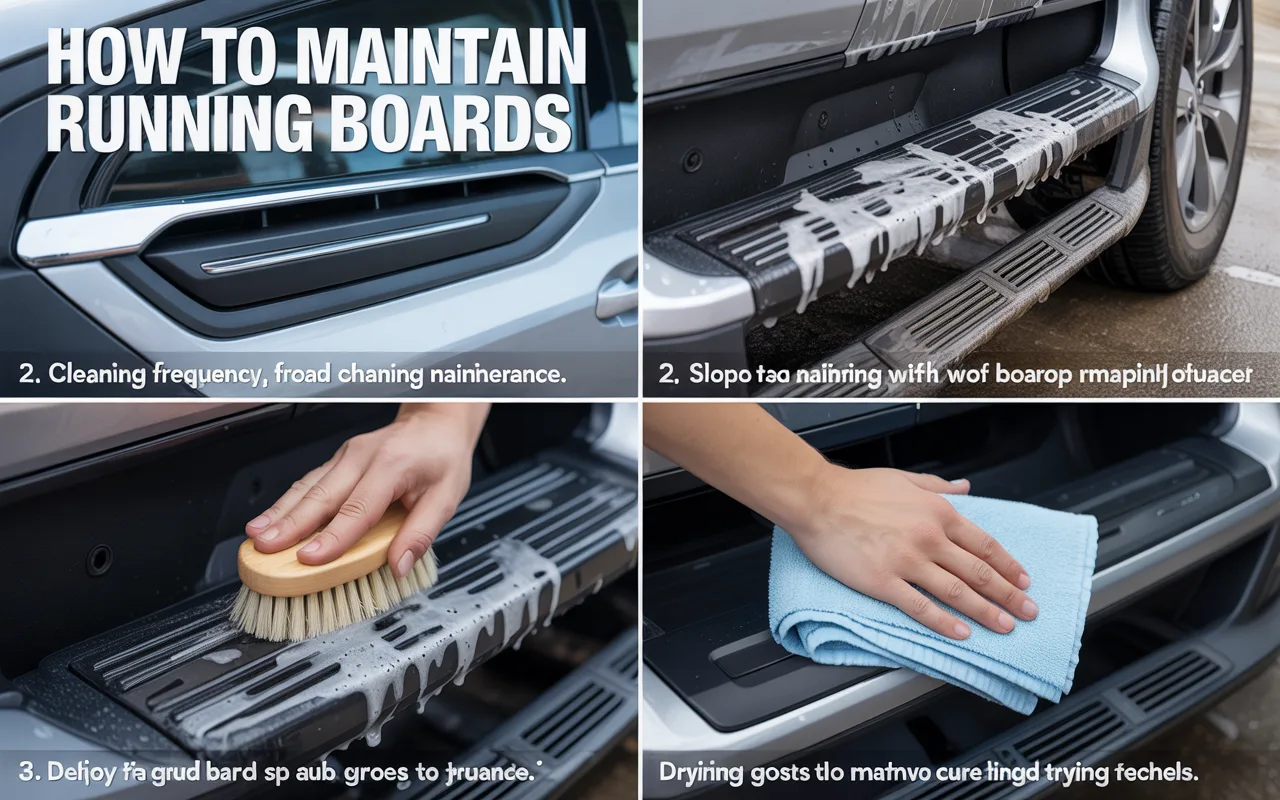
A clear guide on how to maintain running boards for lasting looks and safe use. Learn simple cleaning, inspection, and protection steps to keep your truck or SUV’s steps in top shape.
Running boards are the tough, helpful step on your truck or SUV. They make getting in and out easier. They also get very dirty. Mud, road salt, rocks, and water splash on them every day. If you ignore them, they can become rusty, slippery, and weak. Good news! Learning how to maintain running boards is not hard. It just needs a little regular attention. This guide will walk you through simple steps. You will learn to clean, check, and protect your running boards. This keeps them safe, good-looking, and working for many years.
Why Care for Your Running Boards?
You might think running boards are just metal or plastic steps. Why give them special care? Think about what they do. They hold your weight every time you step on them. They face harsh weather and rough road chemicals. A well-kept running board is a safe running board. It gives you sure footing. It also makes your whole vehicle look better. A rusty or loose step is a safety problem. Spending a few minutes every month on care prevents big repair bills later. It is a small job with big rewards.
“The bitterness of poor quality remains long after the sweetness of low price is forgotten.” – Benjamin Franklin
What You Will Need for the Job
You do not need fancy tools to maintain running boards. Most items are already in your home or garage. Here is a basic list to get started.
| Item | Purpose |
|---|---|
| Car Wash Soap | Gentle cleaning without damaging wax or paint. |
| Bucket and Water | For your cleaning solution. |
| Soft Bristle Brush or Sponge | To scrub off dirt without scratching. |
| Microfiber Towels | For drying and applying protectant. |
| Rubber Protectant (for plastic/rubber) | Keeps materials from drying and cracking. |
| Metal Polish or Wax (for metal) | Protects and shines chrome or polished metal. |
| Degreaser | For tough oil or grease spots. |
| Basic Socket/Wrench Set | For tightening loose bolts. |
Step-by-Step Cleaning Process
Cleaning is the most important part of care. It is not just about looks. Dirt and salt speed up rust and wear. Try to clean your running boards every two weeks. Wash them more often in winter or if you drive on muddy roads.
First, Rinse Well. Use a hose or pressure washer on a low setting. Spray the running boards to remove loose dirt, mud, and grit. Doing this first stops you from rubbing grit into the surface later.
Second, Wash with Soap. Fill a bucket with water and car wash soap. Use a soft brush or sponge to scrub the whole running board. Pay extra attention to the grooves and textured areas where dirt hides. For plastic or rubber boards, scrub gently. For painted boards, avoid brushes that could scratch.
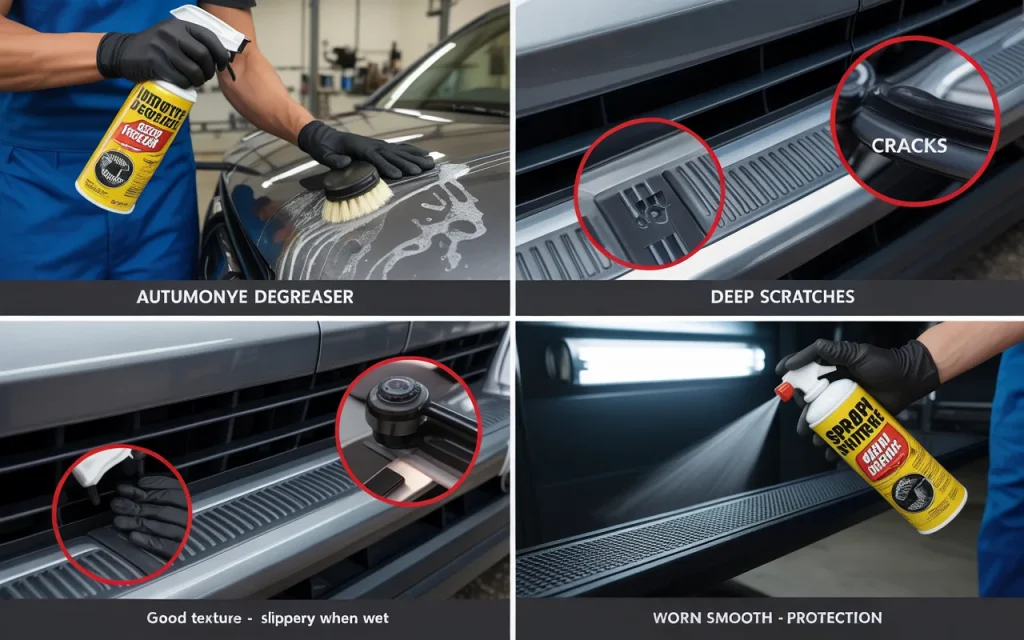
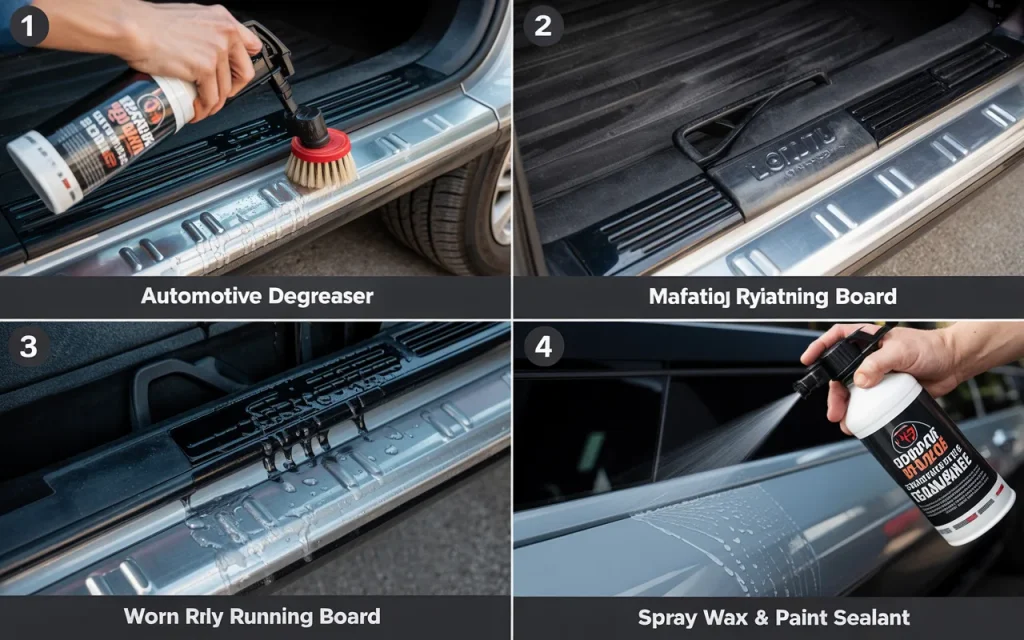
Third, Tackle Tough Stains. If you see tar, grease, or heavy road grime, use a dedicated automotive degreaser. Spray it on the spot. Let it sit for a minute as the bottle says. Then, scrub it gently with your brush. Rinse it off completely.
Fourth, Dry Completely. This step is key! Use a dry microfiber towel to wipe the running boards until no water is left. Water drops can leave spots on chrome. Trapped moisture can also start rust on other metals. Drying stops this.
The Vital Step: Inspection
After cleaning and drying, you have a perfect chance to look closely. This is how you catch small problems before they become big ones. Make this a habit each time you wash.
- Check for Rust: Look for any bubbles under paint or rough orange spots, especially near bolts and welded joints.
- Check for Cracks or Damage: Look over plastic or fiberglass boards for any cracks or chips. On metal boards, check for deep scratches that go through the protective coating.
- Check for Loose Parts: Grab the running board and try to move it up and down gently. It should not wiggle or feel loose. If it does, the mounting bolts likely need tightening.
- Check the Non-Slip Surface: Make sure the textured part you step on is not worn smooth. A smooth running board is very slippery when wet.
“An ounce of prevention is worth a pound of cure.” – Benjamin Franklin
How to Protect and Shine
Once clean and dry, adding a protectant is the final touch. This step seals your hard work and builds a shield.
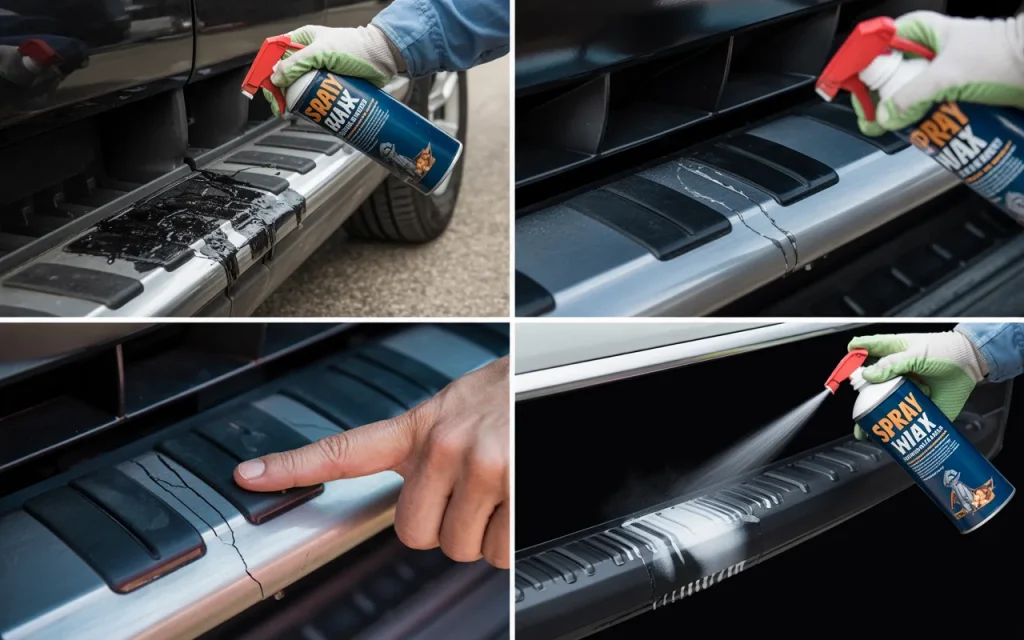
For Plastic or Rubber Running Boards: Use a UV-resistant rubber protectant. Spray it on a microfiber cloth first. Then, wipe it evenly over the surface. This keeps the material from fading in the sun and stops it from drying out and cracking. It often gives a nice dark, like-new finish.
For Chrome or Polished Metal: Use a quality metal polish or automotive wax. Apply a small amount with a clean cloth. Rub it in using a circular motion. Let it haze over, then buff it off with a separate clean cloth. This adds a layer that fights off water and contaminants.
For Painted or Powder-Coated Metal: A simple spray wax or paint sealant works well. It acts like an extra top coat, protecting the paint from chips and stains.
Dealing with Common Problems
Even with good care, issues can pop up. Here is how to handle them.
If You Find Rust: Act fast. For a small spot, use fine sandpaper (like 400 grit) to sand the rust away. Wipe the area clean. Then, apply a touch-up paint or clear coat that matches your running board. This stops the rust from spreading.
If Bolts are Loose: Use your socket or wrench set to tighten the mounting bolts. Do not over-tighten, as this can strip the threads. Just make them snug and firm.
If the Surface is Slippery: You can buy non-slip tape made for automotive steps. Cut it to size and stick it on the stepping area. This gives instant grip. You can also find spray-on bed liner or texture paint for a more permanent fix.
Seasonal Care Tips
The seasons bring different challenges. Adjust your care to match.
Winter: Road salt is the enemy. Rinse your running boards often with plain water, even if you cannot do a full wash. This gets the salt off. A layer of wax before winter starts gives extra protection.
Summer: Sun and UV rays can fade and weaken plastic. Using a UV protectant is very important in summer. Bird droppings and tree sap can also damage the finish. Clean them off quickly.
| Season | Main Threat | Quick Action |
|---|---|---|
| Winter | Road Salt & Moisture | Rinse frequently; apply wax in fall. |
| Summer | UV Sun & High Heat | Use UV protectant; clean sap/bird droppings fast. |
| Spring/Fall | Mud & Road Grime | Regular washing with soap and brush. |
Frequently Asked Questions
How often should I clean my running boards?
Try for every two weeks. If you drive in bad conditions like mud, snow, or on salty roads, clean them once a week. A quick rinse after a storm or off-road trip helps a lot.
Can I use household cleaners?
It is not the best idea. Cleaners like dish soap or window cleaner can strip away protective waxes and seals. They might even damage the material. Always use products made for cars.
What is the best way to keep my chrome running boards shiny?
Regular washing with car soap is the first step. After drying, use a chrome polish or wax. This creates a barrier. Avoid abrasive scrub pads, as they will scratch the chrome.
My plastic running boards look faded. Can I fix this?
Yes, often you can. Clean them very well first. Then, use a plastic restorer or a dedicated rubber/plastic protectant. These products are made to bring back color and shine to faded plastic.
Is it hard to tighten loose running boards myself?
Usually, it is simple. You often just need the right size socket wrench. Check where the board attaches to the truck’s frame. Tighten those bolts. If you are not comfortable, a mechanic can do it very fast.
Conclusion
Knowing how to maintain running boards is a simple but powerful part of vehicle care. It is not about making things complicated. It is about simple, regular habits. Wash them often. Dry them well. Look for problems. Add a protectant. Change your care with the seasons. These easy steps will keep your steps strong, safe, and looking great. Your running boards work hard for you. With a little care in return, they will last for the long life of your truck or SUV. So grab your bucket and soap, and give those trusty steps the attention they deserve.
“Quality is never an accident; it is always the result of intelligent effort.” – John Ruskin