
How To Replace Jeep Brake Pads
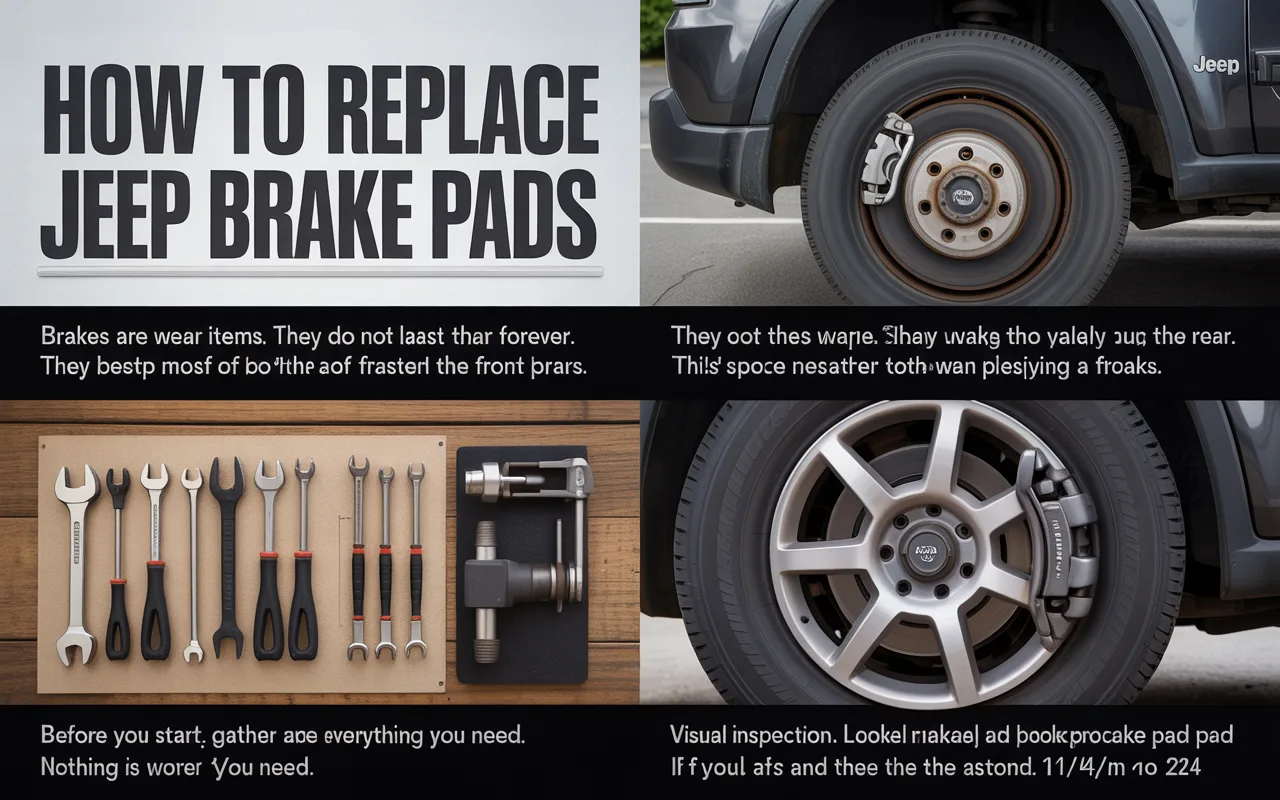
Learn how to replace Jeep brake pads with this simple DIY guide. We cover tools, steps, and safety tips to help you do the job yourself and save money on repairs.
Your Jeep is built for adventure. It takes you to work, through mud, over rocks, and back home safely. But none of that matters if your brakes fail. Brake pads are the most important safety item on your vehicle. They wear down over time. When they get thin, stopping takes longer. That is dangerous.
Many Jeep owners think changing brake pads is hard. The truth is, it is one of the easiest jobs you can do at home. You do not need a lift or special tools. You just need some time, basic hand tools, and this guide.
I have changed brakes on many Jeeps over the years. From Wranglers to Grand Cherokees, the process is mostly the same. Once you learn how to replace Jeep brake pads, you will never pay a shop to do it again. You will save hundreds of dollars. Plus, you will know the job was done right.
In this guide, we will walk through every step. We will talk about the tools you need. We will cover safety. We will show you how to spot worn pads. And we will answer common questions. Let us get started.
Why Learning to Replace Jeep Brake Pads Matters
Brakes are wear items. They do not last forever. The front pads usually wear faster than the rear. This is because most of the stopping power comes from the front brakes. If you drive a heavy Jeep or do a lot of off-roading, your pads may wear even faster.
When you know how to replace Jeep brake pads yourself, you take control of your vehicle’s maintenance. You do not have to wait for an appointment. You do not have to pay high labor rates. You can fix your Jeep on your schedule.
David Long, an off-road enthusiast from Colorado, says: “Learning to do my own brakes was a game changer for my budget. I used to pay $400 for a brake job. Now I spend about $80 on parts and an hour of my time. That money adds up fast.”
This is a skill every Jeep owner should have. It is not complicated. It just requires following steps in order.
Tools and Parts You Will Need
Before you start, gather everything you need. Nothing is worse than getting the wheel off and realizing you are missing a tool.
Required Tools
You probably already own most of these:
- Floor jack
- Jack stands (never use just the jack)
- Lug wrench or impact gun
- Socket set (metric sizes)
- C-clamp or brake caliper tool
- Wire brush
- Gloves and safety glasses
- Brake cleaner spray
- Torque wrench
Parts to Buy
When you go to the auto parts store, you need:
- New brake pads (front or rear set)
- Brake lubricant (small packet is fine)
- Brake cleaner
- Optional: New rotors if yours are worn
Mike Thompson, a mechanic with 20 years of experience, advises: “Always buy quality brake pads. Cheap pads stop poorly and wear out fast. I tell my customers to get mid-range or premium pads. Your Jeep is heavy. It needs good stopping power.”
Here is a quick reference table for common Jeep models and typical pad prices:
| Jeep Model | Front Pad Price Range | Rear Pad Price Range | Difficulty Level |
|---|---|---|---|
| Wrangler JK (2007-2018) | $40-$80 | $35-$75 | Easy |
| Wrangler JL (2018+) | $45-$90 | $40-$80 | Easy |
| Grand Cherokee | $50-$100 | $45-$90 | Easy |
| Cherokee | $40-$85 | $35-$80 | Easy |
| Renegade | $35-$75 | $30-$70 | Easy |
Signs You Need to Replace Jeep Brake Pads
How do you know it is time? Your Jeep will tell you. You just need to pay attention.
Common Warning Signs
Squealing or grinding noise – Most pads have a small metal tab. When the pad gets low, this tab rubs against the rotor. It makes a high-pitched squeal. If you hear grinding, the pad is completely gone. That is bad. Metal is now rubbing on metal. You need new pads and rotors.
Longer stopping distance – If your Jeep does not stop as quickly as it used to, your pads are worn. This is dangerous. Fix it now.
Vibration when braking – This usually means your rotors are warped. You may need to turn the rotors or replace them.
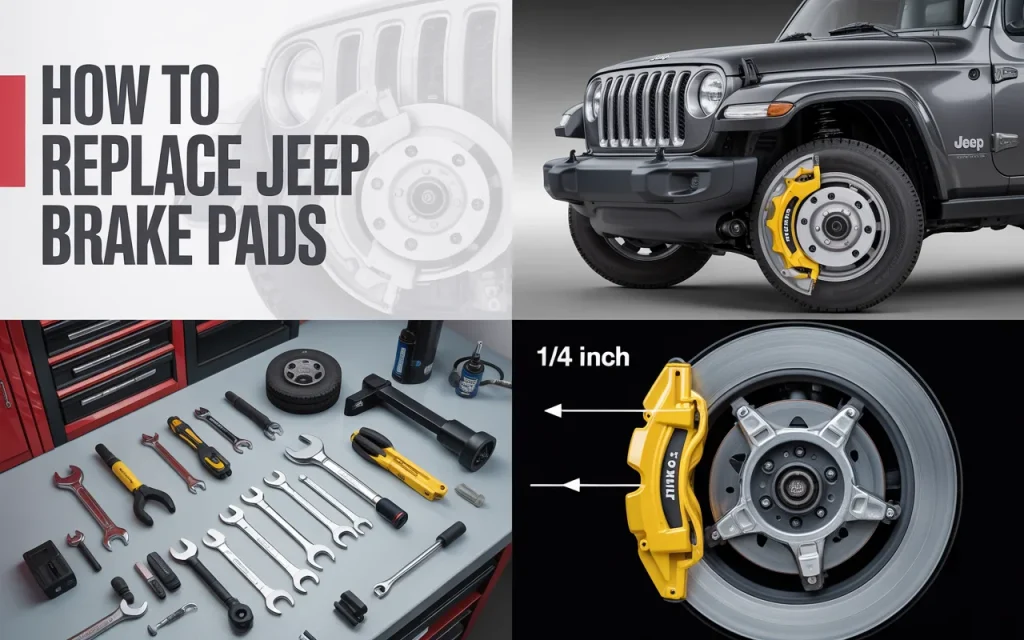
Visual inspection – Look through the wheel spokes. You can see the brake caliper and pad. The pad has a metal backing plate and friction material. If the friction material is less than 1/4 inch thick, you need new pads.
Sarah Chen, a Jeep club leader in Arizona, shares: “I check my brakes every time I rotate my tires. It takes two minutes. Catching wear early saves money. Once I caught a pad that was down to metal with only a week left before a big trip. That could have ruined my vacation.”
Safety First: Preparing Your Jeep
Safety is not optional. A Jeep is heavy. If it falls on you, you will get hurt badly. Follow these steps every time.
Lift and Support Properly
Park on level ground. Put the Jeep in park or in gear. Set the parking brake. Loosen the lug nuts slightly before lifting the vehicle.
Place the jack under the proper lifting point. Consult your owner’s manual. Lift the Jeep until the tire is off the ground. Immediately place jack stands under the frame or axle. Lower the Jeep onto the stands. Give it a gentle shake to make sure it is stable.
Never work under a vehicle supported only by a jack. Jacks fail. Jack stands are safe.
Remove the Wheel
Now you can remove the lug nuts completely. Take the wheel off and set it aside. Place it under the Jeep as an extra safety measure. If something fails, the tire will catch the vehicle before it hits you.
Step-by-Step: How to Replace Jeep Brake Pads
Now we get to the main event. Follow these steps carefully. Work on one wheel at a time. This keeps things organized.
Step 1: Locate the Caliper
Look at the brake assembly. You will see a large metal bracket. Inside that is the caliper. The caliper is the part that holds the pads. It has two bolts holding it to the bracket.
Step 2: Remove the Caliper Bolts
Use your socket set to remove the caliper bolts. On most Jeeps, these are 12mm or 14mm. Set the bolts aside in a safe place. You do not want to lose them.
Once the bolts are out, the caliper will lift off. Do not let it hang by the brake hose. The hose is flexible but it can break. Use a bungee cord or zip tie to hang the caliper from the spring. This takes the weight off the hose.
Step 3: Remove Old Pads
The old pads may be stuck in the bracket. They might have clips holding them. Take note of how everything fits. Take pictures with your phone if needed. This helps when putting new parts in.
Pull the old pads out. Look at them. Are they worn evenly? If one side is more worn than the other, your caliper may be sticking. That is a separate problem. You may need to rebuild or replace the caliper.
Step 4: Clean the Bracket
Use your wire brush to clean the metal bracket. Remove rust and dirt. Pay special attention to the areas where the pads slide. The pads need to move freely. If they stick, they will wear unevenly.
Spray brake cleaner on the bracket and wipe it clean. Brake cleaner dries fast and leaves no residue.
Step 5: Compress the Caliper Piston
This is the step that confuses some people. The caliper piston is pushed out as the pads wear. To fit new, thicker pads, you must push the piston back in.
Use a C-clamp. Place the old inner pad against the piston. Put the C-clamp over it. Tighten slowly. Watch the brake fluid reservoir. If it gets too full, fluid may overflow. You can open the bleeder screw to let fluid out, but that requires bleeding the brakes later. Usually, you can just push slowly and check the reservoir.
For rear brakes on many Jeeps, the piston may need to be rotated while pushing. This is common on vehicles with electronic parking brakes. You may need a special tool for this. Auto parts stores often loan these tools.
Step 6: Apply Lubricant
Open your packet of brake lubricant. Apply a thin layer to the metal contact points on the bracket. Also apply it to the back of the new pads where they touch the caliper. Do not get lubricant on the friction surface of the pad. That surface must stay clean.
Step 7: Install New Pads
Place the new pads into the bracket. They should slide in easily. Install any clips that came with your new pads. Make sure everything is seated properly.
Step 8: Reinstall the Caliper
Lower the caliper over the new pads. Line up the bolt holes. Push the caliper down until it sits flush. Insert the bolts and tighten them by hand first. Then use your ratchet to snug them up. Do not overtighten.
Step 9: Check Everything
Spin the rotor by hand. It should turn freely. If it drags, the piston may not be fully compressed. You may need to compress it more.
Step 10: Reinstall the Wheel
Put the wheel back on. Tighten the lug nuts by hand. Lower the Jeep from the jack stands. Once the Jeep is on the ground, use your torque wrench to tighten the lug nuts to the proper specification. This is usually around 90-110 foot-pounds, but check your owner’s manual.
Here is a quick reference for common Jeep torque specs:
| Jeep Model | Lug Nut Torque (ft-lbs) |
|---|---|
| Wrangler JK | 95 |
| Wrangler JL | 130 |
| Grand Cherokee | 100 |
| Cherokee | 100 |
| Renegade | 100 |
Step 11: Pump the Brakes
Before you drive, pump the brake pedal several times. This pushes the pistons back out against the new pads. The pedal will feel soft at first. After a few pumps, it will get firm.
Step 12: Test Drive
Take a slow test drive in a safe area. Make sure the brakes feel normal. Listen for noises. If everything sounds and feels right, you are done.
Common Mistakes When You Replace Jeep Brake Pads
Even experienced DIYers make mistakes. Here are some to avoid.
Forgetting to Pump the Pedal
This is the most common mistake. If you drive without pumping first, you will have no brakes. The pedal will go to the floor. Always pump until the pedal is firm.
Overtightening Lug Nuts
Impact guns can easily overtighten lug nuts. This warps rotors and makes future removal hard. Always use a torque wrench for the final tighten.
Skipping the Lubricant
Without lubricant, pads can stick. This causes noise and uneven wear. A small packet of lubricant costs almost nothing. Use it.
Not Cleaning the Bracket
Dirt and rust prevent pads from sliding. Clean brackets are essential for proper brake function.
Frequently Asked Questions
How often should I replace Jeep brake pads?
Most Jeeps need new front pads every 30,000 to 50,000 miles. Rear pads last longer, often 50,000 to 70,000 miles. If you off-road often or tow heavy loads, expect shorter life.
Can I replace just the pads or do I need new rotors?
You can replace just the pads if your rotors are smooth and within thickness spec. If rotors are scored, warped, or thin, replace them too. Many auto parts stores will measure rotors for free.
Why do my brakes squeak after replacing them?
New pads may squeak for the first few hundred miles as they seat. This is normal. If squeaking continues, you may need to add lubricant or check for proper installation.
Do I need to bleed the brakes after changing pads?
Usually no. If you did not open the hydraulic system, you do not need to bleed. The only exception is if you pushed fluid back so fast that it aerated. This is rare.
How much money will I save by doing it myself?
A shop charges $300 to $600 for a brake job. Doing it yourself costs $50 to $150 in parts. You save at least $200 per axle.
Is it safe to replace Jeep brake pads myself?
Yes, if you follow safety procedures. Use jack stands. Work carefully. Double-check everything. If you are unsure about any step, ask a knowledgeable friend or watch more videos.
Conclusion
Learning how to replace Jeep brake pads is a valuable skill. It saves money. It gives you confidence. It ensures your Jeep is safe for your family and your adventures.
The job is straightforward. Remove the wheel. Take off the caliper. Swap the pads. Put everything back. Pump the pedal. Test drive. That is it.
Do not be afraid to try. Start with the rear brakes if you are nervous. They are less critical than the fronts. Watch some videos for your specific model. Read your owner’s manual. Take your time.
Tom Wilson, who has driven Jeeps for over 30 years, puts it simply: “Your Jeep will never let you down if you take care of it. Brakes are the most important system on the vehicle. Learn to do them yourself. You will never regret having that skill.”
Your Jeep depends on good brakes. Your safety depends on good brakes. Now you have the knowledge to make sure both are in top shape. Get your tools together, buy quality parts, and give it a try. You can do this.
Related posts
 Best Car Mats for All-Weather Use 2026: Top Picks for Every Driver
Keeping your car clean is tough, especially when rain, mud, and snow are involved. That’s where the best car mats for all-weather use make a difference.…
 Best Custom-Fit Floor Mats for Nissan Titan: Top Picks 2026
These custom-fit mats provide reliable coverage and help protect your Nissan Titan’s interior from dirt and spills. It’s Monday morning, you’re rushing out the door with…
 Best Car Cleaning Wipes for Interior: A Buyer’s Guide
Discover the best car cleaning wipes for your interior. Compare options for dashboards, leather, and tough stains to keep your car spotless and well-maintained. Keeping your…