
How To Prepare Your Jeep For Trail Driving
Learn exactly how to prepare your Jeep for trail driving with this complete guide. We cover essential checks, gear, tires, and safety tips to keep you confident on the dirt.
So you finally have some free time and you want to take your Jeep off the pavement. That is a great feeling. But before you head out to find some mud or rocks, you need to make sure your vehicle is ready. Driving on a trail is not like driving on the highway. The ground is uneven, there are rocks, and you might get stuck in water or mud. If you do not prepare your Jeep for trail driving, you could end up breaking something or worse, getting stranded.
I have been driving Jeeps for a long time, and I have made plenty of mistakes. I remember one time I forgot to check my spare tire before a trip. I got a flat on the trail, and when I went to grab the spare, it was low on air. That was a long day. You do not need to make the same errors. This guide will walk you through every step to get your Jeep trail-ready.
We will talk about the mechanical stuff, the gear you need to bring, and how to think about safety. By the time you finish reading, you will feel much more confident about taking your Jeep off-road.
Why You Need to Prepare Your Jeep for Trail Driving
A lot of people think their Jeep is ready to go right from the factory. And sure, a Jeep Wrangler or Gladiator is more capable than a regular car. But trails are hard on vehicles. Rocks can hit your oil pan. Mud can hide deep holes. Water can get into places it should not go.
When you prepare your Jeep for trail driving, you are protecting your investment. You are also keeping yourself safe. A small problem on a paved road is just an annoyance. The same small problem on a trail can turn into a big emergency. Taking a few hours to check things over before you go is always worth the time.
Step 1: Check the Basics Under the Hood
Before you even look at cool off-road bumpers or winches, you need to make sure the engine and fluids are in good shape.
Engine Oil and Filter
Check your oil level. If you are due for an oil change, get it done before the trip. Trails often mean running the engine at lower speeds but higher RPMs, which can put stress on the oil. Fresh oil is cheap insurance.
Coolant/Antifreeze
Off-roading can be slow. When you are crawling over rocks, there is not much air moving through the radiator. This can make the engine run hot. Make sure your coolant is full and mixed correctly. Also, check the radiator hoses. Squeeze them. If they feel soft or look cracked, replace them.
Brake Fluid
You will use your brakes a lot on steep downhill sections. Make sure the fluid reservoir is full. If your brake fluid looks dark or dirty, it might be time to flush it and put in new fluid.
Power Steering Fluid
When you are turning big tires on loose rocks, the power steering system works hard. Check the fluid level. If you hear your power steering pump whining on the trail, it might be low on fluid.
“Most breakdowns on the trail are not because of big mechanical failures. They happen because people ignored the simple things like fluid levels and hose clamps. Check the small stuff first.” – Mark Evans, Off-Road Guide and Mechanic
Step 2: Inspect Your Tires and Wheels
Your tires are the only thing connecting your Jeep to the ground. This is one of the most important parts of learning how to prepare your Jeep for trail driving.
Tire Pressure
On the road, you run high tire pressure for fuel economy. On the trail, you want lower pressure. Lower pressure lets the tire spread out and grip the rocks or dirt better. It also makes the ride less bumpy.
You should not drive on the highway with low pressure. So, you need a plan. Bring a portable air compressor. You can air down when you get to the trailhead, and then air back up when you are done.
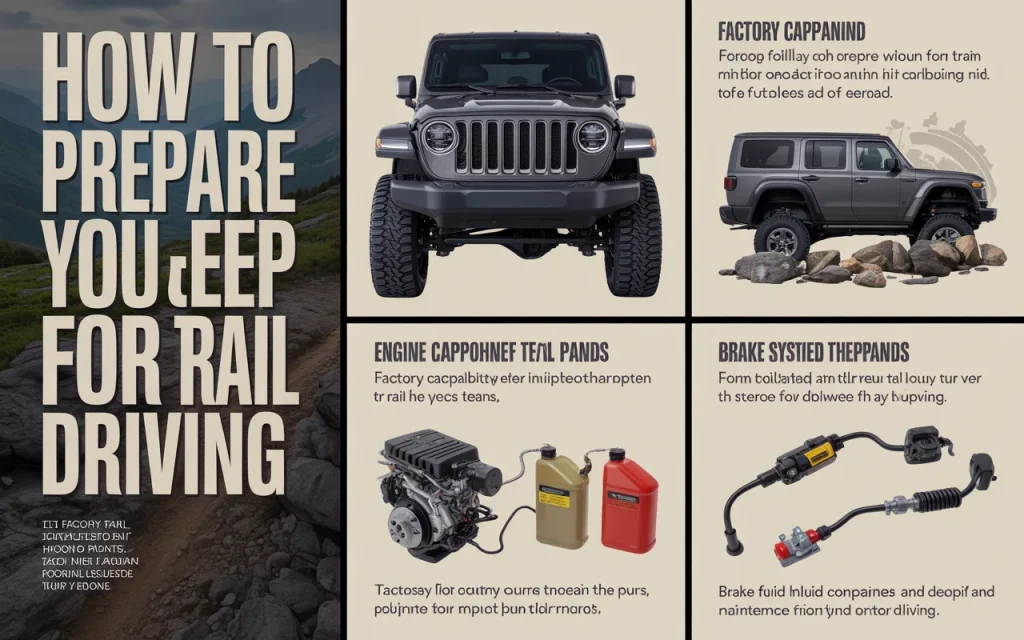
A quick guide to tire pressure:
| Driving Surface | Recommended PSI |
|---|---|
| Highway / Paved Road | 35 – 40 PSI |
| Gravel / Dirt Roads | 25 – 30 PSI |
| Rocky Trails | 15 – 20 PSI |
| Sand / Mud | 12 – 18 PSI |
Check Your Spare Tire
Do not forget about this one. Make sure your spare tire has air. Make sure you have the tools to change the tire. Practice taking the spare off before you go. Some spare tire carriers can be hard to open, especially if they are rusty or have not been used in a while.
Look at Your Tread
Check for cuts in the sidewall. Rocks can be sharp. If you see any deep cuts or bubbles in the tire, replace it before you go. You do not want a tire blowout five miles from the pavement.
Step 3: Look at Your Suspension and Steering
When you drive on a trail, everything moves around a lot. You want to make sure all the parts are tight and not worn out.
Ball Joints and Tie Rods
Have someone turn the steering wheel back and forth while you look at the front end. Watch the tie rod ends and ball joints. If you see any movement where there should not be any, you have worn parts. These need to be fixed before a trail ride. If a tie rod breaks on the trail, you lose all steering control.
Shock Absorbers
Push down on the front and rear of your Jeep. It should go down and come back up smoothly. If it bounces up and down a few times, your shocks might be worn out. Good shocks keep your tires on the ground.
Track Bar
The track bar keeps your axle centered under the Jeep. Look at the bolts where the track bar mounts. Make sure they are tight. A loose track bar can make your Jeep wander all over the trail.
Step 4: Gather Essential Recovery Gear
Part of learning to prepare your Jeep for trail driving is accepting that you might get stuck. It happens to everyone. The key is having the right gear to get un-stuck.
Recovery Points
First, you need places to attach straps or ropes. Look at the front and back of your Jeep. Do you have sturdy tow hooks? Many Jeeps come with them. If not, you should buy some that bolt to the frame. Do not attach a recovery strap to a hitch ball or a plastic bumper. That is dangerous.
Recovery Strap (Not a Tow Strap)
There is a big difference. A tow strap is for pulling a car on the road. It does not stretch. A recovery strap (often called a snatch strap) is made of nylon and stretches like a big rubber band. This stretch helps “pull” the stuck vehicle out. Get a good quality 3-inch wide recovery strap.
Traction Boards
These are like plastic ramps. If your tires are spinning in mud or sand, you put these boards under the tires to give them something to grip. They are lighter than a winch and work great for minor stuck situations.
Gloves and a Shovel
You will probably have to touch muddy straps or dig a little bit. A good pair of work gloves keeps your hands clean and safe. A small shovel (like a military-style entrenching tool) is great for digging mud away from your axles.
Step 5: Think About Air and Electronics
Modern Jeeps have a lot of computers. Water and mud can mess with sensors and electrical parts.
Check Your Battery
Make sure the battery terminals are tight and clean. Off-road driving can vibrate things loose. If your battery is more than four years old, you might want to get it tested. You do not want a dead battery at the bottom of a hill.
Diff Breathers
Your front and rear axles have a small hose called a breather. It lets air pressure escape as the gears heat up. If you drive through deep water, water can go up this hose and into your axle. This ruins the gear oil and can damage the gears. You can buy kits to extend these breather hoses up higher into the engine bay. This is a cheap mod that saves you a lot of money later.
Snorkel (Optional)
If you plan to cross deep water regularly, you might look into a snorkel. This raises the air intake for your engine up to roof level. It lets you drive through deeper water without sucking water into the engine, which would destroy it.
“I have seen too many people ruin a weekend trip because they had a dead battery or a loose ground wire. Spend 15 minutes with a wrench checking your battery connections. It takes almost no time and saves you a huge headache.” – Sarah Jenkins, Off-Road Recovery Volunteer
Step 6: Pack for Safety and Comfort
You are taking your Jeep into a place where there might be no cell service. You need to be able to take care of yourself.
First Aid Kit
Get a good first aid kit. Not just a little plastic box with band-aids. Get one with trauma supplies like gauze, tape, and antiseptic. Know how to use the things in the kit. It is also smart to pack extra personal medications if you take any.
Food and Water
Pack more than you think you need. If you get stuck out there for a few hours or overnight, you will be happy to have snacks and water. A cooler with sandwiches and cold drinks makes the whole day better anyway.
Extra Layers of Clothing
Even in summer, it can get cold at night. Bring a jacket, a hat, and maybe a blanket. If you get wet or muddy, you will want dry clothes to change into.
Communication
Cell phones often do not work on trails. A CB radio or a GMRS radio is common among Jeep groups. This lets you talk to other people in your group. For serious safety, you can look into a satellite messenger like a Garmin InReach. This lets you send texts or an SOS signal from anywhere.
Step 7: Know Before You Go
Getting the Jeep ready is one thing. Getting yourself ready is another.
Tell Someone Your Plan
Before you leave the house, tell a friend or family member where you are going and when you plan to be back. Give them a map or GPS coordinates of the trailhead. If you do not come back, they know where to send help.
Check the Weather
Rain can turn a dry dirt road into a slippery mud pit in minutes. Check the forecast. If big storms are coming, it might be smart to reschedule. Flash floods are a real danger in canyons and dry river beds.
Trail Ratings
Trails have difficulty ratings, like green (easy), blue (moderate), and black (difficult). Be honest about your skill level and your Jeep’s capability. Do not try a black diamond trail if it is your first time out. Start on easy trails and work your way up. It is more fun to drive an easy trail than to get stuck and stressed on a hard one.
Comparing trail difficulty:
| Trail Rating | What to Expect | Recommended For |
|---|---|---|
| Green (Easy) | Wide dirt roads, small rocks, maybe some mud puddles. Stock Jeep with street tires is fine. | Beginners, families, stock vehicles. |
| Blue (Moderate) | Narrower paths, larger rocks, steeper hills. You might need to pick a line. | Drivers with some experience. All-terrain tires and maybe a small lift help. |
| Black (Difficult) | Big rock steps, off-camber sections, deep ruts. Body damage is possible. | Experienced drivers only. Lockers, large tires, and a lift are usually required. |
Step 8: Do a Final Walk-Around
When you get to the trailhead, take one last look. This is your final chance to catch a problem before you hit the dirt.
- Air down your tires.
- Check that all your gear is tied down inside the Jeep. You do not want a heavy cooler flying around if you hit a bump.
- Make sure your recovery points are clear and accessible.
- Put your radio on the right channel if you are with a group.
This last check only takes five minutes. It helps you move from “road mode” to “trail mode” in your head.
“The best piece of advice I ever got was to walk around my Jeep at the trailhead. Look underneath. Look at the tires. Make sure nothing is hanging loose. Once you are on the trail, it is too late to notice that your spare is flat.” – Tom Butler, Jeep Club President
Frequently Asked Questions
Q: Do I need a lift kit to go on a trail?
A: Not at all. Many great trails are easy enough for a stock Jeep. A lift kit helps you fit bigger tires and gives you more ground clearance for big rocks, but it is not required for having fun. Start with what you have.
Q: What is the most important thing to bring for a first-time trip?
A: Besides the basics like water and a first aid kit, bring a friend in another vehicle. It is much safer to go with two vehicles. If one gets stuck, the other can help pull it out. Going alone is risky.
Q: How do I prepare my Jeep for trail driving if it rains?
A: Rain changes everything. Trails get slippery. You should still air down your tires. Drive slower than you think you need to. Avoid steep hills if the mud is thick. And make sure your windshield wipers work well!
Q: Should I disconnect my sway bar?
A: On many Wranglers, you can disconnect the front sway bar. This lets the front suspension move up and down more, which helps keep tires on the ground on bumpy trails. It is great for slow, rocky sections but you should reconnect it for highway driving.
Q: Can I take my 2-wheel drive Jeep on a trail?
A: This depends on the trail. For a simple, flat, dry dirt road, maybe. But for anything with loose rocks, mud, or hills, you really need 4-wheel drive. You will have more fun and get into less trouble with a 4×4.
Conclusion
Learning how to prepare your Jeep for trail driving is not just about buying expensive parts. It is about being smart and taking care of the basics. Check your fluids, look at your tires, and make sure your recovery gear is packed. Think about what you will need if you get stuck or if the weather turns bad.
Every time you go out, you will learn something new. You will learn what your Jeep can do and what you need to work on for next time. The most important thing is to get out there and have fun. Respect the trail, take care of your Jeep, and enjoy the views that most people never get to see.
So go ahead. Grab a wrench, check that spare tire, and get ready for your next adventure. The trail is waiting for you.
Related posts
 Best Car Mats for All-Weather Use 2026: Top Picks for Every Driver
Keeping your car clean is tough, especially when rain, mud, and snow are involved. That’s where the best car mats for all-weather use make a difference.…
 Best Custom-Fit Floor Mats for Nissan Titan: Top Picks 2026
These custom-fit mats provide reliable coverage and help protect your Nissan Titan’s interior from dirt and spills. It’s Monday morning, you’re rushing out the door with…
 Best Car Cleaning Wipes for Interior: A Buyer’s Guide
Discover the best car cleaning wipes for your interior. Compare options for dashboards, leather, and tough stains to keep your car spotless and well-maintained. Keeping your…