
How To Rotate Jeep Tires Properly
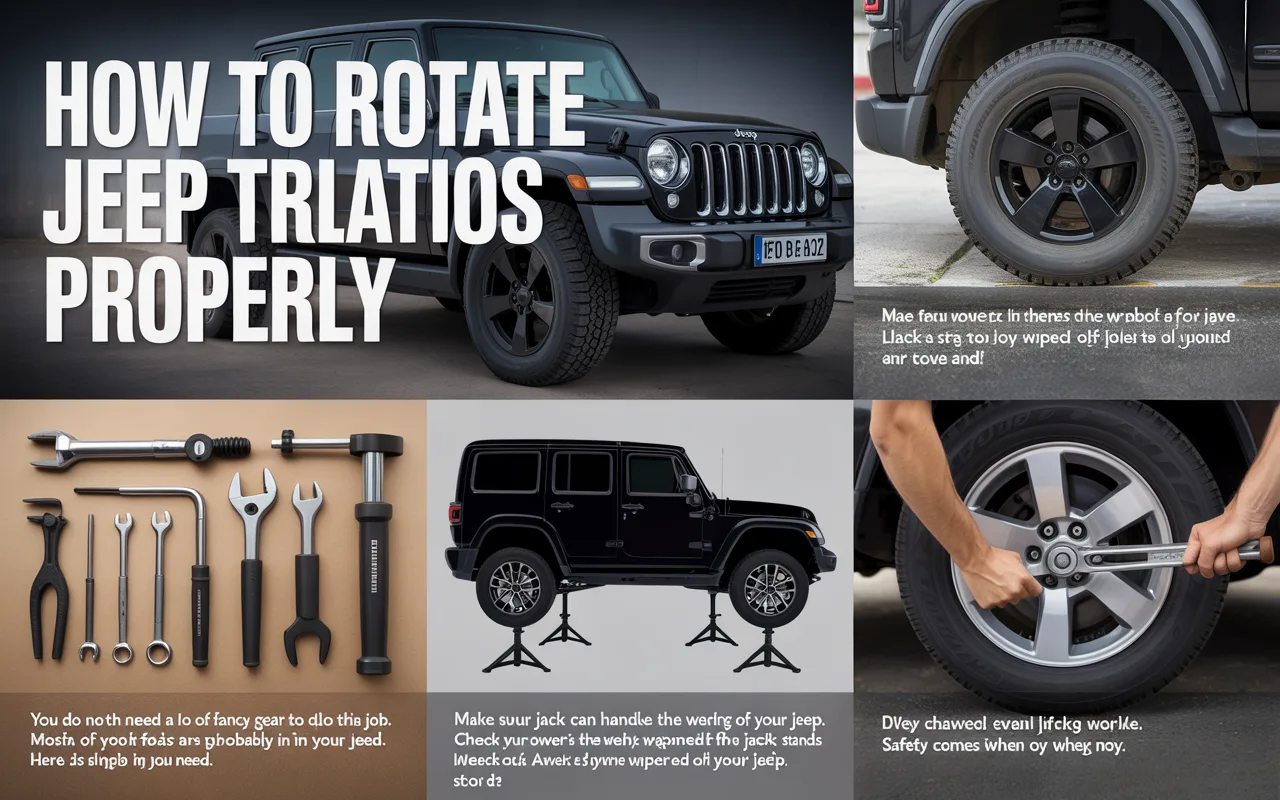
Learn how to rotate Jeep tires properly with this easy guide. Find the right rotation patterns for 4WD, check torque specs, and know when to do it for longer tire life.
Jeeps are different from regular cars. They often have four-wheel drive or all-wheel drive systems. These systems put unique stress on tires. The front tires handle most of the turning and stopping weight. The rear tires might spin more if you drive off-road. If you never move the tires around, some wear out faster than others. This can lead to a bumpy ride and poor grip.
James O’Reilly, a veteran off-road instructor from Moab, says: “I see so many people buy expensive all-terrain tires and then ruin them in 20,000 miles just because they never rotated them. A simple tire rotation every oil change keeps the tread depth even and the Jeep stable on rocks.”
When you rotate Jeep tires properly, you spread the wear across all four tires. This means you replace all four at the same time. It keeps the handling predictable. It also keeps the transfer case and differentials happy because all tires spin at close to the same speed. Even tire wear is key for a safe and capable Jeep.
Tools You Need Before You Start
You do not need a lot of fancy gear to do this job. Most of the tools are probably in your garage already. Here is a simple list of what you need.
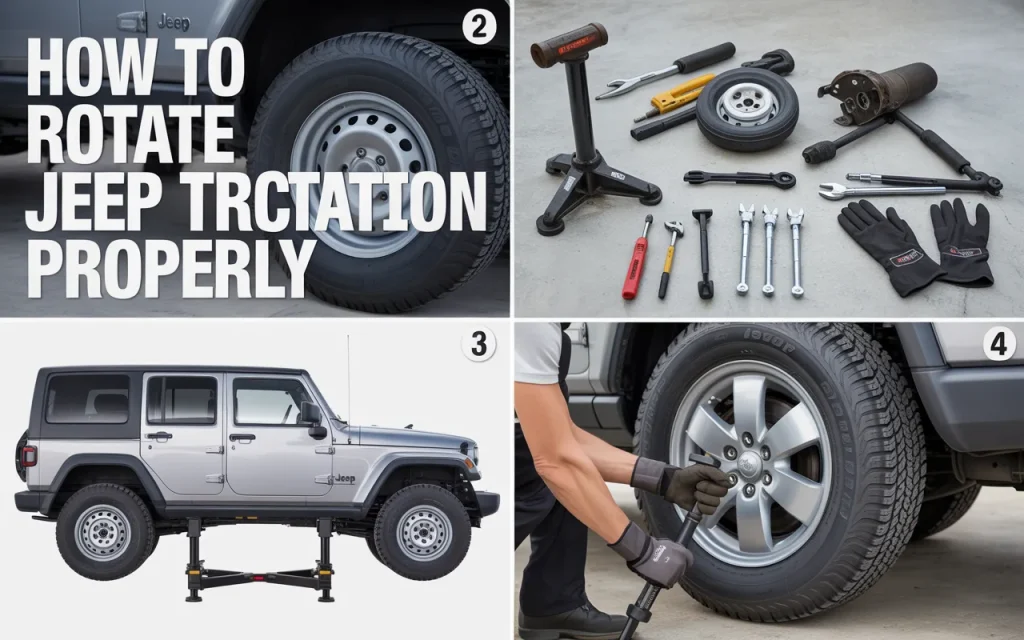
- Floor jack or high-lift jack
- Jack stands (always use these for safety)
- Lug wrench or torque wrench
- Wheel chocks
- Gloves to keep your hands clean
Make sure your jack can handle the weight of your Jeep. Check your owner’s manual for the correct lift points. Never crawl under a vehicle supported only by a jack. Always use jack stands. Safety comes first when you work on any vehicle.
Step-by-Step Guide on How to Rotate Jeep Tires Properly
Following a clear process makes the job fast and safe. Do not rush this. Take your time and do each step the right way. Here is the simple method to get the job done.
Step 1: Park on Level Ground
Find a flat, hard surface to work on. Soft dirt or gravel can make the jack unstable. Put the Jeep in Park if it is an automatic. If you have a manual transmission, put it in gear. Set the parking brake firmly. Place wheel chocks behind the tires that stay on the ground. This stops the Jeep from rolling.
Step 2: Loosen the Lug Nuts First
Use the lug wrench to break the lug nuts loose. Do not take them all the way off yet. Just turn them counterclockwise until they spin freely but the wheel still sits flush. Loosening them while the tire is on the ground stops the wheel from spinning. It is much easier this way.
Step 3: Lift and Support the Jeep
Check your owner’s manual for the correct jacking points. Place the jack under the frame or axle. Lift the Jeep until the tires are just off the ground. Place sturdy jack stands under the axle or frame. Lower the Jeep gently onto the stands. Give the vehicle a little shake to make sure it is stable.
Step 4: Remove the Tires
Now take the lug nuts off all the way. Pull the tire straight toward you. If it is stuck, give it a gentle kick on the sidewall or use a rubber mallet. Do not hit the wheel with a metal hammer. It can damage the rim. Set the tires aside in the order you took them off. This helps you remember where each one came from.
Step 5: Follow the Correct Rotation Pattern
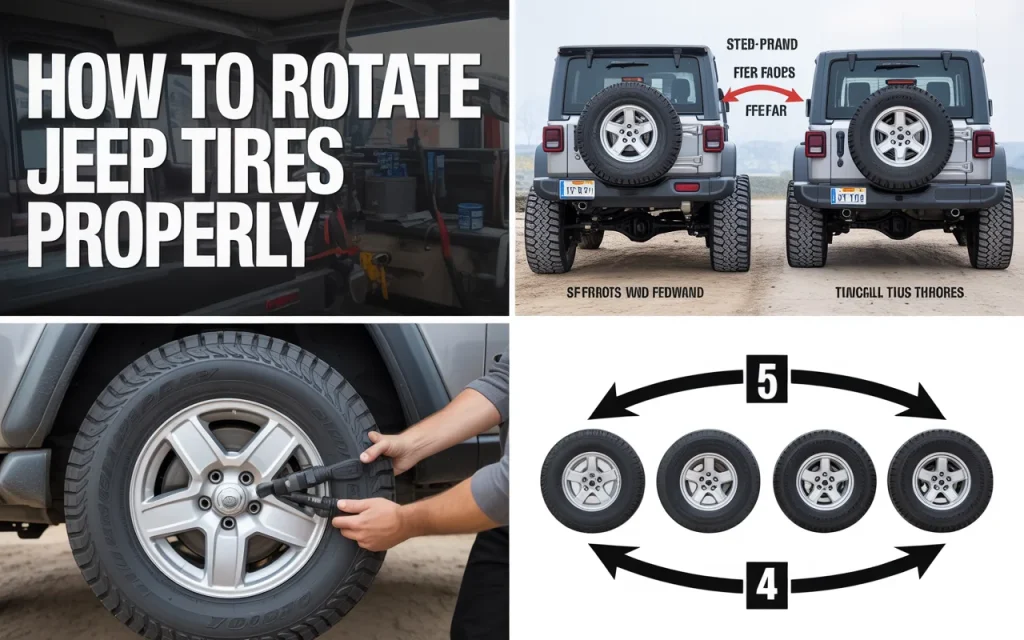
This is the most important part of how to rotate Jeep tires properly. The pattern depends on what kind of Jeep you drive. Most Jeeps use a non-directional tire pattern. That means the tread can spin either way. Here are the patterns you need.
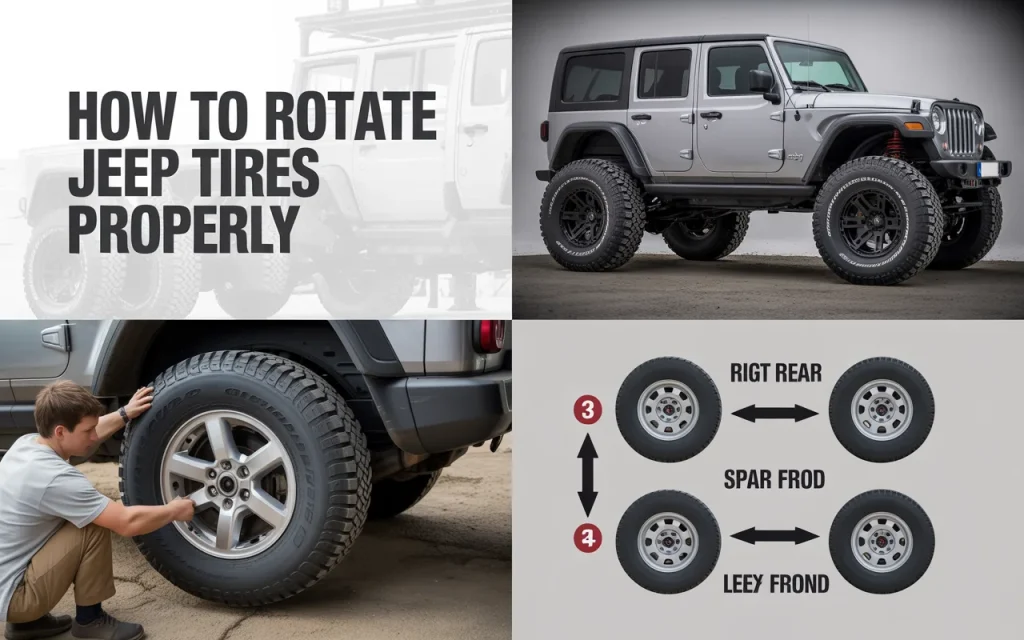
For Rear-Wheel Drive Jeeps (like older models): Move the front tires straight back to the rear axle. Move the rear tires to the front, but cross them. The left rear goes to the right front. The right rear goes to the left front.
For Four-Wheel Drive and All-Wheel Drive Jeeps (most common): Move the rear tires straight forward to the front axle. Move the front tires to the rear, but cross them. The left front goes to the right rear. The right front goes to the left rear.
For Jeeps with a Full-Size Spare: Include the spare in the rotation. This gives you five tires with even wear. The pattern is a little different. Move the right rear to the spare position. Move the spare to the right front. Move the right front to the left rear. Move the left rear to the left front. Move the left front to the right rear. It sounds complex, but it keeps all five tires fresh.
Step 6: Mount the Tires and Hand-Tighten
Put the tire on the wheel studs. Push it all the way back until it sits flush against the hub. Screw the lug nuts on by hand. Turn them clockwise until they are snug. Make sure they are not cross-threaded. Get them started evenly.
Step 7: Lower the Jeep and Torque the Lug Nuts
Lift the Jeep slightly to remove the jack stands. Lower it to the ground. Now you need to tighten the lug nuts to the correct spec. Most Jeeps need between 90 and 110 foot-pounds of torque. Use a torque wrench for this. Tighten the nuts in a star pattern. This means you tighten one, then skip to the opposite side. It seats the wheel evenly and prevents warping the brake rotor. Go around two or three times until all are tight.
Maria Sanchez, a service manager at a Denver off-road shop, explains: “We see warped rotors all the time from people over-tightening lug nuts with an impact gun. Use a torque wrench and follow the star pattern. It takes two extra minutes and saves you hundreds in brake jobs.”
Step 8: Check Pressure and Go for a Test Drive
Check the air pressure in all four tires. Set it to the pressure listed on the door jamb sticker, not the number on the tire sidewall. Take the Jeep for a short drive. Listen for any vibration or noise. If something feels wrong, check the lug nuts again. They can sometimes seat a little more after a few miles.
Rotation Patterns by Jeep Model
Different Jeep models sometimes need different patterns. Here is a quick reference table to help you out. Use this guide based on your specific Jeep.
| Jeep Model | Drive Type | Recommended Rotation Pattern |
|---|---|---|
| Wrangler (All) | 4WD | Rearward Cross (Front to Rear same side, Rear to Front crossed) |
| Grand Cherokee | RWD or 4WD | Forward Cross for 4WD, Rearward Cross for RWD |
| Cherokee/Compass | FWD-based 4WD | Forward Cross |
| Gladiator | 4WD | Rearward Cross (tires are often larger, check pressure often) |
| Older CJ or YJ | RWD or 4WD | Rearward Cross |
If you have directional tires with a specific tread pattern that points forward, you cannot cross them. Directional tires must stay on the same side of the vehicle. They can only move front to back on the same side. Check the sidewall of your tire for an arrow. If you see one, that tire has a direction. Do not swap sides.
When to Rotate Your Jeep Tires
Timing matters just as much as knowing how to rotate Jeep tires properly. Most experts suggest rotating every 5,000 to 7,000 miles. This lines up perfectly with your oil change interval. If you change your oil every 5,000 miles, just rotate the tires at the same time.
For Jeeps that see a lot of off-road use, you might need to do it more often. Mud, sand, and rocks wear tread faster. Check your tires every month. Look at the tread depth across the tire. If the front looks lower than the back, it is time for a rotation. Do not wait for the full 5,000 miles if you see uneven wear.
Tom Chen, a tire engineer with 20 years of experience, notes: “Heat is the enemy of tires. Off-road driving builds heat in different areas than highway driving. Frequent rotation cycles the heat exposure around, which helps prevent tread separation and keeps the rubber compound healthy.”
Common Mistakes People Make
Even experienced DIYers sometimes mess up a tire rotation. Avoid these common errors to keep your Jeep safe.
- Using the wrong pattern: Putting the wrong tires in the wrong spots causes faster wear.
- Forgetting to torque the lugs: Guessing the tightness leads to loose wheels or broken studs.
- Ignoring the spare: If you have a full-size spare, use it. It is a free extra tire.
- Mixing tread depths: If one tire is much more worn than the others, it can stress the drivetrain.
- Not checking tire pressure: Always adjust air pressure after moving tires around.
Benefits of Regular Tire Rotation
When you rotate Jeep tires properly, you get more than just even tread. The benefits add up over time. You get better fuel economy because tires roll easier with even wear. You get a quieter ride because the tread blocks hit the road at the same time. You also get better traction in rain and snow. Deep, even tread pushes water out better than worn spots.
Another big benefit is protecting your Jeep’s mechanical parts. Four-wheel drive systems want all tires to be the same size. If one tire is worn down more than the others, it is actually a smaller diameter. That smaller tire spins faster than the others. This makes the transfer case work harder. It can cause fluid to overheat and parts to wear out. Keeping all tires the same size through regular rotation protects the expensive parts underneath.
Tire Rotation and TPMS Sensors
Modern Jeeps have Tire Pressure Monitoring Systems, or TPMS. These sensors live inside the wheel. They send pressure data to the computer. When you rotate the tires, the sensors move to new corners of the Jeep. The computer might still think the left front tire is the left front, even though you moved it to the right rear.
Some Jeeps learn the new positions automatically after driving a few miles. Others need a reset tool or a trip to the shop. Check your owner’s manual to see how your system works. If the warning light comes on and stays on after rotation, the system might need to relearn the sensor positions. A local tire shop can usually do this for a small fee. It is worth knowing this before you start so you are not surprised by a blinking light later.
Quick Reference for Torque Specs
Getting the lug nut tightness right is critical. Here is a table with common torque specs for popular Jeep models. Use this as a guide, but always verify with your owner’s manual.
| Jeep Model | Year Range | Lug Nut Torque (ft-lbs) |
|---|---|---|
| Wrangler JK | 2007-2018 | 90-110 |
| Wrangler JL | 2018-Present | 90-110 |
| Grand Cherokee WK2 | 2011-2022 | 95-115 |
| Grand Cherokee WL | 2022-Present | 100-120 |
| Cherokee KL | 2014-Present | 90-110 |
| Gladiator JT | 2020-Present | 90-110 |
Remember to re-check the torque after about 50 miles of driving. Newly seated wheels can sometimes settle and loosen slightly. A quick check gives you peace of mind.
Frequently Asked Questions
Can I rotate Jeep tires myself without a torque wrench?
You can, but it is not the best idea. A torque wrench gives you the exact tightness. If you use just a lug wrench, you might not get them tight enough. They could come loose. You might also over-tighten them, which warps brake rotors. Borrow a torque wrench if you do not own one. It is the right tool for the job.
How do I know if my Jeep has directional tires?
Look at the sidewall of the tire. Find an arrow that says “rotation.” The arrow points in the direction the tire should spin when the Jeep moves forward. If you see this, the tire is directional. It must stay on the same side of the vehicle. You can only swap front to back.
Does rotating tires affect the alignment?
No, tire rotation does not change alignment. Alignment is about the angles of the suspension parts. Rotation just moves the tires around. You still need to check alignment if the Jeep pulls to one side or if you hit a big pothole. Rotation and alignment are separate maintenance items.
What if my Jeep has different size tires front and rear?
Some lifted Jeeps or special editions have staggered fitment. The front and rear tires are different sizes. You cannot rotate these at all. The tires only fit one position. In this case, just check pressure regularly and inspect for uneven wear. You will replace the front and rear sets at different times.
Can a bad rotation pattern hurt my Jeep?
Yes, it can. Using the wrong pattern on a four-wheel drive Jeep can make the tires wear faster in a sawtooth pattern. This creates noise and vibration. It can also make the transfer case work harder if the tread depths get too far apart. Stick to the patterns listed above for your drive type.
Conclusion
Knowing how to rotate Jeep tires properly is a basic skill that pays off big. It takes about an hour and saves you from buying new tires too soon. It keeps your Jeep stable on the highway and capable on the trail. Remember to use the right pattern for your drive type. Always torque the lug nuts to the correct spec. Make rotation part of your regular routine, like oil changes. Your Jeep works hard for you. Taking care of the tires is one of the best ways to take care of the whole vehicle. Get out there, get it done, and enjoy the drive.
Related posts
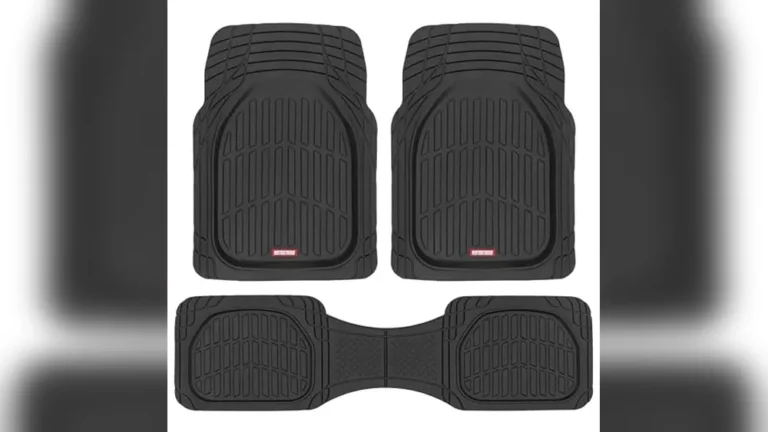 Best Car Mats for All-Weather Use 2026: Top Picks for Every Driver
Keeping your car clean is tough, especially when rain, mud, and snow are involved. That’s where the best car mats for all-weather use make a difference.…
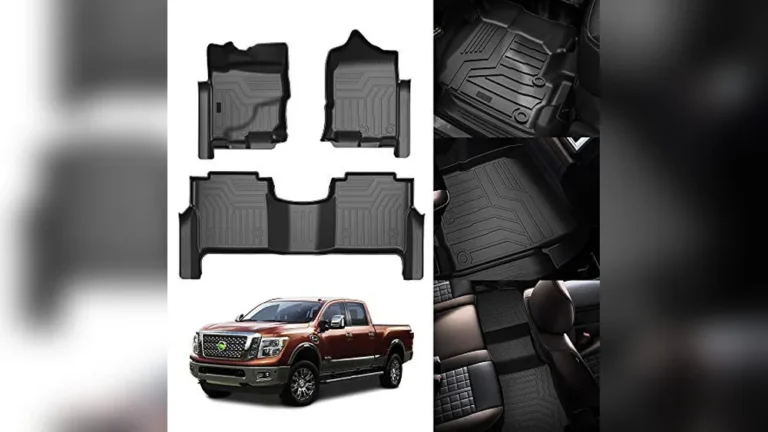 Best Custom-Fit Floor Mats for Nissan Titan: Top Picks 2026
These custom-fit mats provide reliable coverage and help protect your Nissan Titan’s interior from dirt and spills. It’s Monday morning, you’re rushing out the door with…
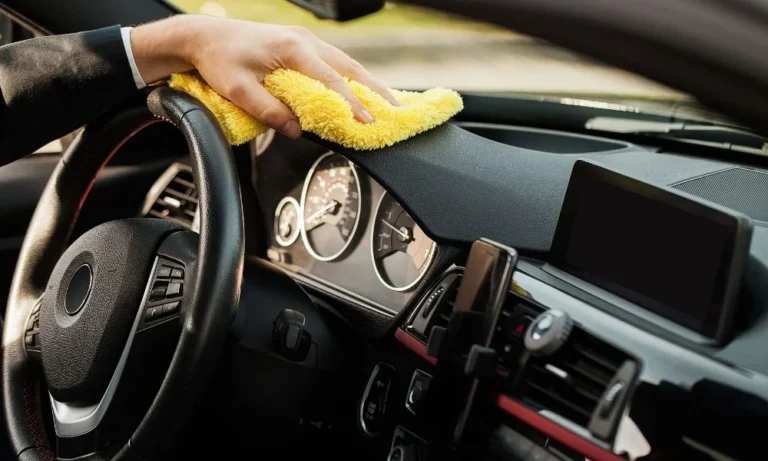 Best Car Cleaning Wipes for Interior: A Buyer’s Guide
Discover the best car cleaning wipes for your interior. Compare options for dashboards, leather, and tough stains to keep your car spotless and well-maintained. Keeping your…