How To Cross Water Safely In A Jeep
Learn the essential steps to cross water safely in a Jeep. We cover depth limits, proper technique, vehicle preparation, and what to do if water enters the cabin. Expert advice for Jeep owners.
Taking a Jeep through water is one of the most exciting things you can do. Whether you are heading to a camping spot or exploring a trail, you will likely face a water crossing at some point. Many drivers make mistakes here that cost them thousands of dollars in repairs. I have been driving Jeeps for over fifteen years, and I have learned the hard way what works and what does not. Let me share everything I know about how to cross water safely in a Jeep.
Water crossings can damage your engine in seconds if you do them wrong. But with the right knowledge, you can get through almost any creek or puddle without trouble. This guide covers every single thing you need to know before you even think about driving into water.
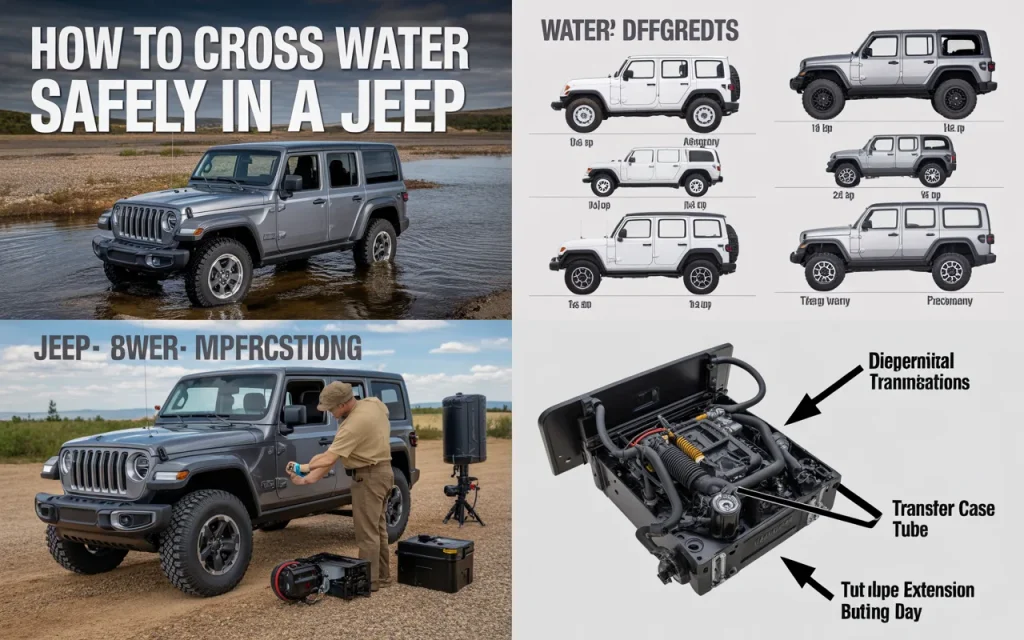
Know Your Jeep Water Fording Depth First
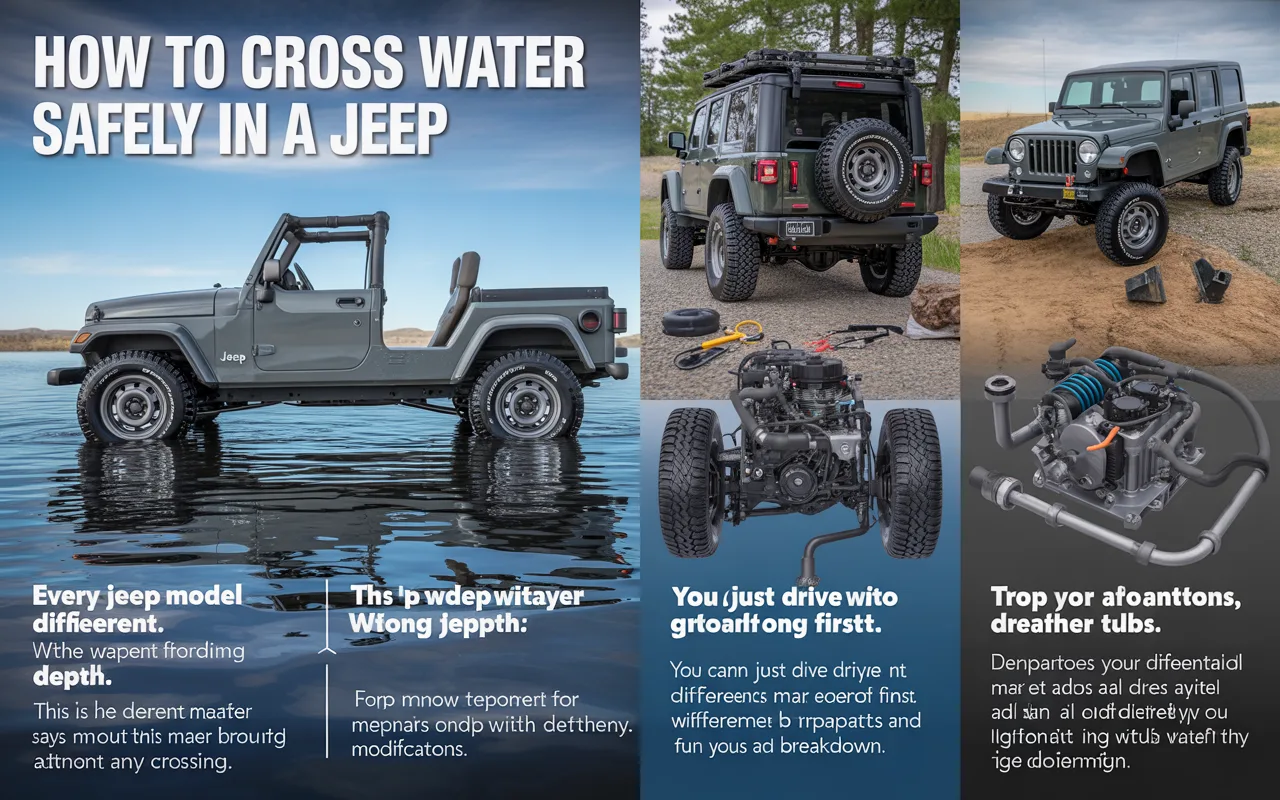
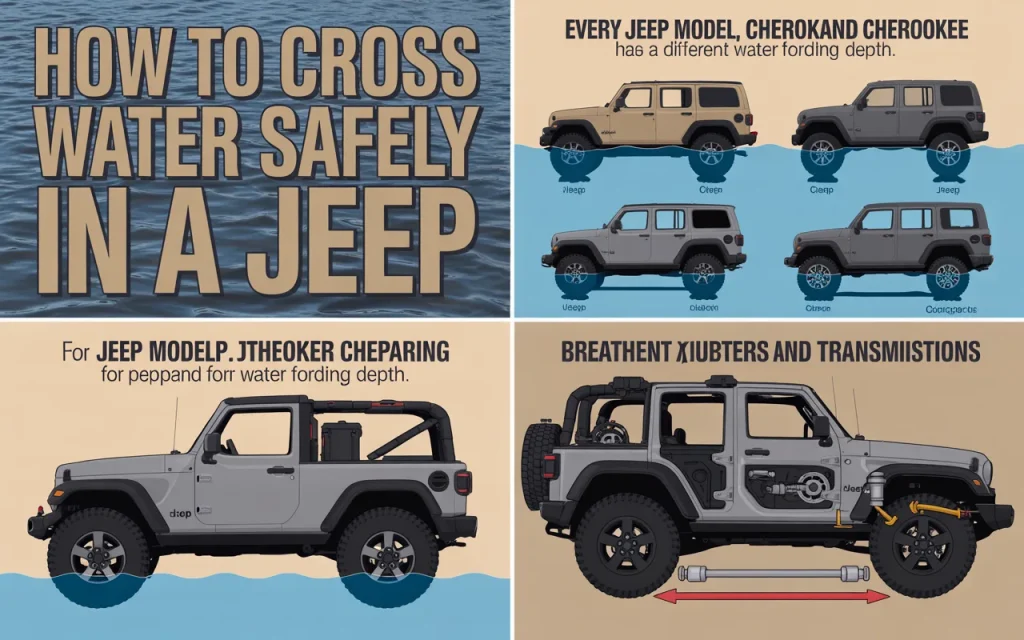
Every Jeep model has a different water fording depth. This is the deepest water the manufacturer says you can drive through without modifications. You must know this number before you attempt any crossing.
| Jeep Model | Stock Water Fording Depth |
|---|---|
| Wrangler JL/JK | 30 inches |
| Wrangler TJ | 20 inches |
| Grand Cherokee | 20 inches |
| Cherokee Trailhawk | 20 inches |
| Gladiator | 30 inches |
| Renegade Trailhawk | 19 inches |
These numbers come from the factory. But remember that depth changes based on your tires, lift kit, and driving speed. Do not just trust the number on paper. You need to check the actual water depth yourself before driving through.
I always get out and walk the crossing first. Yes, your feet might get wet. But that is much better than hydrolocking your engine. Use a stick or a branch to check how deep the water really is. Look for hidden rocks, holes, or logs that could damage your Jeep.
Essential Vehicle Preparation Before the Crossing
You cannot just drive into water without getting your Jeep ready first. Proper preparation makes the difference between a fun adventure and a breakdown.
Check Your Air Intake Location
The air intake is the most important thing to check. This is where your engine gets the air it needs to run. If water gets sucked into the intake, it goes straight into the engine cylinders. Water does not compress like air does. This bends connecting rods and destroys engines instantly.
On most Wranglers, the air intake sits behind the passenger side headlight, about halfway up the grille. This is actually pretty high. But if you have modified your Jeep, the intake might be in a different spot. Know exactly where yours is before crossing water.
“Most engine damage from water crossings happens because drivers forget that their air intake sits lower than they think. I have seen brand new Jeeps with destroyed engines because someone assumed the intake was higher than it actually was.” – Mark Thompson, Master Jeep Technician for 22 years
Check Fluids and Seals
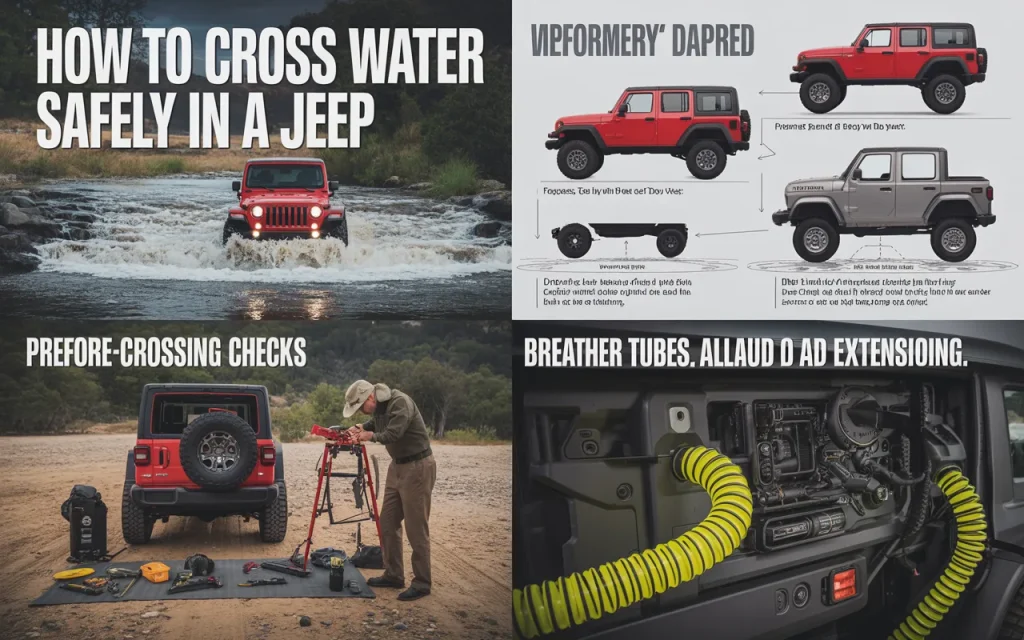
Your differentials, transmission, and transfer case all have breather tubes. These tubes let air escape when fluids get hot. But they can also suck water in if they get submerged. Make sure all your breather tubes are extended up high, usually into the engine bay or tail lights.
Check your door seals too. If water gets inside the cabin, it can damage electrical components under the seats. Many modern Jeeps have computers and wiring harnesses mounted low. Water inside the cabin means expensive repairs.
Remove Accessories That Catch Water
Take off any aftermarket lights or accessories that sit low. Water pressure can rip these right off. Also, remove your floor mats. They just trap water inside if it comes in. Put them in the back or leave them at home.
How to Approach the Water Correctly
How you drive up to the water matters just as much as how you drive through it. Many people speed up right before the crossing. This is a mistake. You want a slow, controlled approach.
Stop and Study the Water
Pull over well before the water. Get out and look at the whole crossing. Watch how fast the water is moving. Fast water can push your Jeep sideways. Look at where the water enters and exits the crossing. The entry and exit points are often the trickiest parts.
Check the bottom if you can see it. Is it mud, gravel, or rocks? Mud means you might get stuck. Loose rocks mean you could slip. Hard bottom is best. Walk the entire path your tires will take.
Pick Your Line Carefully
Choose where you will drive before you get back in the Jeep. Look for the shallowest path. Sometimes the water looks deep in the middle but is actually shallower near the edges. Look for tire tracks from other vehicles that made it through. But be careful, those tracks might be from lifted trucks with bigger tires.
Try to drive where the water flows smoothly. Avoid areas where water bubbles or swirls. These usually mean big rocks or deep holes underneath.
The Correct Technique to Cross Water Safely in a Jeep
Now comes the actual crossing. You have prepared your Jeep, checked the depth, and picked your line. Here is how to actually drive through.
Use Low Range and First Gear
Put your Jeep in four-wheel drive low range. Use first gear or a low gear if you have an automatic. This keeps your speed down and your engine RPMs up. The exhaust system pushes air out, which helps keep water from backing up into the engine.
Keep your speed steady and slow. You want to create a small bow wave in front of the Jeep. This wave actually pushes water away from the engine and keeps the intake dry. If you go too fast, water splashes up and can get into the intake. If you go too slow, water comes in through the doors and soaks everything.
“The single biggest mistake I see people make when they cross water safely in a Jeep is going too fast. They think speed keeps them dry. In reality, speed forces water into places it should never go. Slow and steady wins this race every time.” – Sarah Chen, Off-Road Recovery Specialist
Keep Steering Wheel Straight
Turn your steering wheel as little as possible. When you turn the wheels in water, they act like buckets and scoop water toward the undercarriage. This can force water into seals and breathers. Go straight through unless you absolutely have to turn.
If you must turn, do it very slowly. Make small steering adjustments. Let the water flow past the tires rather than scooping it.
Watch Your Wake
Look in your side mirrors as you drive. You should see a nice V-shaped wake behind you. If you see water splashing high, you are going too fast. Slow down. The goal is to push water aside, not throw it up in the air.
Keep your foot steady on the gas. Do not lift off suddenly. If you lift off, water can rush back into your exhaust pipe. The exhaust is hot and creates pressure that keeps water out. Lifting off loses that pressure.
What Happens If Water Gets Inside
Even with perfect technique, water sometimes finds its way inside. Do not panic. Here is what you need to do.
Keep Driving Until You Are Out
If water comes in the doors, keep going. Stopping in the middle makes everything worse. Drive slowly and steadily until you are completely on dry ground. Then stop and assess the situation.
Once you are out, open all the doors. Let the water drain out. If your carpets are soaked, you will need to pull them out later. For now, just let everything air out as much as possible.
Check for Water in Fluids
After you are out, check your oil dipstick. If the oil looks milky or foamy, water got into the engine. Do not restart the engine. You need to have it towed to a mechanic immediately. Milky oil means internal engine damage has already started.
Check your differentials and transmission fluid too if you know how. Water in these fluids means you need to change them soon. Water causes bearings to fail and gears to wear out fast.
After the Crossing: Immediate Recovery Steps
You made it through. Good job. But your work is not done yet. What you do in the next few hours matters a lot.
Dry Your Brakes
Your brakes got wet during the crossing. They will not work as well until they dry out. Once you are on a safe, straight road, test your brakes gently. Pump them a few times to build pressure. Then drive slowly while lightly applying the brakes. The friction creates heat that dries them out.
Do not slam on the brakes right after a water crossing. You might not stop in time. Give them a chance to dry first.
Clean Electrical Connections
Water and electricity do not mix well. If you have exposed electrical connectors under the hood or under the seats, spray them with a water-displacing spray. This pushes water out and prevents corrosion. Pay special attention to sensors and computer modules.
“Water crossings are hard on every part of your Jeep. But the electrical system suffers the most over time. I recommend spraying all connectors with dielectric grease or a protective spray after every water crossing. It takes ten minutes and saves weeks of headaches later.” – James Rodriguez, Off-Road Electrical Engineer
Lubricate Moving Parts
Water washes grease away. Your driveshafts, U-joints, and suspension joints all lost lubrication during the crossing. Get out the grease gun and give everything a few pumps. This pushes fresh grease in and forces any water out.
Check your wheel bearings too if you have been through deep water. Some bearings have grease fittings. Others are sealed. If they are sealed and you went through deep water, consider having them repacked soon.
Common Myths About Crossing Water in a Jeep
There is a lot of bad information out there about water crossings. Let me clear up some common myths.
Myth: Snorkels Make Your Jeep Waterproof
Snorkels raise your air intake, which helps. But they do not make your Jeep waterproof. Water can still get into differentials, transmissions, and electrical systems. A snorkel helps with deep crossings but does not protect everything else.
Myth: Faster Is Safer
We already covered this one. Speed is your enemy in water crossings. It forces water into places it should not go and makes control harder. Slow is smooth, and smooth is safe.
Myth: Diesels Handle Water Better
Some people think diesel engines handle water better because they have no spark plugs. This is not really true. Diesel engines still need air, and they still compress it. Water in a diesel engine causes just as much damage as in a gas engine. The injection systems are actually more sensitive to water contamination.
Myth: If Others Made It, You Will Too
Every Jeep is different. That lifted Wrangler on 35-inch tires that just went through might have a different air intake location than your stock Jeep. Do not assume you can follow someone else. Always check the depth yourself.
When to Turn Around and Not Cross
Sometimes the smartest move is to not cross at all. Here is when you should turn around.
Water Is Moving Fast
If the water is moving fast enough to make you feel unsteady on your feet, do not drive through. Fast water can pick up a Jeep and sweep it downstream. Even heavy vehicles can float in as little as two feet of fast-moving water.
Water Is Above Your Tires
Once water reaches above your tires, you are in dangerous territory. Most stock Jeeps can handle water at tire height, but not much more. If the water is halfway up your doors, you are probably too deep unless you have major modifications.
You Cannot See the Bottom
If the water is so muddy or dark that you cannot see the bottom, do not cross. Hidden obstacles can destroy tires, bend axles, or flip your Jeep. Only cross if you can clearly see the bottom or have walked the entire path.
You Are Alone
Crossing water alone is risky. If something goes wrong, you have no one to help. Try to cross with at least one other vehicle. That way someone can pull you out if you get stuck or take you for help if something breaks.
Essential Gear for Water Crossings
Before you attempt any water crossing, make sure you have this gear with you.
- Long stick or pole for checking depth
- Waterproof phone case or dry bag
- Tow strap with rated shackles
- Spare set of dry clothes and shoes
- Basic tool kit
- Flashlight and headlamp
- First aid kit
- Extra drinking water
Having this gear does not guarantee a safe crossing. But it gives you options if things go wrong. The dry clothes seem silly until you are soaked and miles from camp. Trust me on this one.
Vehicle Modifications That Help With Water Crossings
If you plan to cross water regularly, some modifications make it safer and easier.
Snorkel or Raised Air Intake
A snorkel moves your air intake up to roof level. This lets you cross deeper water without sucking water into the engine. Just remember that the rest of your Jeep is still at factory height.
Extended Breather Lines
Extending your differential and transmission breather lines up high keeps water from being sucked into these components. This is a cheap mod that protects expensive parts.
Waterproof Seat Covers
Good seat covers keep water from soaking into your seats. Wet seats take forever to dry and can start smelling bad. Neoprene covers work great for this.
Lifted Suspension
Lifting your Jeep raises everything higher. This includes your air intake, breather lines, and electrical components. More ground clearance means deeper water crossings.
Frequently Asked Questions
Q: Can I cross water in my Jeep if it has an automatic transmission?
Yes. Automatic transmissions handle water crossings just fine. Keep the transmission in a low gear and maintain steady speed. Do not shift while in the water.
Q: What happens if water gets in my gas tank?
Water in the gas tank is bad news. It can cause your engine to run poorly or not at all. If you think water got in, do not run the engine. Have the tank drained and cleaned by a mechanic.
Q: How do I know if water damaged my engine after a crossing?
Watch for rough running, misfires, or strange noises. Check your oil for a milky appearance. If your engine seems fine right after, but starts acting up later, water damage could be the cause.
Q: Should I cross water with the windows up or down?
Keep windows up. This keeps most water out of the cabin. If water starts coming in the doors, having windows up at least keeps it from splashing inside.
Q: Can I cross salt water in my Jeep?
Avoid salt water if possible. Salt causes rapid corrosion on everything it touches. If you must cross salt water, wash your entire Jeep thoroughly immediately afterward. Every inch of the undercarriage needs rinsing.
Conclusion
Learning how to cross water safely in a Jeep takes practice and patience. The key points are simple: check depth first, go slow, keep steady speed, and know your vehicle limits. Water crossings do not have to be scary or damaging. With the right preparation and technique, you can enjoy this part of off-roading without breaking things.
Remember that every crossing is different. What worked in one creek might not work in another. Always get out and look first. Trust your instincts. If something feels wrong, turn around. There will always be another trail on another day.
Keep your Jeep maintained, carry the right gear, and never cross alone if you can help it. Follow these rules and you will have many years of safe, fun water crossings ahead of you. The mud will wash off, but the memories of a good adventure last forever. Get out there and enjoy your Jeep the way it was meant to be enjoyed, just do it smart and do it safe.
Related posts
 Best Car Mats for All-Weather Use 2026: Top Picks for Every Driver
Keeping your car clean is tough, especially when rain, mud, and snow are involved. That’s where the best car mats for all-weather use make a difference.…
 Best Custom-Fit Floor Mats for Nissan Titan: Top Picks 2026
These custom-fit mats provide reliable coverage and help protect your Nissan Titan’s interior from dirt and spills. It’s Monday morning, you’re rushing out the door with…
 Best Car Cleaning Wipes for Interior: A Buyer’s Guide
Discover the best car cleaning wipes for your interior. Compare options for dashboards, leather, and tough stains to keep your car spotless and well-maintained. Keeping your…