
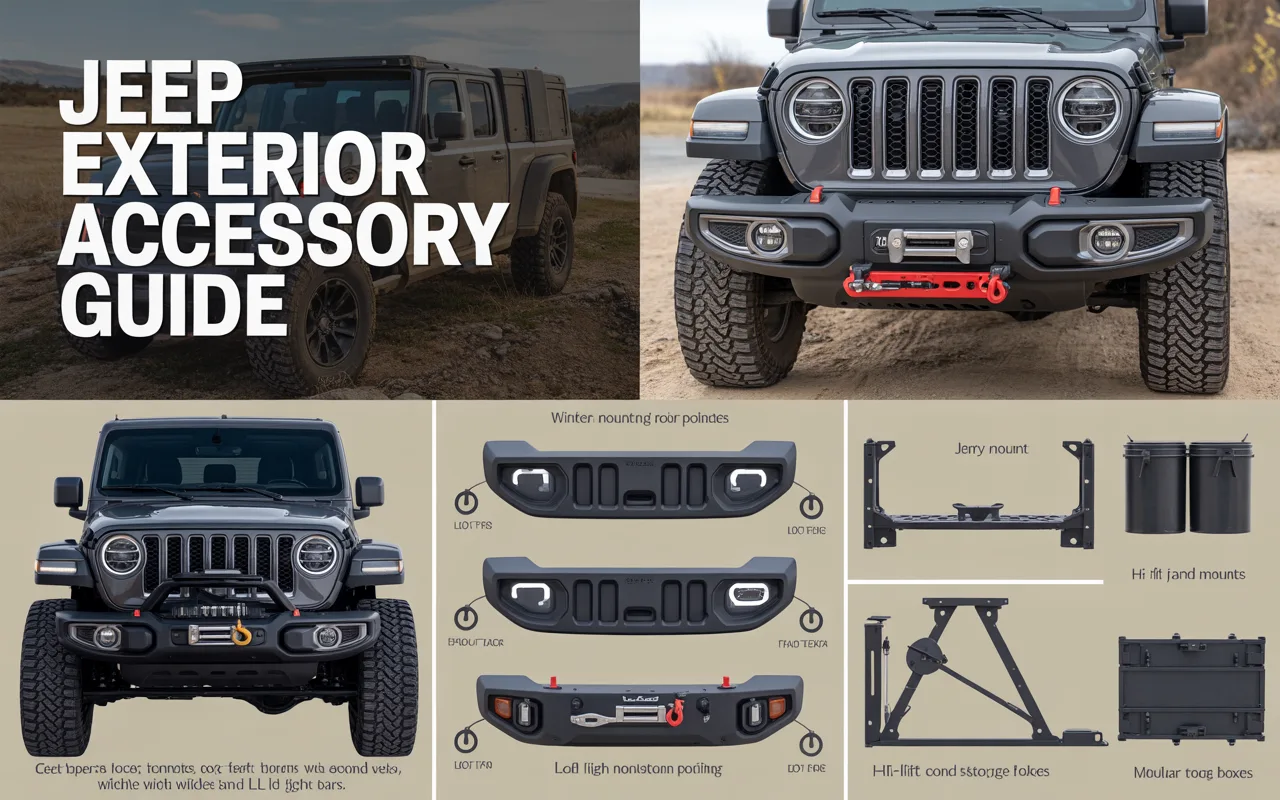
This complete jeep exterior accessory guide helps you pick the right parts for your vehicle. We cover bumpers, lights, roof racks, and armor so you know what fits your driving style and budget. Whether you own a Wrangler, Gladiator, or Cherokee, this jeep exterior accessory guide gives clear answers without the confusion.
Jeep owners are a special group. We do not just drive cars. We drive machines built for dirt, mud, sand, and rock. But here is the thing. Not every Jeep leaves the factory ready for serious trails. Some parts look cool but fail when you need them most. Other parts seem plain but save your vehicle from damage.
I learned this the hard way. Five years ago, I bought a used Wrangler and immediately added cheap tube steps. They looked fine in the parking lot. Then I went to Moab. One wrong placement on a rock and the step bent into my door. That repair cost more than the steps themselves.
This is why I wrote this jeep exterior accessory guide. I want you to avoid my mistakes. I want you to spend money on things that work, look good, and last. You do not need to be a mechanic or have a huge budget. You just need the right information.
We will walk through each exterior category together. I will tell you what matters and what does not. I will share quotes from people who build Jeeps for a living. And I will keep everything simple. No confusing terms. No fluff.
Front Bumpers: Your First Line of Defense
Your front bumper is not just for looks. It protects the front end from trees, rocks, and animals. It also holds your winch and lights. A stock bumper is fine for pavement. But if you go off pavement even once a month, you want something stronger.
Steel bumpers are the most popular choice. They handle impacts and do not crack. Aluminum is lighter and resists rust but costs more. Plastic bumpers belong on minivans, not Jeeps.
Mark Torres, off-road shop owner from Arizona, told me this: “I have seen stock bumpers fold like paper on mild trails. A proper steel bumper is the best insurance policy you can buy. It does not have to be expensive. It just has to be strong.”
When you shop, look for winch mounting plates built into the bumper. Some bumpers come with a winch tray. Others need a separate plate. Also check if the bumper has holes for factory fog lights. Many aftermarket bumpers keep your stock lights or offer better LED replacements.
Steel vs. Aluminum Front Bumpers
| Material | Weight | Strength | Cost | Rust Resistance |
|---|---|---|---|---|
| Steel | Heavy | Very High | Low to Medium | Low (needs coating) |
| Aluminum | Light | High | Medium to High | Very High |
Rear Bumpers and Tire Carriers
Your rear bumper takes abuse too. Backing into a rock or tree happens to everyone. A good rear bumper absorbs that hit and keeps going. Many rear bumpers also include a tire carrier. This is important if you run larger tires.
Stock tire carriers are made for stock tires. When you go up to 35 inches or more, the weight stresses the tailgate. Over time, this causes sagging and cracks. A rear bumper with an integrated tire carrier takes that weight off your tailgate. It swings open with the tire attached.
Some rear bumpers also hold jerry cans, Hi-Lift jacks, or storage boxes. Think about what gear you carry regularly. Do you go on long trips? Extra fuel storage helps. Do you wheel alone? A jack mount gives peace of mind.
Rock Sliders and Side Armor
Rock sliders are the most underrated Jeep accessory. People buy big tires and lifts first. Then they go on a trail and hear a loud crunch. That crunch is their rocker panel getting crushed. Rock sliders bolt to the frame and create a barrier between rocks and your body.
I run simple frame-mounted sliders with no steps. They stick out just enough to protect the body but not so far that they catch on everything. Some sliders include a step pad. These are great for daily drivers and shorter passengers. Just make sure the step part is removable or recessed so it does not hang up on obstacles.
Lisa Chen, who has driven her Jeep across the Trans-America Trail, shared this: “I tell new Jeep owners to buy sliders before bumpers. You can dent a bumper and still drive home. You crush your rocker panel and you are stuck. Sliders are cheap insurance against a very bad day.”
Roof Racks and Cargo Solutions
Jeeps are not known for cargo space. The Wrangler two-door has almost no room behind the seats. The four-door is better but still tight when you have passengers. Roof racks solve this problem.
A roof rack lets you carry tents, kayaks, cargo boxes, and recovery boards. It frees up interior space for people and dogs. But not every roof rack fits every Jeep. Soft tops cannot support heavy loads. Hardtops can, but you need the right mounting system.
Some racks mount to the freedom panel area. Others mount to the body and avoid the top entirely. If you plan to remove your hardtop seasonally, get a rack that comes off easily. If you never remove your top, a permanent rack works fine.
Rooftop tents are popular now. They are comfortable and keep you off the ground. But they add significant weight up high. This changes how your Jeep handles corners. Drive carefully until you adjust to the higher center of gravity.
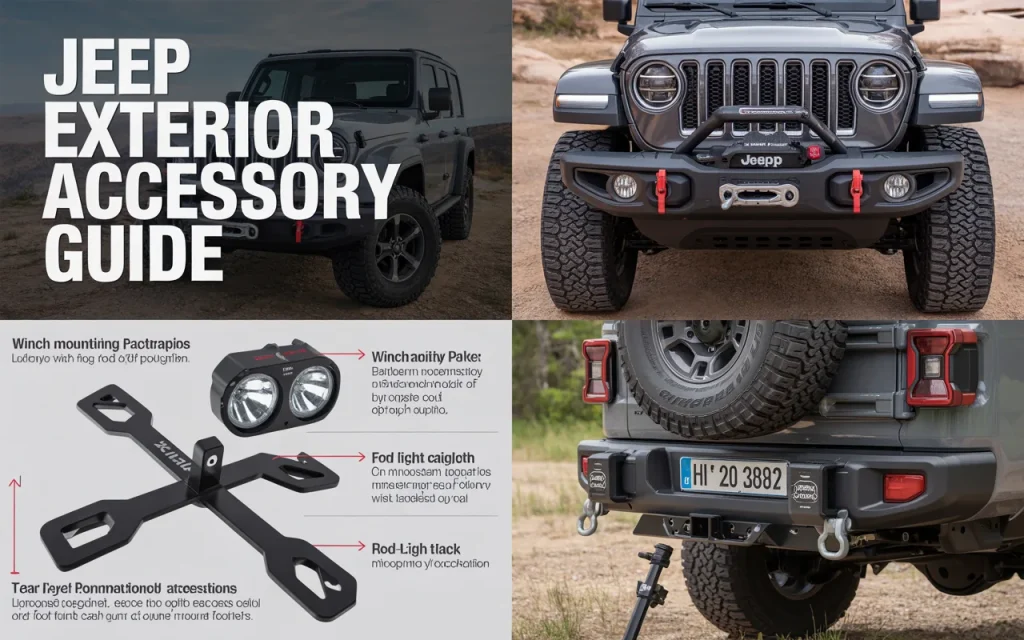
Common Roof Rack Types and Uses
| Rack Type | Best For | Weight Capacity | Top Removal |
|---|---|---|---|
| Freedom Panel Mount | Light gear, recovery boards | Low to Medium | Difficult |
| Body Mount | Rooftop tents, heavy loads | High | Easy |
| Factory Rail Add-on | Kayaks, cargo boxes | Low | Easy |
Lighting Upgrades: See and Be Seen
Jeep headlights from the factory are acceptable. But acceptable is not good enough on dark trails or foggy highways. LED headlights are the standard upgrade now. They are much brighter than halogens and last longer. They also draw less power.
You can replace just the bulbs or the whole housing. Full housings usually give better beam patterns. Cheap bulb swaps often scatter light and blind oncoming drivers. Spend a little more on quality housings with proper cutoffs.
Auxiliary lights are next. Light bars are affordable and flood large areas. Pod lights are smaller and focus the beam further. I run a 20-inch light bar on my bumper for wide coverage and two round pods on the A-pillars for distance.
Do not forget rear lights. Reverse lights are weak from the factory. Adding LED pods aimed backward helps tremendously when backing up at night. Some people also add chase lights or rock lights. Rock lights mount under the chassis and illuminate the ground directly around your Jeep. This helps you see obstacles at night without blinding yourself with high beams.
David Park, an electrical engineer and Jeep forum moderator, explained: “Lighting is not about how many lumens you have. It is about beam control and color temperature. A well aimed 2,000 lumen light outperforms a scattered 10,000 lumen bar every time. Focus on quality optics, not just peak numbers.”
Winches and Recovery Gear
A winch is a recovery tool, not a fashion accessory. If you go off road alone or in remote areas, a winch can save you hours of waiting or walking. Winches pull your Jeep out of mud, sand, and steep inclines.
Winch size matters. You want a winch rated for at least one and a half times your vehicle weight. A heavy Wrangler Unlimited with bumpers and gear weighs around 5,000 pounds. You want a winch with at least 7,500 pounds of pull. Many people go with 9,000 or 10,000 pounds for extra safety.
Synthetic rope is better than steel cable for most people. It is lighter, safer if it snaps, and easier to handle. Steel cable lasts longer against abrasion but requires gloves and careful spooling.
You also need recovery gear beyond the winch. Tree saver straps protect trees and give you anchor points. Shackles connect straps to your bumpers. Gloves keep your hands clean and protected. A snatch block doubles your pulling power or changes direction.
Never use tow straps for recovery. Tow straps are for pulling on pavement, not yanking vehicles out of holes. Use proper kinetic recovery ropes or winch extensions.
Hood Accessories and Windshields
Hood latches are a common upgrade. Stock latches work fine but can loosen over time. On rough trails, hood flutter happens. The hood moves up and down at speed. This stresses the hinges and latches. Aftermarket hood latches lock the hood down tight. Many are adjustable so you can keep tension correct.
Hood vents help with engine cooling. Jeeps run hot in slow traffic and on trails. Vents let hot air escape from the engine bay. Some vents are functional. Others are decorative. If you have a manual transmission, vents also help keep the cabin cooler because less heat soaks through the firewall.
Windshield considerations are important too. Jeep windshields are large and vertical. They catch rocks easily. Cracks happen. Some people add windshield protection films. These are clear films that absorb impact and prevent chips. They do not stop big rocks, but they help with gravel and debris.
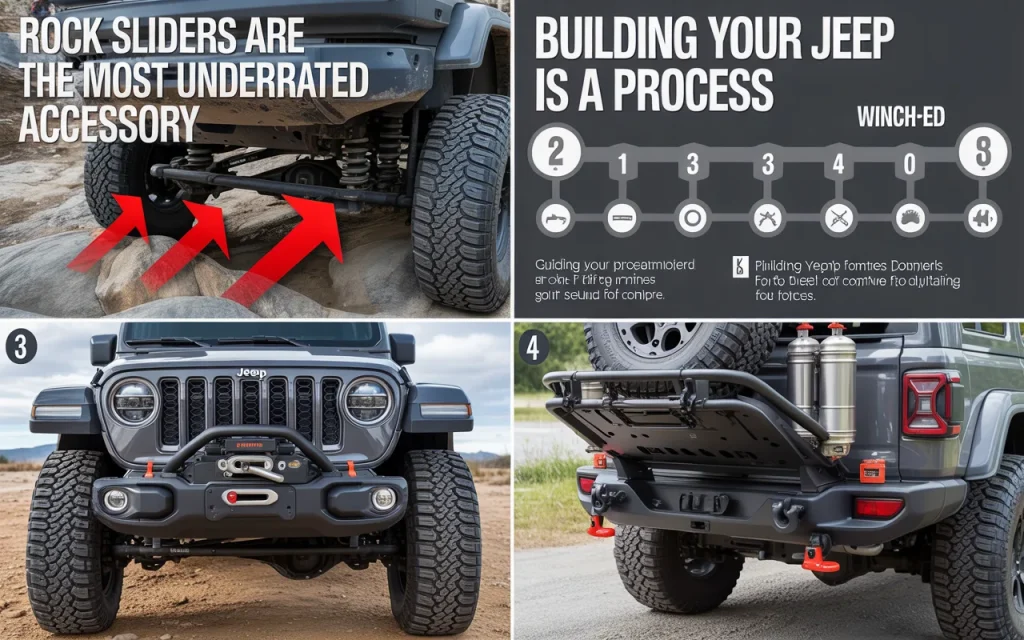
Fender Flares and Tire Coverage
When you lift your Jeep and add wider tires, your stock fender flares may not cover the tread. This is illegal in many places and rude to other drivers. Mud and rocks fly off exposed tires and hit cars behind you.
Wider fender flares solve this. Pocket style flares have visible bolts and a utilitarian look. Flat flares sit closer to the body and have a cleaner appearance. Tube flares are narrow and offer less protection but weigh almost nothing.
Some flares are made of flexible plastic that bends on rocks. Others are rigid and crack under pressure. If you wheel in tight trees or rocky canyons, flexible flares survive better.
Soft Tops and Sunshades
Soft tops are not just for summer. Modern soft tops insulate well and operate quietly on the highway. They also fold back easily for open air driving. If you remove your hardtop frequently, a premium soft top saves you from storing heavy roof panels.
Sunshades are mesh covers that replace your freedom panels or soft top. They block UV rays and keep the cabin cooler while still giving an open feeling. Bugs and small debris stay out. Air flows through freely. Sunshades install in minutes and roll up for storage.
Some people run sunshades year round in warm climates. They reduce air conditioning use and protect interior plastics from sun damage.
Grille Guards and Brush Guards
Grille guards are metal frames that wrap around your front grille and headlights. They protect against brush and small impacts. Some people like the look. Others prefer the clean face of an open grille.
Brush guards do not replace bumpers. They mount to the bumper or frame and extend upward. They are good for driving through tall grass or branches. They are not strong enough for vehicle to vehicle impacts or heavy rock contact.
If you want maximum front end protection, choose a full bumper with a built in grille hoop. If you want light mounting points and minor brush protection, a separate brush guard works.
Maintenance and Care for Exterior Parts
Jeep parts take abuse. They need maintenance. Steel bumpers rust if the paint chips. Touch up paint prevents rust spread. Aluminum does not rust but can corrode in salt environments. Wash your Jeep regularly, especially after beach trips or winter salted roads.
Plastic flares and trim fade over time. Heat guns restore some color temporarily. Dedicated trim restorer products last longer. Avoid silicone sprays that wash off in the first rain.
Lights fog up if seals fail. Check your light housings after car washes. If moisture gets inside, remove the light and dry it thoroughly. Reapply sealant if needed.
Recovery gear also needs care. Synthetic winch rope degrades in direct sunlight. Use a winch cover. Inspect your rope for fraying or abrasion. Replace it if you see damaged sections.
Frequently Asked Questions
Do I need a lift kit before adding larger tires?
Yes, for tires over 33 inches on most Jeeps. Smaller tires sometimes fit stock suspension but may rub at full turn or flex. Check your specific model year for exact fitment.
What is the first exterior accessory I should buy?
Rock sliders. They protect your vehicle from expensive body damage. You can wheel safely while you save money for bumpers and lifts.
Can I install these parts myself?
Many bolt on accessories require basic hand tools and a friend for heavy parts. Bumpers and winches are heavy. Use a floor jack or get help. Wiring lights requires basic electrical knowledge.
How do I choose between steel and aluminum?
Steel is stronger and cheaper. Aluminum is lighter and rust proof. Daily drivers benefit from aluminum. Hard core crawlers benefit from steel.
Will aftermarket parts void my warranty?
Generally, no. Dealers cannot void your warranty just for adding parts. They can deny claims if the part caused the failure. Keep your stock parts and install carefully.
Conclusion
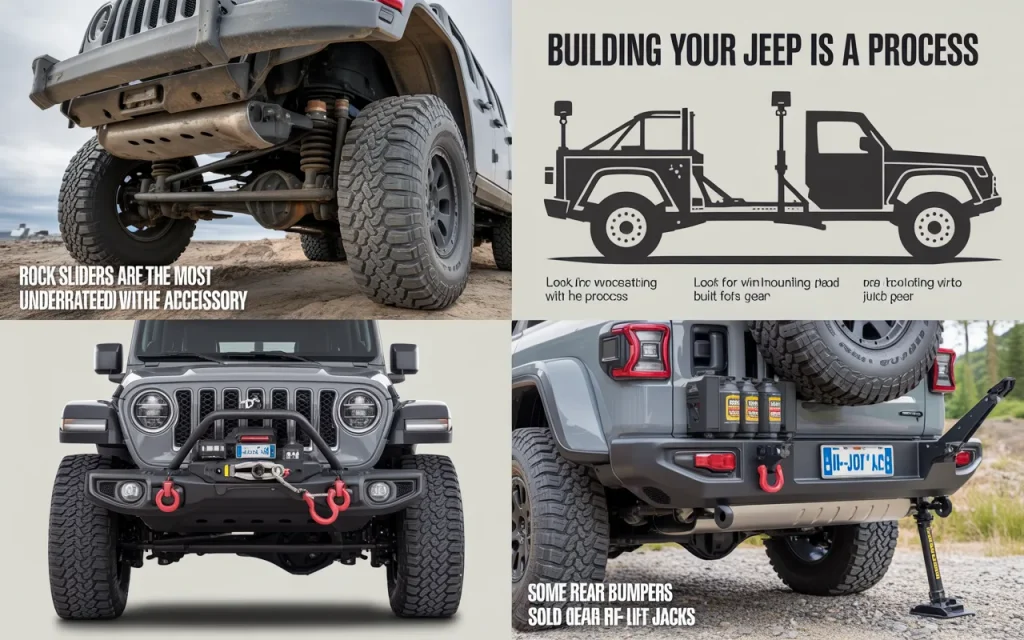
Building your Jeep is a process. You do not need everything at once. Start with protection. Add sliders and a rear bumper. Then add recovery gear and lights. Then focus on cargo solutions and comfort.
This jeep exterior accessory guide exists because I wish someone had given me this information years ago. I wasted money on bad parts. I learned expensive lessons. You do not have to repeat my mistakes.
Every Jeep is different. Your driving style, budget, and local trails determine what you need. Take your time. Read reviews. Ask other Jeep owners what works for them. The Jeep community is generous with knowledge.
Now go enjoy your Jeep. Take it somewhere dusty. Get it dirty. Fix the scratches and add better parts later. That is what these vehicles are made for. And when someone asks you about your setup, share what you learned. Pass it forward.
Remember what Lisa Chen said: “Sliders are cheap insurance against a very bad day.”
Remember what Mark Torres said: “A proper steel bumper is the best insurance policy you can buy.”
Remember what David Park said: “Focus on quality optics, not just peak numbers.”
Those three sentences will save you money, time, and frustration. Keep them in mind. Buy smart. Drive far. See you on the trail.
1 thought on “Jeep Exterior Accessory Guide”