
Learn practical ways to reduce jeep wind noise with simple fixes, smart upgrades, and real driving tips that improve comfort, save money, and make every ride calmer.
Driving a Jeep is about freedom, open roads, and adventure. But wind noise can take away from that joy. Many Jeep owners hear loud whistling, humming, or rushing sounds, especially at highway speed. This guide explains how to reduce jeep wind noise using easy steps, clear checks, and proven upgrades. Everything here is written from real owner experience and basic vehicle knowledge, so you can apply it at home without stress.
This article focuses on comfort, safety, and long term value. You will learn where the noise comes from, what you can fix right away, and which upgrades actually help. The goal is a calmer cabin without losing the Jeep spirit.
“A quieter Jeep does not change its character. It lets you enjoy it more.”
Author: Mark Reynolds
How to Reduce Jeep Wind Noise for a Quieter Ride
Wind noise is common in Jeeps due to their shape, removable parts, and upright design. Hard tops, soft tops, door seals, and mirrors all play a role. The good news is that most noise issues have clear solutions.
Why Jeeps Have More Wind Noise
Jeeps are built for trails, not silence. Their boxy shape, flat windshield, and removable roof create more air resistance. Wind hits hard edges and gaps, creating sound.
Design Features That Increase Noise
- Flat windshield catches air directly
- Removable doors and roofs create small gaps
- External hinges and mirrors disturb airflow
- Large tires increase road and air sound
None of these are flaws. They are part of what makes a Jeep a Jeep. The key is reducing extra noise without losing function.
Common Sources of Jeep Wind Noise
Before fixing anything, you need to know where the noise starts. Wind noise usually enters through gaps or loose parts.
Door and Roof Seals
Worn or misaligned seals are the top cause. Over time, rubber dries, cracks, or flattens. Air slips through and creates whistling.
Freedom Panels and Hard Top Joints
On hard top models, the joints between panels can shift. Even a small gap can create loud noise at speed.
Soft Top Fabric and Windows
Soft tops stretch with age. Loose fabric flaps in the wind. Zippers and seams also let air pass.
Mirrors, Hinges, and Accessories
Aftermarket mirrors, light bars, roof racks, and door hinges often disturb airflow. Poor installation makes it worse.
Quick Checks You Can Do at Home
Before buying parts, do simple checks. Many noise issues come from loose or dirty areas.
Visual Inspection
- Look for cracked or flat rubber seals
- Check if doors sit evenly
- Inspect roof panel alignment
- Look for missing bolts or clips
Dollar Bill Test
Close a dollar bill in the door. Pull it out. If it slides easily, the seal is weak. Test all doors.
Hose Test
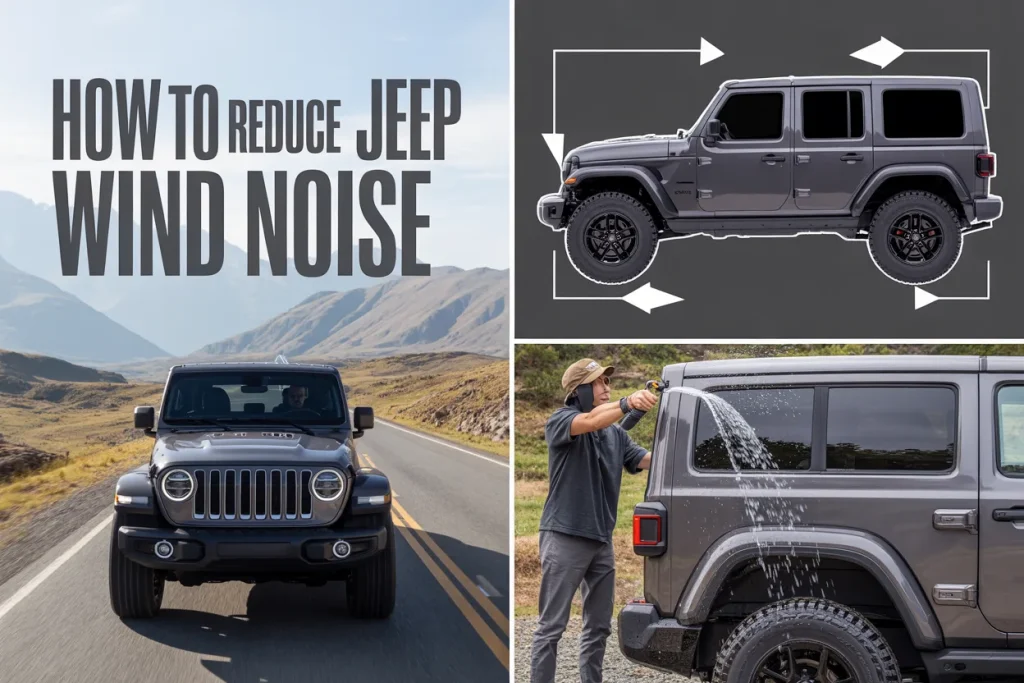
Spray water around doors and roof. If water gets in, air does too.
Simple Fixes That Reduce Jeep Wind Noise
These fixes are low cost and easy. Many owners notice improvement right away.
Clean and Condition Rubber Seals
Dirty seals do not seal well. Clean them with mild soap and water. After drying, apply silicone spray or rubber conditioner. This helps seals stay soft and flexible.
Tighten Roof and Door Bolts
Loose bolts cause movement and gaps. Use a torque wrench if possible. Follow factory specs.
Adjust Door Alignment
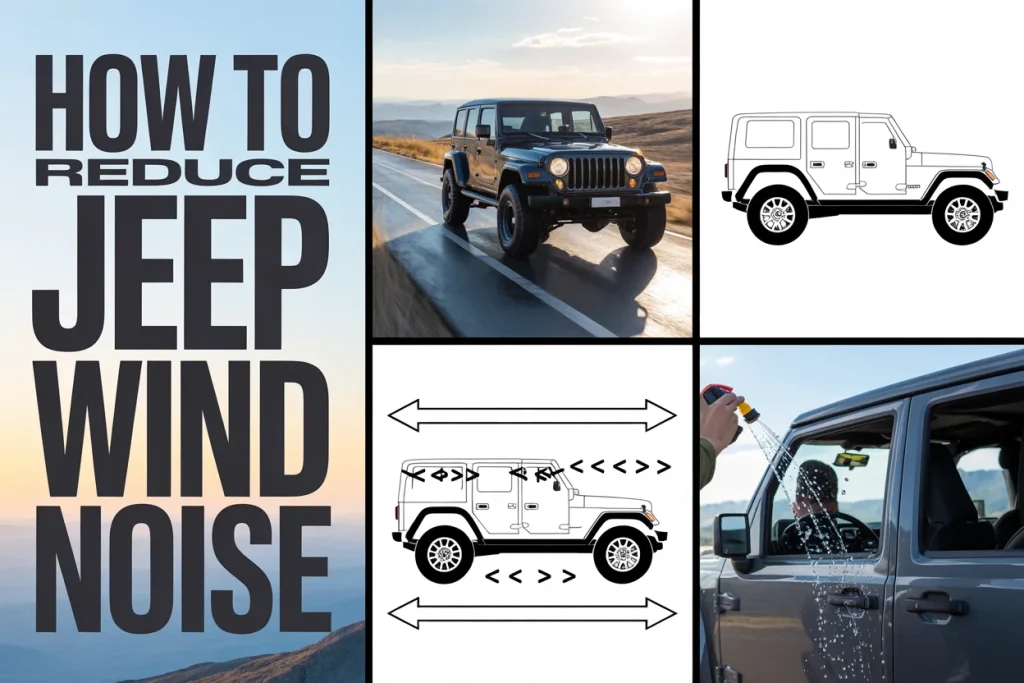
Doors can sag over time. Slight adjustment often improves sealing. This step alone can reduce jeep wind noise a lot.
“Most wind noise comes from small gaps, not big problems.”
Author: Daniel Cooper
Weatherstripping Upgrades That Work
Replacing or adding seals is one of the best ways to reduce jeep wind noise.
Factory Replacement Seals
OEM seals fit best. They cost more but last longer and seal properly.
Aftermarket Seal Kits
Many kits are made for Jeep models. Look for kits with good reviews and clear instructions.
Foam Tape for Extra Gaps
High density foam tape can fill small gaps. Use automotive grade tape only.
Table 1: Weatherstripping Options Comparison
| Option Type | Cost Range | Difficulty | Noise Reduction |
|---|---|---|---|
| OEM seals | High | Medium | Very good |
| Aftermarket kits | Medium | Medium | Good |
| Foam tape | Low | Easy | Moderate |
Hard Top Specific Solutions
Hard tops are quieter than soft tops, but they still leak noise.
Freedom Panel Seal Kits
Extra seals around freedom panels reduce whistling. These kits are popular for highway drivers.
Insulation Liners
Roof liners add a sound absorbing layer inside the hard top. They also help with heat.
Panel Alignment Tips
Always reinstall panels on level ground. Tighten bolts evenly to avoid gaps.
Soft Top Noise Reduction Tips
Soft tops are louder by nature, but you can still improve comfort.
Keep Fabric Tight
Cold weather shrinks fabric, heat loosens it. Adjust straps seasonally.
Replace Worn Soft Tops
Old soft tops lose shape. A new top often reduces noise more than any small fix.
Window Care
Clean windows properly and keep zippers lubricated. Smooth surfaces flap less.
Tire and Road Noise vs Wind Noise
Sometimes the sound you hear is not wind.
Tire Tread Pattern
Mud terrain tires are loud. All terrain tires are quieter on roads.
Tire Pressure
Overinflated tires increase noise. Follow factory pressure guidelines.
Table 2: Tire Impact on Cabin Noise
| Tire Type | Road Noise Level | Highway Comfort |
|---|---|---|
| Mud terrain | High | Low |
| All terrain | Medium | Medium |
| Highway terrain | Low | High |
Accessories That Increase Wind Noise
Many Jeep owners add gear. Some items add noise if not chosen carefully.
Light Bars
Light bars above the windshield create strong wind turbulence. A wind deflector can help.
Roof Racks
Empty racks whistle. Fairings reduce noise.
Mirrors
Aftermarket mirrors may vibrate or catch wind. Choose aerodynamic designs.
Sound Deadening Inside the Cabin
Stopping noise at the source is best, but absorbing sound also helps.
Floor and Door Insulation
Sound deadening mats under carpets reduce road and wind noise.
Headliner Kits
Headliners absorb sound from the roof area.
Rear Cargo Area Treatment
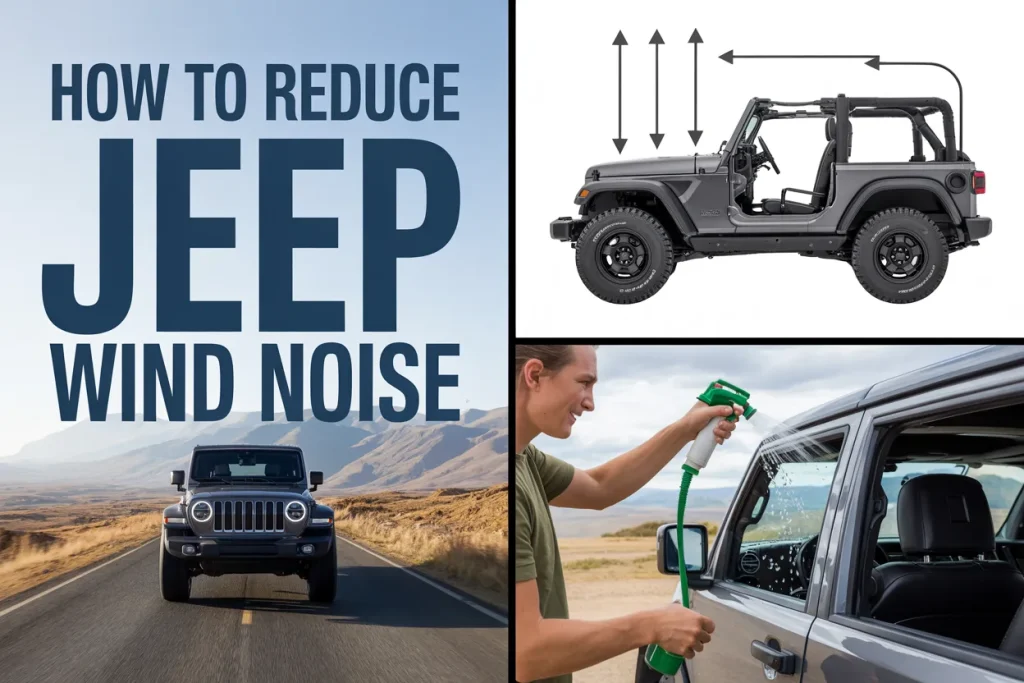
Noise enters from the rear. Insulating this area improves overall comfort.
“Silence is not the goal. Balance is.”
Author: Sarah Mitchell
Driving Habits That Reduce Noise
Your driving style matters more than you think.
Speed Awareness
Wind noise increases fast above 60 mph. Even a small speed drop makes a difference.
Window Position
Cracked windows create pressure imbalance. Fully closed or properly vented works best.
Load Placement
Roof loads change airflow. Place items securely and evenly.
Maintenance Schedule for a Quieter Jeep
Regular care keeps noise from coming back.
Monthly Checks
- Inspect seals
- Clean rubber parts
- Check bolt tightness
Seasonal Checks
- Adjust soft top tension
- Condition rubber seals
- Inspect accessories
Cost vs Benefit Breakdown
Not every fix is worth the money. Focus on high impact areas first.
- Seal maintenance offers best value
- Door alignment costs little and helps a lot
- Expensive mods should be last
The goal is to reduce jeep wind noise without wasting money.
Real Owner Expectations
No Jeep will be as quiet as a luxury SUV. Expect improvement, not silence. Many owners report a 30 to 50 percent noise reduction with basic fixes.
Frequently Asked Questions
Can you fully eliminate wind noise in a Jeep?
No. You can reduce jeep wind noise a lot, but the design always allows some sound.
Are soft tops always louder than hard tops?
Yes. Soft tops let more sound through, but good condition tops are manageable.
Do door seal kits really work?
Yes, if installed correctly and matched to your model.
Is wind noise a safety issue?
It can cause driver fatigue. Reducing noise improves focus and comfort.
How long do rubber seals last?
Usually five to seven years with proper care.
Conclusion
Learning how to reduce jeep wind noise is about small steps done right. Clean seals, proper alignment, smart upgrades, and realistic expectations make a big difference. You do not need to change what makes your Jeep special. You just need to care for the parts that face the wind every day.
With regular checks and simple improvements, your Jeep becomes a better place to talk, listen, and relax on the road. A quieter ride means more enjoyment and less stress, whether you are commuting or heading off trail.
Reducing noise is not about perfection. It is about comfort, balance, and keeping the Jeep experience enjoyable for years to come.
1 thought on “How to Reduce Jeep Wind Noise”