Guide to Vehicle Recovery Using Winch Snatch Blocks: Expert Tips
Vehicle recovery in off-road conditions can be challenging, especially when you’re stuck in mud, sand, or uneven terrain. One tool that makes a big difference is the winch snatch block. Many drivers have a winch, but few use snatch blocks correctly to double pulling power, change the pulling angle, or recover safely. This guide will show you how to use snatch blocks for vehicle recovery, explain why they’re essential, and help you avoid common mistakes.
What Is A Snatch Block And How Does It Work?
A snatch block is a heavy-duty pulley inside a metal case. You open the case, place the winch line around the wheel, and close it. This lets you redirect the winch line or double its power. The main reasons to use a snatch block are:
- Increase pulling force: A snatch block halves the load on your winch.
- Change pulling direction: You can pull from an angle, not just straight ahead.
- Reduce strain on equipment: Less risk of overheating or breaking your winch.
Many off-roaders forget that using a snatch block can mean the difference between a safe recovery and damaging your vehicle.
Choosing The Right Snatch Block
Picking the correct snatch block is important for safety and performance. Here are the main things to consider:
- Rated capacity: Always pick a snatch block rated for at least twice the weight of your vehicle.
- Winch line type: Make sure the block fits your winch cable—steel cable or synthetic rope.
- Sheave size: The diameter of the wheel (sheave) should match your winch line.
- Build quality: Look for hardened steel or aluminum body and smooth bearings.
Below is a quick comparison of snatch block ratings and typical uses.
| Snatch Block Rating | Vehicle Type | Winch Line Diameter |
|---|---|---|
| 8,000 lbs | Light SUVs, ATVs | 1/4″ |
| 16,000 lbs | Pickup Trucks, Jeeps | 5/16″ |
| 24,000+ lbs | Heavy Trucks, Vans | 3/8″ or more |
Pro tip: Check your winch manual for recommended snatch block sizes. Using the wrong size can damage the winch cable.

Credit: device.report
When To Use A Snatch Block
You do not need a snatch block for every recovery. Use it when:
- Your winch alone cannot pull the vehicle
- You need to pull from an angle (not straight)
- The winch motor is overheating or straining
- You want to reduce the load on your winch
A good rule: If the vehicle is buried deep, very heavy, or at an odd angle, always use a snatch block.
Step-by-step Guide: Using A Snatch Block For Recovery
Follow these steps to use a snatch block safely and effectively:
1. Assess The Situation
Check your vehicle’s position and the anchor point (tree, rock, or another vehicle).
2. Prepare Equipment
Get your winch, snatch block, gloves, tree saver strap, and shackles ready.
3. Attach The Snatch Block
Open the snatch block and place it around the winch line.
4. Secure To Anchor Point
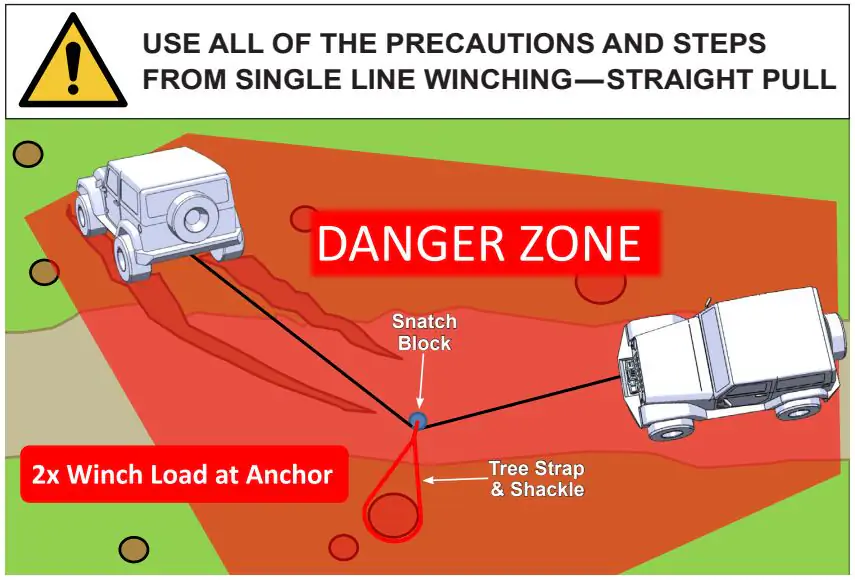
Use a tree saver strap around the anchor. Connect the snatch block to the strap with a shackle.
5. Run The Winch Line
Pull the winch line through the snatch block, then back to your vehicle or a different anchor.
6. Check Alignment
Make sure the snatch block is straight, not twisted, and the winch line is seated properly.
7. Tension The Line
Take up slack slowly to avoid sudden jerks.
8. Start Winching
Winch slowly, keeping an eye on all gear and bystanders at a safe distance.
9. Monitor Everything
Stop and check all connections if you hear strange sounds or see the snatch block move.
10. Complete The Recovery
Once free, unwind the winch line, disconnect all hardware, and store your gear.
Never stand near the winch line or snatch block while under load. If anything breaks, it can snap back with deadly force.

Credit: www.myteeproducts.com
Common Mistakes To Avoid
Even experienced off-roaders make mistakes with snatch blocks. Here are the most common:
- Using underrated gear: Always check the snatch block and shackle ratings.
- Wrong cable type: Some snatch blocks are only for steel or synthetic lines, not both.
- Improper alignment: The block should be in line with the winch pull, not at a sharp angle.
- Overloading: Doubling up with more snatch blocks can add risk; only do this if you understand the math.
- Ignoring safety gear: Always wear gloves and use a winch dampener.
A surprising tip: Many people forget to clean their snatch blocks after use. Dirt or sand can jam the pulley, making it dangerous next time.
Advanced Snatch Block Techniques
If you want more than just basic recovery, try these advanced uses:
- Double-line pull: Run the winch line from your vehicle through the snatch block and back to your own vehicle. This halves the load on the winch.
- Multiple anchor points: Use two or more snatch blocks to pull around obstacles or create complex angles.
- Redirect pull: If no anchor is directly in front, place a snatch block at a side anchor to change the pulling direction.
Here’s a simple example comparing single vs. double-line pulls:
| Setup | Winch Load | Pulling Force |
|---|---|---|
| Single-line | 100% | Equal to winch rating |
| Double-line (with snatch block) | 50% | Double winch rating |
Advanced tip: For very heavy recoveries, you can use two snatch blocks and split the load between two winches or anchor points. This keeps everything within safe limits.

Credit: www.amazon.com.be
Care And Maintenance Of Snatch Blocks
Well-maintained snatch blocks last for years. After every use:
- Clean off dirt, mud, and sand
- Check the sheave for wear or grooves
- Lubricate the bearing (if needed)
- Inspect for cracks or damage
A rusty or jammed snatch block can fail at the worst moment. Replace any gear that shows signs of weakness.
Real-world Example
Imagine you’re stuck in deep mud, and your winch alone can’t move the vehicle. You attach a snatch block to a tree 30 feet to the side. Now, you not only double your pulling power but also change the angle, making it easier to pull your vehicle onto solid ground.
Many rescue teams use snatch blocks this way for fast, safe recoveries.
For more details on vehicle recovery equipment and safety, the Four Wheel Drive Association of BC offers excellent resources.
Frequently Asked Questions
What Is The Main Benefit Of Using A Snatch Block?
A snatch block lets you increase winch pulling power or change the pulling direction. This makes recovery safer and more effective.
Can I Use A Snatch Block With Synthetic Winch Rope?
Yes, but you must make sure the snatch block is designed for synthetic rope. Some blocks can damage softer lines.
How Do I Know If My Snatch Block Is Strong Enough?
Check the working load limit (WLL) on the block. It should be at least twice your vehicle’s weight.
Is It Safe To Use More Than One Snatch Block?
Using more than one is possible for complex pulls or heavy loads, but you must know the math and keep all gear rated for the full load.
How Often Should I Inspect My Snatch Block?
Check your snatch block after every use for dirt, wear, and damage. Replace it if you see cracks or deep grooves.
Mastering the use of winch snatch blocks is a key skill for off-road recovery. With the right equipment and technique, you can recover vehicles more safely, protect your gear, and be ready for any adventure.
Related posts
 Why You Should Use a Foam Cannon for Car Washing: Ultimate Guide
Washing your car is more than just making it look good. It protects the paint, keeps the value high, and makes driving feel better. But if…
 How to Clean Leather Seats Without Damaging Them: Expert Tips
Keeping your leather seats clean can be a challenge. Leather looks beautiful and feels luxurious, but it needs special care. Many people worry about damaging their…
 Why Using a Ceramic Coating Spray is Important for Your Car’s Shine
If you care about your car’s appearance and value, you probably wash and wax it regularly. But did you know there’s a better way to protect…