
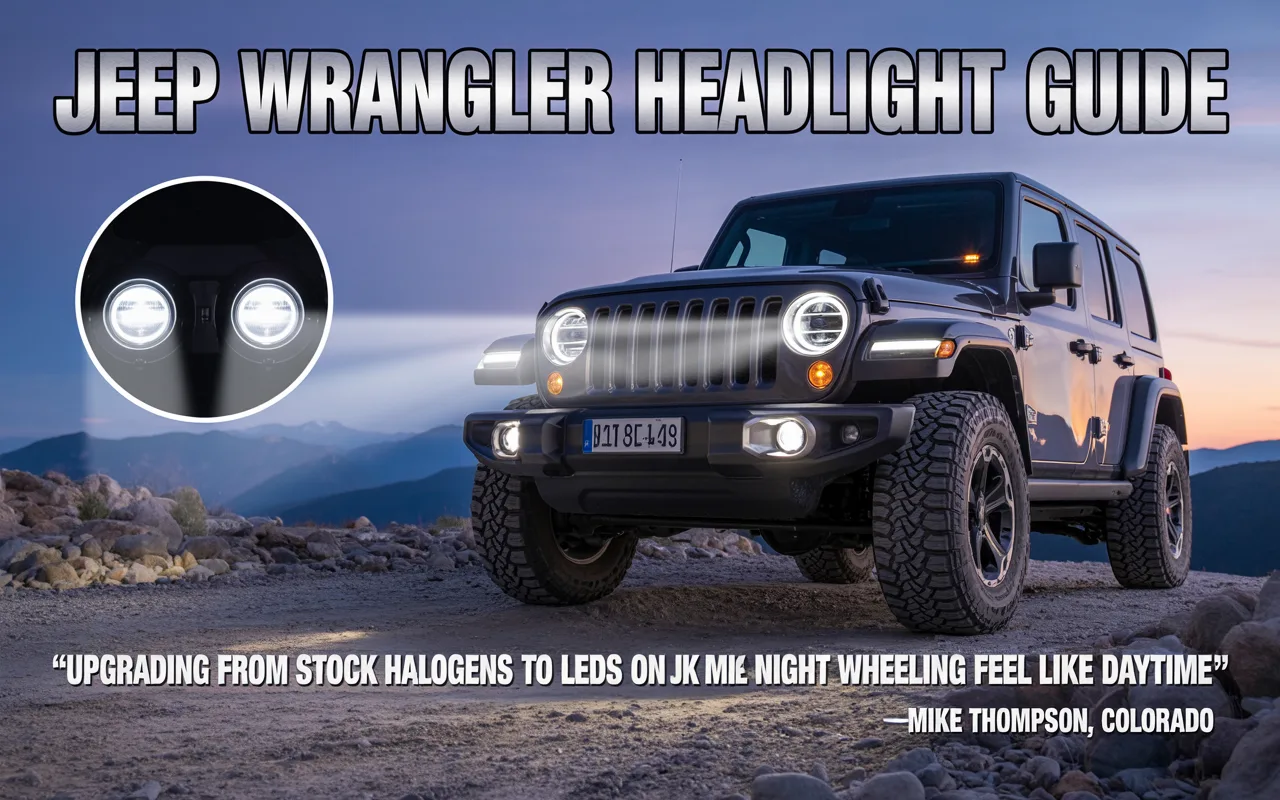
This jeep wrangler headlight guide helps owners understand bulb options, installation steps, and maintenance for safer driving on trails or highways. From halogen basics to LED upgrades, find practical advice to improve visibility without hassle.
If you’re a Jeep Wrangler owner, you know that good lighting makes all the difference, especially when you’re out on rough paths or dark roads. Headlights aren’t just about seeing where you’re going; they help others spot you too. In this jeep wrangler headlight guide, we’ll cover everything from basic bulb replacements to full upgrades. Whether you have an older model or a newer one, keeping your lights in top shape ensures you stay safe and enjoy the drive more. We’ll look at different types, how to install them, and tips for upkeep. By the end, you’ll feel confident handling your Wrangler’s lighting needs.
Over the years, Jeep Wranglers have evolved, and so have their headlights. Early models used simple sealed beams, while modern ones offer advanced options like LEDs for brighter, longer-lasting performance. If you’re dealing with dim lights or planning an upgrade, this guide has you covered. Let’s start by exploring how headlights have changed in Wranglers.
Evolution of Jeep Wrangler Headlights
The Jeep Wrangler has a long history, starting from its roots in military vehicles, and its headlights have come a long way too. Back in the 1980s and 1990s, models like the YJ used rectangular sealed beam headlights, which were basic and reliable but not very bright by today’s standards. These were 5×7 inch units that provided enough light for city driving but struggled on unlit trails. As the TJ came along in the late 1990s, Jeep switched to round 7-inch headlights, which became a signature look. These used halogen bulbs, offering better illumination and easier replacements since you could swap just the bulb instead of the whole unit.
Moving into the 2000s with the JK series, headlights stayed round but improved in design. They still relied on halogen technology, like the H13 bulb for high and low beams, but aftermarket options started popping up more. Owners began experimenting with brighter alternatives to handle off-road adventures better. Then, with the JL in 2018, Jeep introduced factory LED headlights as an option, which marked a big shift. These are 9-inch rounds in some trims, providing crisp white light that’s energy-efficient and lasts much longer than halogens. The Gladiator JT, based on the JL, follows a similar pattern.
This progression reflects how Wranglers are used: for daily commutes, weekend fun, and serious off-roading. Better headlights mean safer night drives and less strain on your eyes. If you own an older Wrangler, you might still be running those original halogens, but upgrading can transform your experience. Remember, compatibility matters – always check your model year before buying parts.
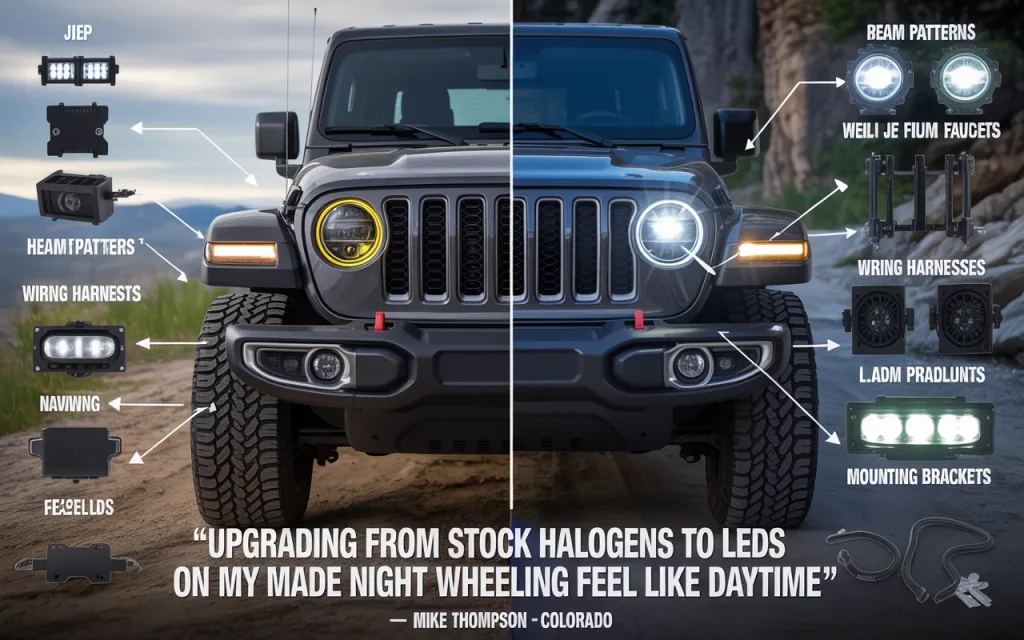
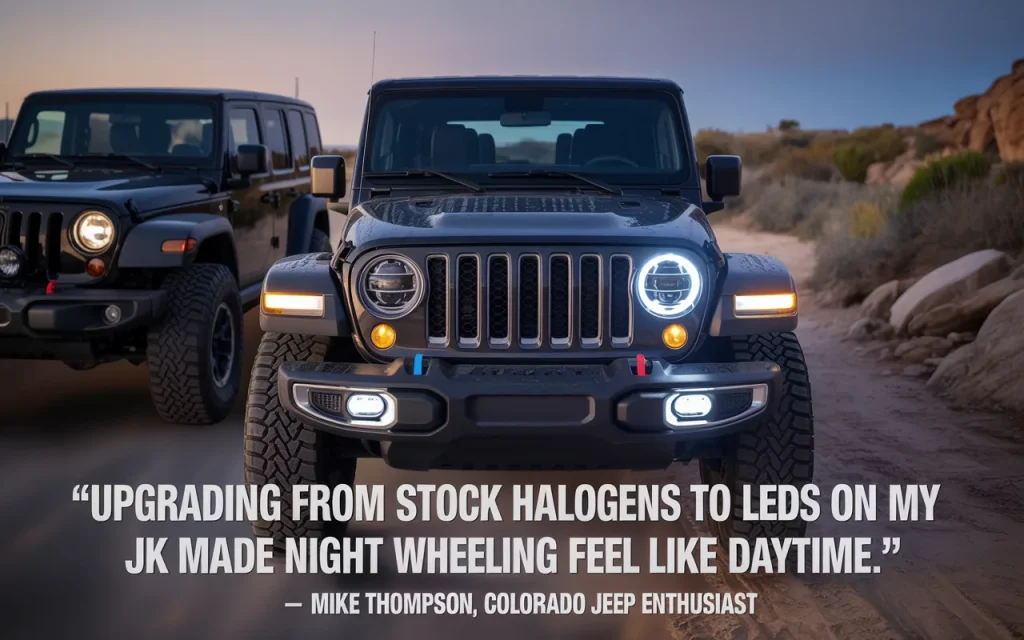
“Upgrading from stock halogens to LEDs on my JK made night wheeling feel like daytime,” says Mike Thompson, a long-time Jeep enthusiast from Colorado.
Bulb Sizes by Model Year
Knowing the right bulb size is key to any headlight work on your Wrangler. Different years use different specs, so grabbing the wrong one can lead to frustration. For instance, many recent models share sizes, but older ones vary. Here’s a quick reference to help you out.
| Model Year | Headlight Bulb (High/Low Beam) | Fog Light Bulb |
|---|---|---|
| 1987-1995 (YJ) | H6054 (Sealed Beam) | N/A (Optional) |
| 1997-2006 (TJ) | H4 (9003) | 9145 |
| 2007-2017 (JK) | H13 (9008) | PSX24W |
| 2018-Present (JL/JT) | H13 (9008) or LED Factory | PSX24W or 5202 |
This table focuses on the main front lights, but don’t forget turn signals (often 3157) or brake lights (7443) if you’re doing a full refresh. Always double-check your owner’s manual or a reliable parts store for exact matches, as trims like Rubicon might differ slightly. Using the correct size prevents electrical issues and ensures a snug fit.
For upgrades, many owners switch to LED versions of these bulbs. They plug right in but might need adapters for perfect alignment. If your Wrangler is lifted, consider adjustable housings to aim the beams properly.
Types of Headlights: Halogen, LED, HID
When it comes to headlights for your Jeep Wrangler, you have a few main choices, each with its own strengths. Halogen bulbs are the stock option in most models before 2018. They’re affordable and easy to find, using a filament that glows when electricity passes through. However, they run hot, use more power, and don’t last as long – maybe 500 to 1,000 hours.
LED headlights have become popular for good reason. They use light-emitting diodes, which are cooler, brighter, and last up to 50,000 hours. For Wranglers, 7-inch or 9-inch LED kits fit the round housings perfectly and often include halo rings for a custom look. They’re great for off-road use because they provide focused beams that cut through fog or dust better.
HID, or high-intensity discharge, bulbs use gas to create light, offering intense brightness. They’re less common in Wranglers due to the need for ballasts and potential glare issues if not installed right. Plus, they take a moment to warm up, which isn’t ideal for quick flashes.
Choosing depends on your needs. If you drive mostly on roads, halogens might suffice. For trails, LEDs shine. Whichever you pick, ensure they’re DOT-approved to stay legal.
How to Choose the Best Headlights for Your Wrangler
Picking headlights involves more than just brightness. Think about your driving habits first. Do you hit trails often? Look for units with high lumens and adjustable patterns to avoid blinding others. Color temperature matters too – 5000K to 6000K gives a natural white light, while warmer tones feel more like halogens.
Budget plays a role. Basic halogen replacements cost under $20 per bulb, but quality LED kits can run $100 to $300 for a pair. Brands like JW Speaker or Oracle offer durable options built for Jeeps, with waterproofing and anti-fog features. Read reviews from other Wrangler owners to see real-world performance.
Compatibility is crucial. For JK models, 7-inch rounds are standard, but JLs might need 9-inch if going aftermarket. Check for plug-and-play designs to skip wiring hassles. Also, consider extras like built-in turn signals or daytime running lights for a cleaner setup.
In the end, the best choice balances performance, ease, and cost. Test them at night if possible to ensure they meet your expectations.
“After trying several brands, I found that investing in quality LEDs pays off in reliability during long trips,” notes Sarah Jenkins, an automotive technician specializing in off-road vehicles.
Step-by-Step Installation Guide
Installing new headlights on your Jeep Wrangler is a straightforward DIY job that can take under an hour with the right approach. Start by parking on a level surface and turning off the engine. Pop the hood and locate the headlight housings – they’re the round units at the front.
For bulb swaps, remove the grille clips or screws to access the back. Twist off the old bulb counterclockwise, unplug it, and insert the new one. Be careful not to touch the glass with bare hands, as oils can shorten its life. For full housing replacements, like switching to LEDs, you’ll need to remove the old assembly. Use a Torx screwdriver (usually T15 or T20) to loosen the retaining ring, then pull out the unit. Connect the new wiring harness, which often plugs directly into the factory socket.
If your model has adaptive features, you might need to reset the computer, but most don’t. Test the lights before reassembling to catch any issues early. Low beams, high beams, and signals should all work smoothly.
Here’s a simple tools list to make it easier.
| Tool | Purpose |
|---|---|
| Screwdriver Set | Removing grille and rings |
| Pliers | Handling clips |
| Gloves | Protecting bulbs |
| Flashlight | Seeing in tight spots |
Follow these steps, and you’ll have brighter lights in no time. If you’re unsure, watch a model-specific video for visual help.
Adjusting Your Headlights Properly
Proper adjustment keeps your beams effective without bothering other drivers. Misaligned lights can cause glare or leave dark spots ahead. To fix this, find a flat wall about 25 feet away from your Wrangler. Park with the headlights on, and mark the beam centers on the wall with tape – they should be at the same height as the actual headlight centers on your Jeep.
Use the adjustment screws on the housing: one for vertical (up/down) and one for horizontal (left/right). Turn them with a screwdriver until the beams hit slightly below the marks and converge straight ahead. For off-road use, a slight upward tilt helps on uneven ground, but keep it moderate.
Check local laws, as some states have specific requirements. Do this after any suspension changes, like a lift kit, since they alter the angle. Regular checks ensure ongoing safety.
Maintenance and Troubleshooting Common Issues
Keeping your headlights in good shape involves simple habits. Clean the lenses regularly with a soft cloth and mild soap to remove dirt or bugs that dim the output. Avoid harsh chemicals that can cloud the plastic. Inspect for moisture inside – if you see fogging, it might mean a seal is broken, leading to corrosion.
Common problems include flickering, which could stem from loose connections or a failing alternator. Dim lights often point to old bulbs or voltage drops; test with a multimeter. Burnt-out bulbs are easy fixes, but if both sides go, check fuses under the hood.
For LED setups, heat buildup can be an issue in hot climates, so ensure good ventilation. Winter salt can corrode wiring, so rinse the front end after snowy drives. Address issues promptly to avoid bigger repairs.
Upgrading to LED Headlights: Pros and Cons
Many Wrangler owners upgrade to LEDs for better performance. Pros include superior brightness – often double that of halogens – and lower power draw, which is great for adding accessories without straining the battery. They also last longer, reducing replacement frequency, and offer modern styling with halo effects.
On the downside, initial cost is higher, and cheap kits might cause radio interference or error codes in newer models. Installation can require anti-flicker modules. Still, for frequent night drivers, the benefits outweigh the cons.
LEDs transformed my Wrangler’s night visibility, making off-road exploration safer and more fun,” shares Tom Rivera, an experienced trail guide from Arizona.
Frequently Asked Questions
What bulb size do I need for my 2015 JK Wrangler headlights?
For a 2015 JK, the high and low beam is typically an H13 bulb. Confirm with your manual for any variations.
Can I install LED headlights myself?
Yes, most are plug-and-play, but some need basic tools and about 30 minutes per side.
Why are my new LEDs flickering?
This often happens due to the vehicle’s computer detecting lower power use. Adding a resistor or decoder usually fixes it.
How often should I replace headlights?
Halogens last 1-2 years with regular use; LEDs can go 5-10 years or more.
Are aftermarket headlights legal?
As long as they’re DOT-approved and properly aimed, yes. Avoid overly bright or colored ones.
Do I need to adjust headlights after a lift?
Absolutely, since lifts change the angle. Re-aim them to prevent glare.
What’s the best way to clean cloudy lenses?
Use a restoration kit with polishing compound for clear results.
Can I mix halogen and LED?
It’s possible but not ideal, as outputs differ. Better to upgrade both sides.
How do I know if my headlights are aimed correctly?
Park facing a wall; beams should be even and not too high.
Are halo lights worth it?
They add style and can serve as daytime runners, but focus on quality for durability.
Conclusion
Wrapping up this jeep wrangler headlight guide, remember that good lighting is essential for any adventure in your vehicle. From picking the right bulbs to regular maintenance, these steps keep you safe and enhance your driving experience. Whether sticking with basics or going for upgrades, apply what fits your needs. Stay proactive, and your Wrangler will light the way reliably for years.