Jeep Wrangler Night Driving Visibility Tips
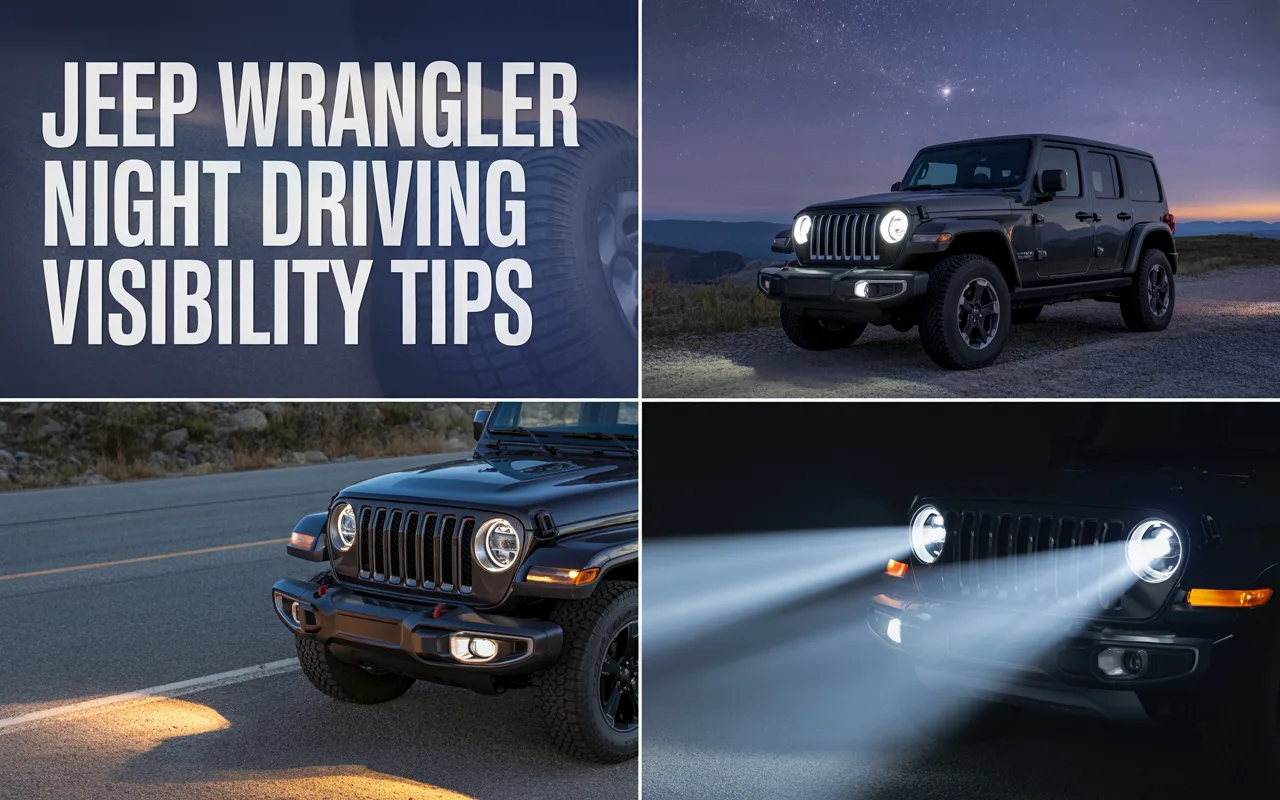
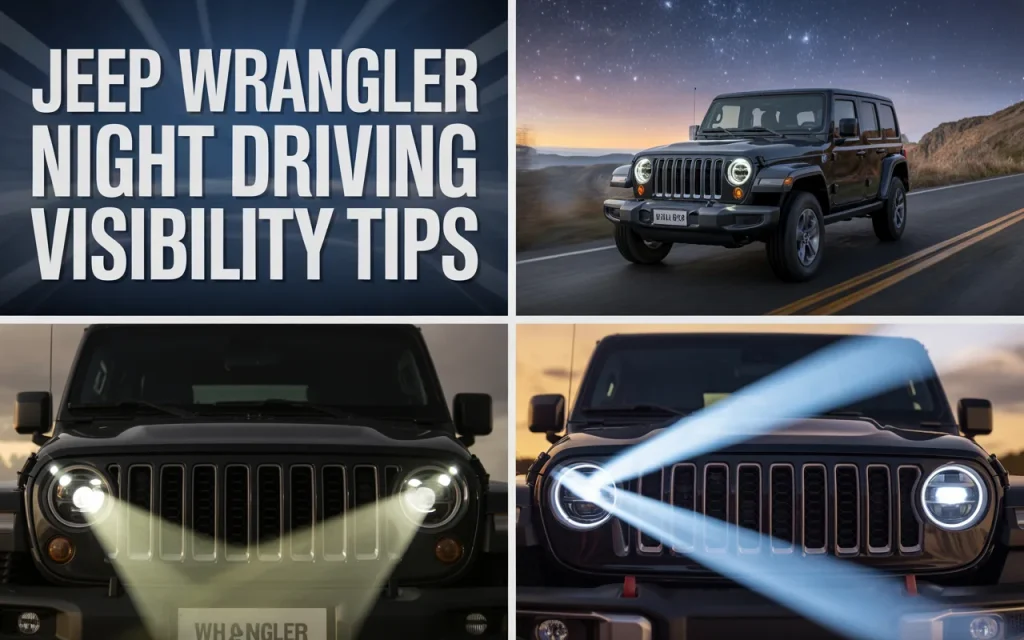
Practical Jeep Wrangler night driving visibility tips that actually work. Learn about headlight upgrades, fog light usage, interior light discipline, and simple mods to make nighttime trail riding and highway driving safer. Real advice from experienced Jeep owners.
Driving a Jeep Wrangler at night feels different than driving a regular car. The boxy shape, the upright windshield, and the removable doors all make the experience unique. But these same features can make night driving harder. Headlights sit lower. The vehicle catches wind. And those big tires create more road noise.
I have owned three Wranglers over the past twelve years. A 2012 JK, a 2018 JL, and now a 2024 Rubicon 4xe. Night driving used to stress me out. I could not see far enough ahead. Oncoming traffic blinded me. And trails after sunset felt dangerous.
Over time, I learned what works and what does not. This article shares real Jeep Wrangler night driving visibility tips that I have tested myself. Whether you drive a YJ, TJ, JK, or JL, these ideas will help you see and be seen after dark.
Why Stock Wrangler Lighting Falls Short at Night
Jeep engineers face a tough challenge. They must meet federal safety rules while keeping the classic Wrangler look. Round headlights are part of the brand identity. But round housings limit how much light you can project down the road.
Factory halogen bulbs produce yellowish light. They do not throw light very far. And the reflector bowls inside stock headlights scatter light in too many directions.
On wet roads, stock Wrangler headlights struggle even more. Water absorbs light. Dark pavement eats up illumination. If you have ever driven a stock Wrangler on a rainy night, you know the feeling of squinting at the road ahead.
This is why so many owners start researching Jeep Wrangler night driving visibility tips soon after buying their vehicle. The need for better light becomes obvious very quickly.
Headlight Upgrades That Make a Real Difference
LED Conversion Kits
Switching to LED headlights is the single biggest improvement you can make. LED bulbs produce white light that closely resembles daylight. Your eyes work less hard to process what you see.
I installed Quadratec Gen 7 LED headlights on my JK in 2019. The difference was immediate. Dark country roads became easy to navigate. I could see deer standing on the shoulder from a quarter mile away.
LEDs also last much longer than halogens. You will likely never change these bulbs again. And they draw less power from your electrical system. That matters if you run a winch, air compressor, or other accessories.
Popular options include Truck-Lite, JW Speaker, and KC HiLiTES. Prices range from 200 to 800 dollars per pair. Do not buy the cheapest no-name kits. They often have poor beam patterns that blind other drivers.
Projector Retrofit Headlights
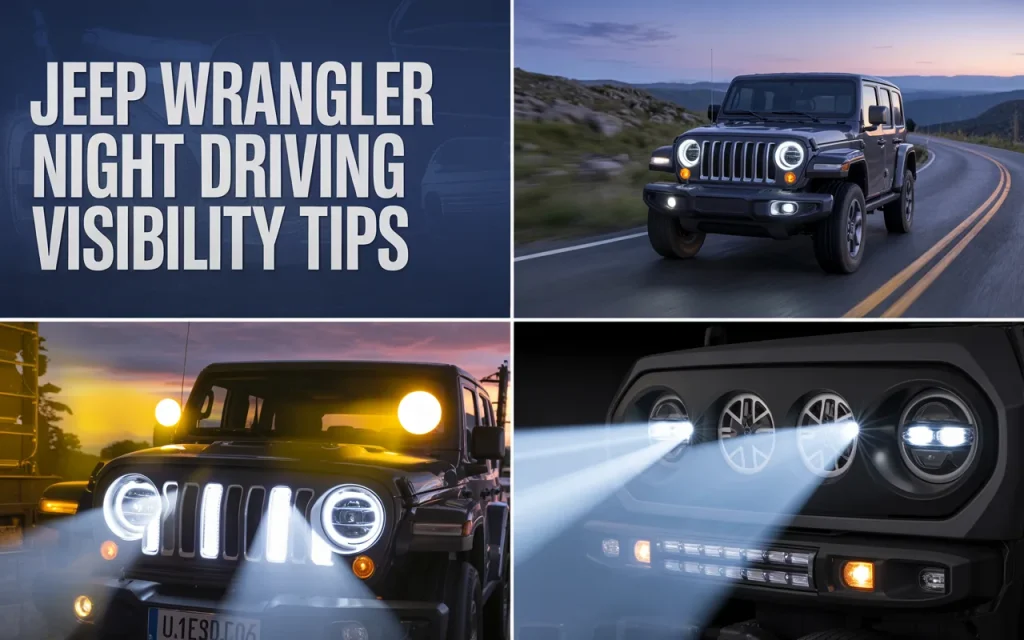
Projector headlights use a lens to focus light into a sharp beam. This design reduces glare for oncoming traffic while putting more light where you need it. Some Jeep owners retrofit projectors into factory housings. Others buy complete projector headlight assemblies.
The light cutoff is very clean. You can aim projectors precisely. This makes them excellent for lifted Wranglers. Your headlights will not shine directly into sedan windshields if aimed correctly.
Headlight Harness Upgrades
Older Wranglers like the TJ and YJ suffer from voltage drop. Power travels from the battery, through the firewall, to the headlight switch, and back to the bulbs. Resistance builds up over years. The result is dim headlights.
A headlight harness solves this. It pulls power directly from the battery. Relays control the flow. Your headlights receive full voltage. This upgrade costs about fifty dollars and takes an hour to install.
Table 1: Headlight Upgrade Comparison
| Upgrade Type | Price Range | Difficulty | Best For |
|---|---|---|---|
| LED Conversion | 200-800 | Easy | JK, JL, JT owners wanting instant improvement |
| Projector Retrofit | 400-1000 | Hard | Enthusiasts wanting custom beam patterns |
| Harness Upgrade | 40-80 | Moderate | TJ, YJ owners with voltage drop issues |
| HID Conversion | 150-300 | Moderate | Budget minded owners, slower warm up time |
Auxiliary Lighting: More Than Just Light Bars
Many Jeep owners rush to buy giant light bars. But more light does not always mean better visibility. Light placement matters more than total lumens.
Fog Lights and Driving Lights
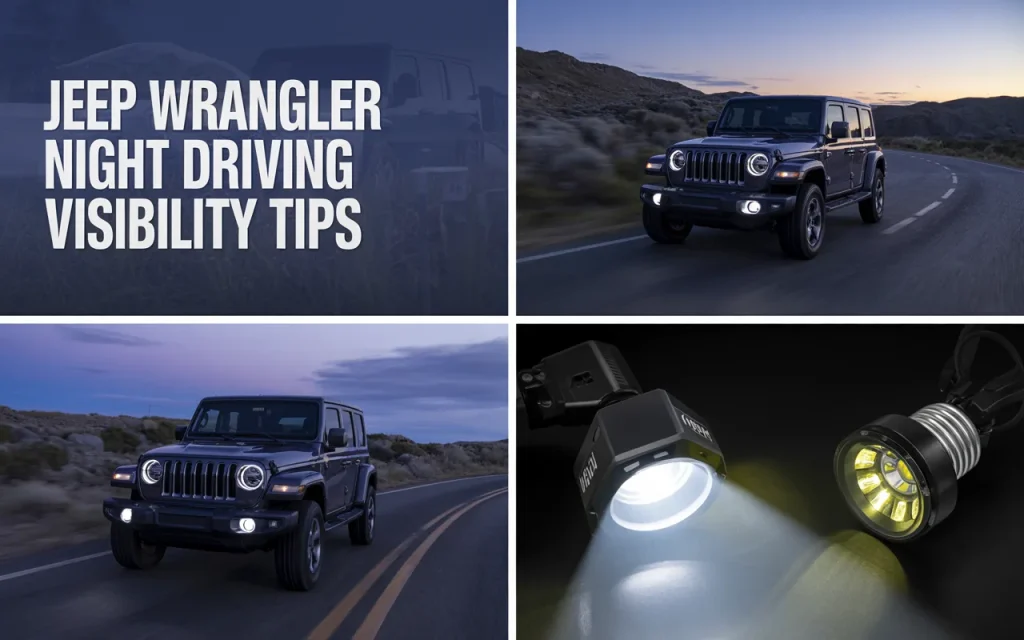
Factory fog lights on most Wranglers are weak. They look good but do little. Upgrading to LED fog lights helps you see the road edges and immediate foreground.
Yellow or amber fog lights cut through rain and snow better than white light. I run Baja Designs Squadron Sport amber fog lights on my JL. They illuminate the shoulder without reflecting back into my eyes during heavy rain.
Driving lights belong on the bumper or A-pillar. These lights project further than headlights. Use them only on dark roads with no oncoming traffic. Most states have laws about auxiliary light usage on public roads.
A-Pillar Light Placement
A-pillar lights mount on the windshield frame. They sit high, which helps you see over tall grass and brush. This position also reduces shadows cast by the hood.
But A-pillar lights create glare on your own hood. Flat hood Wranglers reflect light right back at you. Textured hood decals help reduce this reflection. You can also aim the lights slightly outward to keep the beam off the hood.
Rock Lights for Trail Visibility
Rock lights mount under the vehicle. They illuminate the ground directly around your Jeep. At night on the trail, rock lights help you see tire placement and obstacles.
They also serve as courtesy lights when camping. You can turn them on while parked to create ambient light without draining your battery. Most rock light kits include phone apps for color selection and brightness control.
Interior Lighting and Glare Control
Bright interior lights ruin your night vision. Your pupils constrict when light hits your face. It takes thirty seconds or more for your eyes to readjust to darkness.
Many Wrangler owners swap dome lights for red LEDs. Red light preserves night adaptation. Your eyes remain sensitive to low light conditions outside the vehicle.
Dashboard brightness matters too. Dim your instrument cluster to the lowest readable level. Cover or remove aftermarket gauge lights that cannot be dimmed. Every little bit of interior light reduces what you can see through the windshield.
I learned this lesson the hard way. I installed bright blue interior footwell lights because they looked cool. The first night drive afterward, I could barely see the road. My eyes kept fighting between the bright interior and dark exterior. Those lights came out the next morning.
Windshield and Mirror Adjustments
A clean windshield seems obvious. But Wranglers spend time off pavement. Dust and mud accumulate quickly. Carry glass cleaner and microfiber towels in your Jeep. Stop and clean the windshield before night driving if it is dirty.
The inside of the windshield matters too. Off gassing from plastics creates a film on interior glass. This film catches light and creates haze. Clean the inside of your windshield monthly.
Adjust your side mirrors slightly downward on two lane roads. This reduces headlight glare from vehicles behind you. The mirror still shows approaching cars, but the direct beam misses your eyes.
Jeep Wranglers have large side mirrors. They catch light from following vehicles easily. Anti-glare mirror settings help, but repositioning works better.
Table 2: Quick Night Visibility Checklist
| Item | Action | Time Needed |
|---|---|---|
| Headlights | Clean lenses, check aim | 15 minutes |
| Windshield | Clean inside and out | 10 minutes |
| Mirrors | Adjust down slightly | 2 minutes |
| Interior lights | Dim or switch to red | 5 minutes |
| Spare bulbs | Check you have backups | 5 minutes |
Tires and Suspension Factors
Larger tires affect night visibility in two ways. First, they raise the vehicle. Your headlight beam angle changes when you lift the suspension. Headlights must be reaimed after any suspension modification.
Second, mud terrain tires create more road noise at highway speeds. Loud tires cause driver fatigue faster. Fatigued drivers have slower reaction times and make more mistakes.
If you run aggressive tires, take breaks during long night drives. Stop every two hours. Walk around. Let your brain reset. This is one of the simplest Jeep Wrangler night driving visibility tips that has nothing to do with lights.
Trail Riding After Sunset
Night trail riding requires different techniques than highway driving. You move slower. Your focus shifts from distance vision to near vision.
Use your spotter. A good spotter outside the vehicle sees things you cannot. They watch your tire placement and obstacles the headlights miss.
Walk the trail before driving it at night. Know what comes next. Memorize major obstacles during daylight. Then drive them after dark.
Stick to familiar trails for your first few night rides. New terrain is challenging enough during the day. At night, even easy obstacles become tricky.
Carry at least two good flashlights or headlamps. Battery powered lights fail when you need them most. Keep spares in the glove box and center console.
Quote from Experienced Off Roader
“Night wheeling taught me that speed is the enemy. When you cannot see clearly, slow down to walking pace. Let your eyes adjust. Use your spotter. The trail will still be there tomorrow if you take an extra hour tonight.”
– Mark Torres, Off Road Guide and 20 year Jeep owner
Common Night Driving Mistakes Wrangler Owners Make
Mistake 1: Overloading the Windshield
Phone mounts, dash cams, recovery gear, and sun visor clutter all block forward vision. At night, these objects create blind spots. They also reflect dashboard light back at you. Keep your windshield area as clear as possible.
Mistake 2: Ignoring Headlight Aim
A lifted Wrangler with unadjusted headlights points the beam into treetops. You lose road illumination completely. Aim your headlights after any suspension lift. Most auto parts stores loan headlight aiming tools for free.
Mistake 3: Running Every Light at Once
Light bars, fog lights, driving lights, and headlights all together create washout. Your pupils constrict from the total brightness. The road ahead actually appears darker. Use only the lights needed for current conditions.
Mistake 4: Forgetting Spare Bulbs
LEDs rarely fail. Halogens fail frequently. If you still run factory halogen headlights, carry spare bulbs. Keep them in the vehicle. Change burned out bulbs immediately, not when convenient.
Quote from Automotive Lighting Engineer
“Most drivers overestimate how far their headlights reach. At 60 miles per hour, you travel 88 feet per second. If your low beams show 200 feet ahead, you have barely two seconds of reaction time. That is why high beams exist. Use them whenever roads are empty.”
– David Chen, Former Automotive Lighting Engineer
Night Driving Prep Routine
Before every night drive, I run through a quick mental checklist. This takes sixty seconds and prevents problems.
First, I check headlight lenses. Are they clean? Road film builds up fast. A quick wipe with a damp towel fixes this.
Second, I dim all interior displays. The radio screen, climate controls, and gauge cluster all go to minimum brightness.
Third, I adjust mirrors downward slightly if traffic is behind me.
Fourth, I turn off all cabin lights before putting the Jeep in gear.
Fifth, I remind myself to use high beams frequently. Many drivers forget high beams exist. They leave them off even on completely dark roads.
This routine became habit after years of night driving. It takes almost no time and makes every drive safer.
State Laws and Courtesy
Bright lights help you see. But they can blind others. Know your local laws about auxiliary lighting. Most states restrict light bar usage on public roads. Some prohibit colored lights beyond standard white and amber.
Beyond legal requirements, consider courtesy. A six inch lifted Wrangler with unaimed LED headlights destroys the night vision of oncoming sedan drivers. Aim your lights properly. Use high beams responsibly. Turn off auxiliary lights for oncoming traffic.
We all share the road. Jeep drivers already stand out. Let us be known for being considerate, not for blinding everyone else.
Quote from Off Road Club Leader
“Our club requires amber covers on all forward facing auxiliary lights during group night runs. The amber cuts glare and lets everyone see better. We also enforce strict light discipline. No light bars until the trail leader calls them. This keeps the group together and prevents accidents.”
– Rachel Okonkwo, Four Wheel Drive Club President
Frequently Asked Questions
Do I need to upgrade my alternator for LED headlights?
No. LEDs draw less power than halogen bulbs. Your stock alternator handles them easily.
Can I put LED bulbs in factory reflector housings?
You can, but beam pattern suffers. LED bulbs work best in housings designed for them. Complete headlight assemblies perform better than plug in LED bulbs.
How do I aim my Jeep Wrangler headlights?
Park 25 feet from a flat wall on level ground. Measure from ground to headlight center. Mark the wall at that height. Adjust the headlight screws until the beam cutoff sits slightly below that mark.
Are light bars worth it for night driving?
Light bars help on empty off road trails. They create significant glare on paved roads and in traffic. Use them appropriately.
What color fog lights work best?
Amber fog lights reduce backscatter in rain, snow, and fog. White light reflects more off precipitation particles.
Do mirror mounted lights help visibility?
Mirror mounted lights help when backing up at night or during camp setup. They do not help forward visibility.
How often should I clean my windshield interior?
Clean interior glass every two to four weeks. Plasticizers from dashboard materials create a persistent film.
Conclusion
Better night visibility in your Jeep Wrangler comes from many small improvements, not one big purchase. LED headlights help tremendously. So do proper headlight aim, clean glass, disciplined interior lighting, and smart auxiliary light placement.
I spent years adding more and more lights to my Jeeps. Bigger light bars. More pods. Brighter everything. Eventually I realized that thoughtful lighting works better than excessive lighting.
Start with the basics. Upgrade your headlights. Clean your windshield. Adjust your mirrors. Dim your dash. Carry spare bulbs. Use your high beams.
Then drive at night and notice how much more you see. The road ahead becomes clear. The deer on the shoulder become visible. The trail after sunset becomes manageable.
These Jeep Wrangler night driving visibility tips come from real experience on pavement and dirt, in rain and clear weather, on highways and mountain passes. They work because they address the actual problems Wrangler owners face after dark.
Your Jeep is capable of taking you anywhere. Make sure you can see well enough to enjoy the ride, no matter when you choose to drive.
Related posts
 Best Car Mats for All-Weather Use 2026: Top Picks for Every Driver
Keeping your car clean is tough, especially when rain, mud, and snow are involved. That’s where the best car mats for all-weather use make a difference.…
 Best Custom-Fit Floor Mats for Nissan Titan: Top Picks 2026
These custom-fit mats provide reliable coverage and help protect your Nissan Titan’s interior from dirt and spills. It’s Monday morning, you’re rushing out the door with…
 Best Car Cleaning Wipes for Interior: A Buyer’s Guide
Discover the best car cleaning wipes for your interior. Compare options for dashboards, leather, and tough stains to keep your car spotless and well-maintained. Keeping your…