Winch Snatch Block Capacity: What It Means and Why It Matters
When you look at winch snatch blocks, you’ll often see a “capacity” rating. But what does this number really mean? If you use your winch for off-road recovery, towing, or any kind of heavy pulling, understanding snatch block capacity is more than just knowing a number on a sticker. It can be the difference between a safe, successful pull and a dangerous failure. Let’s break down what winch snatch block capacity means, why it matters, and how to choose and use the right snatch block for your needs.
What Is A Winch Snatch Block?
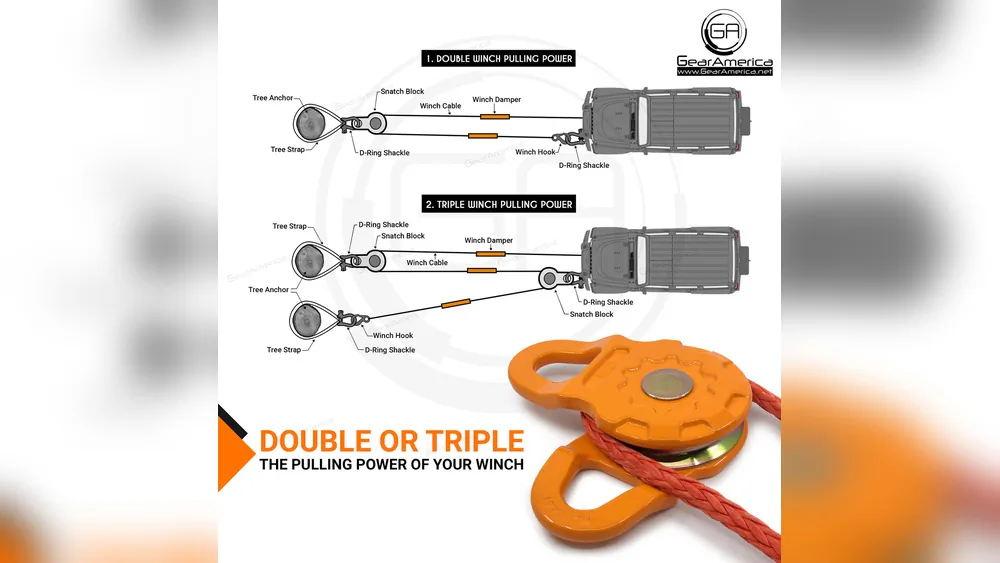
A winch snatch block is a pulley device that lets you change the direction of your winch cable. You can also double the pulling power of your winch by running the cable through the block and back to your anchor point or vehicle. Snatch blocks are commonly used in vehicle recovery, logging, marine work, and construction.
The main parts of a snatch block are:
- Sheave (pulley wheel): Guides the winch cable.
- Side plates: Hold the sheave and allow the cable to be “snatched” or placed inside without threading it through.
- Pin or bolt: Holds everything together and lets the sheave spin.
Understanding Snatch Block Capacity
When you see a snatch block labeled “20,000 lbs capacity,” what does this actually mean? In simple terms, capacity is the maximum load the snatch block can safely handle. Exceeding this load risks breaking the block, damaging your equipment, or causing serious injury.
But there’s more to it. The rated capacity is not always the same as the line pull you can apply in every situation. Other factors, like cable angle, winch strength, and block quality, affect real-world safety. So, you need to know what the snatch block rating covers and what it doesn’t.
How Snatch Block Capacity Is Calculated
Manufacturers test snatch blocks under controlled conditions. The capacity rating is usually based on a straight pull, with the cable running directly through the block, and with an even, steady load. If the snatch block says “10,000 lbs,” it means it can handle that much force before failing in a standard setup.
Two terms you may see:
- Working Load Limit (WLL): The safe maximum load for normal use.
- Breaking Strength: The force needed to physically break the block. Often 3–5 times the WLL.
Always use the WLL for safety. Don’t assume you can push the snatch block up to its breaking strength.
Why Snatch Block Capacity Is So Important
Snatch block capacity is about more than following the rules. The forces involved in winching can be much higher than most people expect. Here’s why capacity matters:
- Safety: Overloading a snatch block can cause sudden failure, sending metal parts flying. This can injure or kill people nearby.
- Equipment protection: Using an underrated block can damage your winch, cable, or vehicle.
- Efficiency: The right snatch block works smoothly and lets your winch perform at its best.
Real-world Example: Winching A Stuck Truck
Imagine you’re using a 9,500 lb winch to recover a 5,000 lb truck stuck in deep mud. If you use a snatch block, you can double your winch’s pulling power. But the force on the snatch block can be much more than 5,000 lbs, depending on the angle and resistance.
For instance, if the mud adds extra resistance and you use a snatch block to redirect the cable, the line pull could reach 8,000–10,000 lbs or more. If your snatch block is only rated for 8,000 lbs, you’re at the limit—and that’s risky.
A 16,000 lb or 20,000 lb snatch block would be safer.
How To Choose The Right Snatch Block Capacity
Picking the right snatch block means looking at more than just the winch’s rating.
1. Know Your Winch’s Pulling Power
Check the rated line pull of your winch. If you have a 12,000 lb winch, your snatch block should be rated at least that high—or higher.
2. Factor In Double Line Pull
When you use a snatch block to double your winch line, the force on the block can equal the full winch pull. So, a 10,000 lb winch using a snatch block can put close to 10,000 lbs on the block.
Always match or exceed your winch’s rating.
3. Allow For Safety Margin
Don’t choose a snatch block that barely meets your needs. Go for a block with at least 1.5 to 2 times your winch’s rated pull. This gives you a safety margin for unexpected loads.
4. Consider Your Cable Size
Snatch blocks come in different sheave sizes for different cable diameters. Using the wrong size can damage your cable or the block itself.
5. Think About Application
If you do heavy recovery, like pulling trucks or equipment, pick a block with a higher rating. For light-duty work (ATVs, small 4x4s), a lower capacity might be enough.
Comparing Snatch Block Capacities
Here’s a look at some common snatch block ratings and what they’re used for:
| Snatch Block Capacity | Typical Use | Recommended Winch Size |
|---|---|---|
| 8,000 lbs | ATVs, small UTVs | Up to 4,000 lbs |
| 12,000 lbs | Mid-size 4x4s, light trucks | Up to 8,000 lbs |
| 20,000 lbs | Full-size trucks, heavy SUVs | Up to 12,000 lbs |
| 30,000 lbs | Commercial, heavy recovery | 15,000 lbs and above |
Common Mistakes When Choosing Snatch Block Capacity
Many beginners make the same errors when picking a snatch block. Here are some to avoid:
- Matching block rating to vehicle weight only: This ignores mud, slope, or other resistance, which can double or triple the force.
- Ignoring the winch’s full pull: Even if you don’t use your winch at max power often, you must prepare for the worst-case scenario.
- Buying cheap or unbranded blocks: Low-quality blocks may not meet their rated capacity and can fail unexpectedly.
- Not checking cable compatibility: Using a block designed for steel cable with synthetic rope (or vice versa) can cause problems.

Credit: www.myteeproducts.com
Snatch Block Capacity Vs. Breaking Strength
Let’s compare working load limit and breaking strength in a simple way:
| Term | What It Means | Typical Value |
|---|---|---|
| Working Load Limit (WLL) | Safe everyday maximum load | e.g., 20,000 lbs |
| Breaking Strength | Load that causes failure | 60,000–100,000 lbs |
Never plan to use a snatch block anywhere near its breaking strength. The WLL is the real-world limit for safety.
The Role Of Snatch Block Angle And Configuration
The way you use your snatch block can change the actual load on it.
- Straight pull: The load is spread evenly.
- Sharp angles: Increase the force on the snatch block and cable.
- Multiple blocks: Using two or more blocks can multiply the force even more.
Here’s a quick example:
| Configuration | Force on Snatch Block |
|---|---|
| Straight pull (0° angle) | Equal to line pull |
| 90° angle | About 1.4 times line pull |
| Double block setup | Can be 2x or more |
Non-obvious insight: People often forget that a sharp cable angle increases the force on both the snatch block and anchor point. Always check the angle and reduce sharp bends when possible.
How To Use A Snatch Block Safely
Choosing the right capacity is step one. Using the block correctly is just as important.
- Inspect before use: Check for cracks, bent parts, or loose pins.
- Use the right cable size: Match the cable to the block’s sheave size and groove shape.
- Anchor securely: Attach the block to a strong anchor (like a tree with a protector strap or a recovery point).
- Avoid side loading: Keep the cable as straight as possible through the block.
- Stand clear: Never stand near the winch line or snatch block under tension.
Pro tip: Always use a damper (a heavy blanket or special cover) on the winch line to reduce snap-back if something breaks.
How Snatch Block Capacity Affects Winching Efficiency
A larger snatch block isn’t just safer—it can also make winching smoother. Bigger sheaves reduce stress on the cable, and higher-rated blocks are usually better built. That means less friction and easier pulls.
However, using a block that’s too big or heavy for your setup can be awkward or slow. Match your gear to your real needs.

Credit: www.ebay.com
Snatch Block Ratings And Industry Standards
Reputable manufacturers test snatch blocks to meet industry standards, such as those from the American Society of Mechanical Engineers (ASME) or other safety organizations. Always look for certifications or test data when you buy a new block. Don’t trust unmarked or uncertified products.
If you want to learn more about how snatch blocks are tested, check the official guidelines from the ASME.
When Should You Upgrade Your Snatch Block?
Upgrade your snatch block if:
- You buy a more powerful winch.
- You start recovering heavier vehicles or loads.
- Your old block shows signs of wear, bending, or cracking.
- You want to switch from steel cable to synthetic rope (or vice versa) and need a compatible block.
Don’t wait for a failure—upgrade before you reach the limit.

Credit: www.myteeproducts.com
Frequently Asked Questions
What Happens If I Overload A Snatch Block?
Overloading a snatch block can cause it to break or deform suddenly. This can send broken parts and the winch line flying at high speed, which is extremely dangerous. Always use a block rated for more than your winch’s maximum pull.
How Do I Know If My Snatch Block Is Compatible With My Winch Cable?
Check the snatch block’s specifications for the recommended cable diameter. The cable should fit snugly in the sheave groove without being pinched or loose. Using the wrong size can damage both the cable and the block.
Can I Use Multiple Snatch Blocks Together?
Yes, you can use two or more snatch blocks to multiply pulling power or change the direction of the winch line. But remember, each block and anchor point must handle the increased forces. Always plan for the highest possible load.
What Maintenance Does A Snatch Block Need?
After each use, clean dirt and debris from the block. Lubricate the sheave and pin regularly. Inspect for cracks, bends, or excessive wear. Replace any damaged parts before using the block again.
Are Snatch Block Ratings Universal?
No, ratings can vary by manufacturer. Always check for certifications and read the product manual. Don’t mix snatch blocks and winch gear from unknown brands without checking the actual rated capacities.
A snatch block is a simple tool—but its capacity rating is a critical safety factor. Always match your snatch block to your winch, your cable, and the job you’re doing. Leave plenty of safety margin, use quality gear, and inspect your equipment regularly.
Smart choices with snatch block capacity mean safer, smoother recoveries every time.
Related posts
 Why You Should Use a Foam Cannon for Car Washing: Ultimate Guide
Washing your car is more than just making it look good. It protects the paint, keeps the value high, and makes driving feel better. But if…
 How to Clean Leather Seats Without Damaging Them: Expert Tips
Keeping your leather seats clean can be a challenge. Leather looks beautiful and feels luxurious, but it needs special care. Many people worry about damaging their…
 Why Using a Ceramic Coating Spray is Important for Your Car’s Shine
If you care about your car’s appearance and value, you probably wash and wax it regularly. But did you know there’s a better way to protect…