
What is a Winch Recovery Ring Used For? Essential Guide
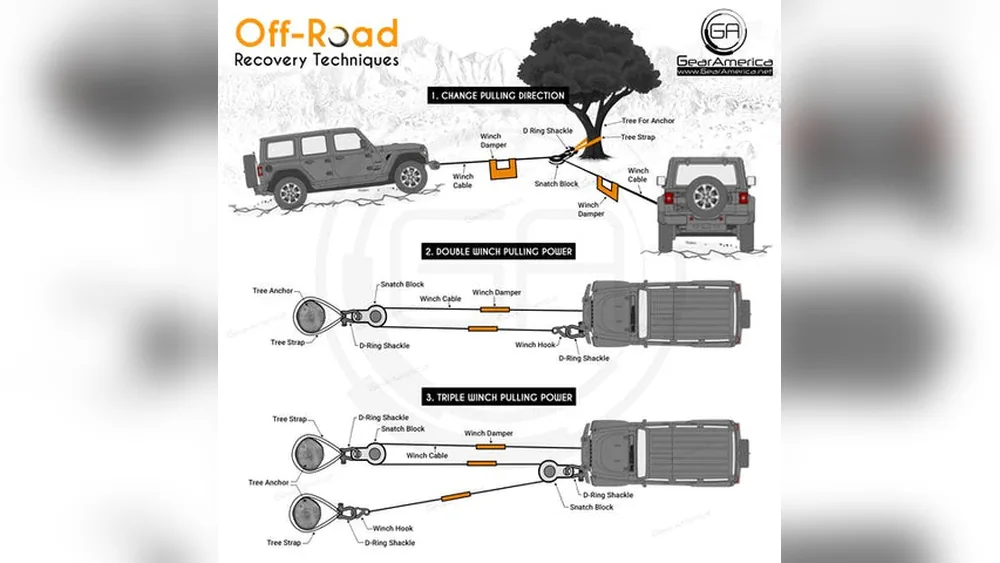
When you find yourself stuck in mud, snow, or rough terrain, a winch can be your best friend. But what if you want to pull from an angle, change the direction of your pull, or reduce strain on your winch line? This is where a winch recovery ring comes into play. This small, circular device is changing the way off-roaders and recovery teams approach challenging situations. Whether you’re new to winching or you already carry gear in your 4×4, understanding what a winch recovery ring is used for could make your next recovery smoother, safer, and even more efficient.
What Is A Winch Recovery Ring?
A winch recovery ring is a round, usually aluminum device designed for use with synthetic winch lines. It replaces the traditional snatch block or pulley in many recovery scenarios. You’ll notice it has a smooth, round groove where the winch line can move freely. Unlike heavy steel pulleys, a winch recovery ring is much lighter and easier to carry, making it popular with overlanders and off-road enthusiasts.
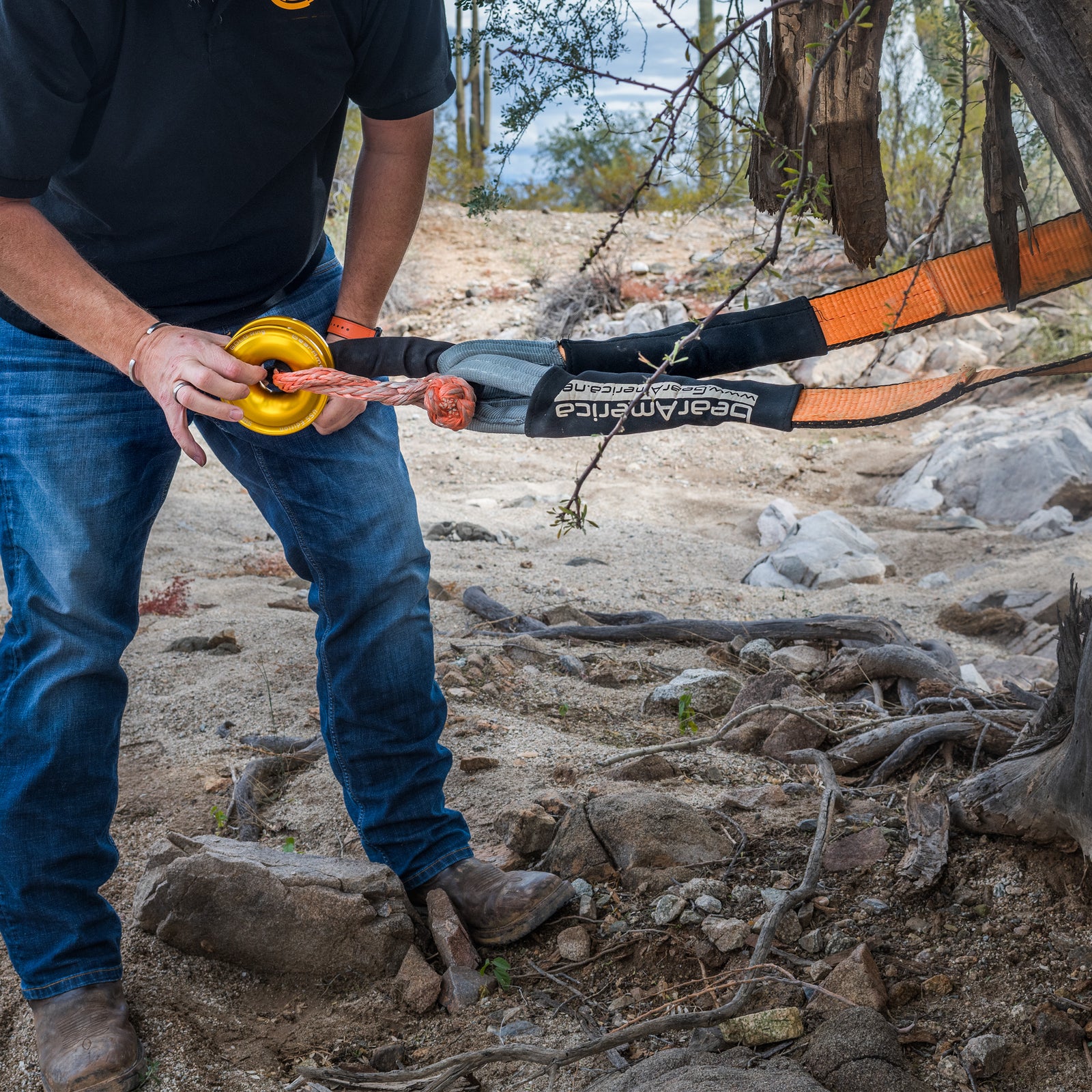
These rings are designed to be used with a soft shackle, which loops through the ring and attaches to a recovery point on your vehicle or a tree saver strap. As the winch line pulls, the ring acts as a low-friction guide, allowing the line to move and redirect the force.
How Does A Winch Recovery Ring Work?
The main principle behind a winch recovery ring is simple: it changes the direction of the winch line and can even double the pulling power of your winch in a double-line pull setup.
Here’s how it works in practice:
- Attach a soft shackle through the ring and a recovery point (like a tree saver strap).
- Thread your synthetic winch line through the groove in the ring.
- Begin winching. As the winch pulls, the line slides smoothly around the ring, redirecting the force as needed.
Because the ring is smooth and round, it minimizes friction and wear on the winch line. It’s important to note that winch recovery rings are designed specifically for synthetic lines, not steel cable, as steel can damage both the ring and itself.
Common Uses For A Winch Recovery Ring
You might wonder, when would you actually use this tool? Here are some of the most common scenarios:
1. Redirecting The Pull
Sometimes, your winch is not lined up directly with the stuck vehicle. A winch recovery ring lets you change the direction of pull safely. For example, if you need to pull from the side or around a tree, the ring acts as a turning point for the line.
2. Double-line Pulls
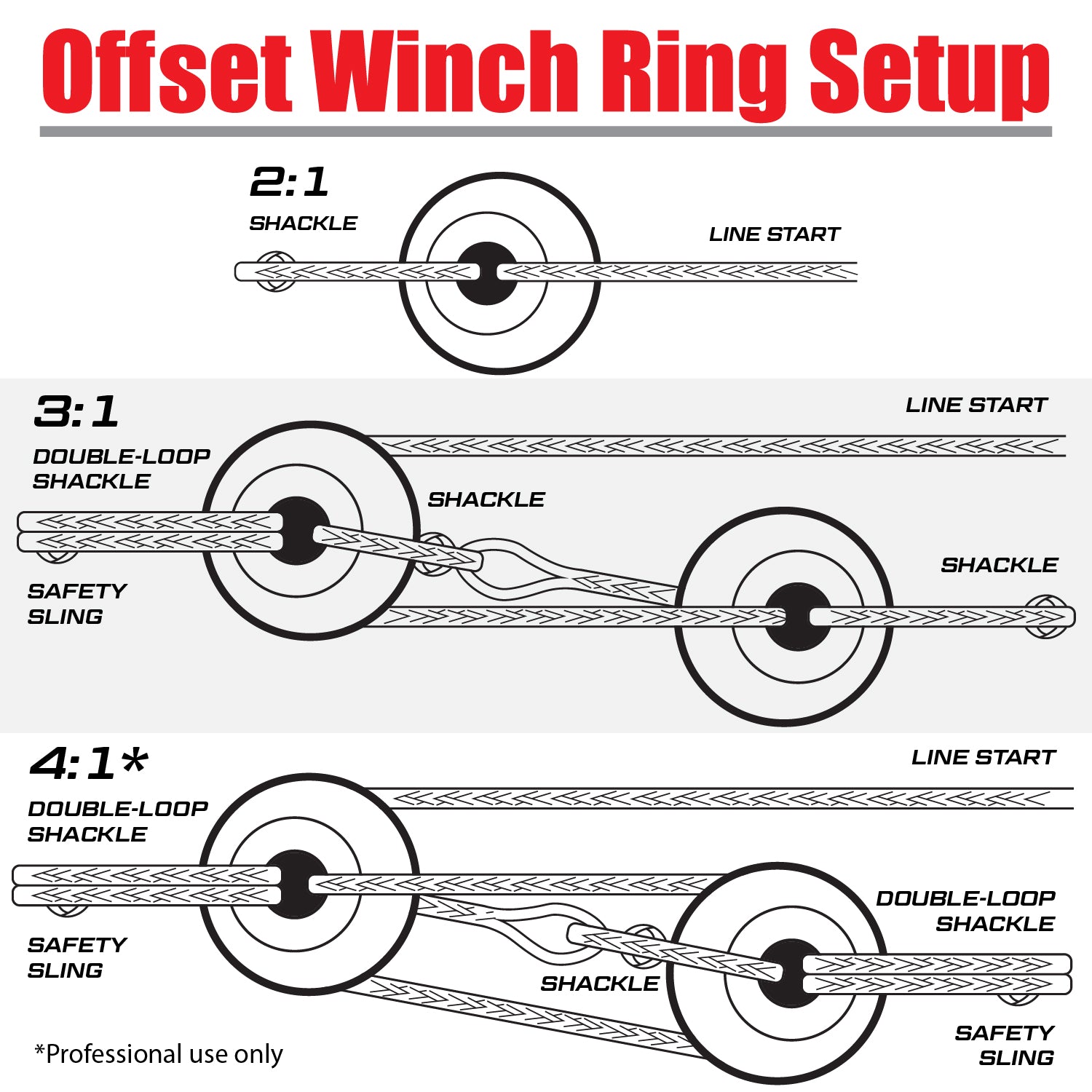
When a single line isn’t strong enough, a double-line pull can double your winch’s pulling force. By looping the winch line through the recovery ring and back to your vehicle, you can pull heavier loads or get out of deeper trouble.
3. Winching Around Obstacles
Rocks, trees, or other vehicles can get in the way. A winch recovery ring lets you route the winch line around these obstacles, giving you more options and making difficult recoveries possible.
4. Lightweight Recovery Kits
Traditional snatch blocks are heavy. A winch recovery ring is much lighter, so you can carry it easily in your recovery kit without adding much weight.
5. Safer For Synthetic Lines
The smooth surface of the ring is gentle on synthetic winch lines, reducing the risk of abrasion and damage compared to some pulleys.
Key Benefits Of Using A Winch Recovery Ring
Why are so many off-roaders switching to recovery rings? Here are the top advantages:
- Lightweight and Compact – Most rings weigh less than 1 pound.
- Easy to Use – Simple setup with soft shackles and synthetic line.
- Strong and Durable – High-quality rings can handle loads over 20,000 lbs.
- Safer – No sharp edges, and fewer moving parts than traditional pulleys.
- Low Maintenance – No bearings or moving parts to seize or wear out.
- Cost-Effective – Usually cheaper than heavy-duty snatch blocks.
Winch Recovery Ring Vs. Snatch Block
Many wonder how a winch recovery ring compares to the classic snatch block. Here’s a quick look at the key differences:
| Feature | Winch Recovery Ring | Snatch Block |
|---|---|---|
| Weight | Very light (0.5–1 lb) | Heavy (3–8 lbs) |
| Compatibility | Synthetic line only | Synthetic or steel cable |
| Moving Parts | None | Yes (bearings/pin) |
| Maintenance | Minimal | Needs lubrication |
| Setup Speed | Fast with soft shackles | Slower, needs D-shackle/pin |
| Cost | Lower | Higher |
A winch recovery ring is perfect if you use synthetic line and want speed and simplicity. Snatch blocks are better for steel cable and when you need the absolute highest strength.
Choosing The Right Winch Recovery Ring
Not all rings are equal. When picking one for your kit, pay attention to:
- Rated Capacity: Check the maximum load. Most quality rings are rated for 20,000 lbs or more.
- Material: Aircraft-grade aluminum is standard. Some budget rings use lower-grade alloys—avoid these.
- Groove Size: The groove should match your winch line diameter (typically 8–12mm).
- Finish: A smooth, anodized finish reduces friction and resists corrosion.
- Weight: Lighter rings are easier to handle, but make sure they’re not too thin or weak.
- Brand Reputation: Stick to trusted brands with real-world reviews.
Here’s a sample comparison of popular rings:
| Brand | Rated Capacity | Weight | Groove Size | Material |
|---|---|---|---|---|
| Factor 55 | 22,000 lbs | 0.5 lbs | Up to 12mm | 6061 Aluminum |
| ARB | 20,000 lbs | 0.7 lbs | Up to 11mm | 6061 Aluminum |
| Warn | 22,000 lbs | 0.6 lbs | Up to 12mm | 7075 Aluminum |
Credit: yankum.com
How To Use A Winch Recovery Ring: Step-by-step
Setting up a winch recovery ring is straightforward but must be done correctly for safety and efficiency.
Step 1: Assess The Situation
Always start by planning your recovery. Look at the terrain, obstacles, and the best anchor points. Never rush into hooking up gear without a clear plan.
Step 2: Select The Anchor Point
Choose a solid anchor—this could be a tree (with a tree saver strap), another vehicle, or a ground anchor. Make sure it’s strong enough for the load.
Step 3: Attach The Ring
- Loop a soft shackle through the ring and the anchor point.
- Secure the shackle, making sure it’s locked and positioned away from sharp edges.
Step 4: Thread The Winch Line
Pull out your synthetic winch line and pass it through the groove in the ring. Make sure it sits flat and isn’t twisted.
Step 5: Set Up A Double-line Pull (if Needed)
If you need more power, run the winch line through the ring and back to a recovery point on your own vehicle. This doubles the pulling force.
Step 6: Tension And Winch
Keep clear of the line path. Use winch controls to slowly take up slack, then begin winching. Monitor the ring and line for any shifting or snags.
Step 7: Complete And Pack Up
Once recovery is complete, carefully remove the line, ring, and shackles. Inspect for damage and pack everything away dry and clean.
Practical Tip: Always wear gloves and never stand in line with a loaded winch line. Even with synthetic lines, unexpected failures can be dangerous.
Safety Considerations And Common Mistakes
Winch recovery rings are safe when used properly, but mistakes can lead to accidents or equipment damage. Here’s what to watch out for:
- Never use with steel cable – Steel can cut into the ring and fail suddenly.
- Check gear ratings – Always use rings, shackles, and lines rated above your vehicle’s weight.
- Watch for line stacking – If the line overlaps in the groove, friction increases.
- Inspect regularly – Check for cracks, nicks, or flattening on the ring.
- Avoid sharp edges – Anchor points should be smooth and free of burrs.

Credit: altiq.com.au
Real-world Example: Using A Winch Recovery Ring Off-road
Picture this: You’re off-roading in a remote forest and your friend’s Jeep slides into a ditch. The only good anchor is a tree off to the side. With a winch recovery ring, you wrap a tree saver strap around the tree, attach a soft shackle and the ring, and run your winch line through it. Now, you can pull at an angle and get your friend out without cutting a new trail or straining your equipment.
Many off-road recovery teams now use winch recovery rings for this very reason—the flexibility and speed are game-changers.
Maintenance And Care
A winch recovery ring needs little maintenance, but a few steps will keep it working for years:
- Rinse off mud and dirt after every use.
- Dry thoroughly to prevent corrosion, especially if the finish is scratched.
- Store in a padded bag to prevent nicks.
- Inspect before each use for cracks or deep scratches.
If you notice any damage, replace the ring immediately. Even small cracks can become dangerous weak points under heavy loads.
Who Should Use A Winch Recovery Ring?
These rings are ideal for:
- Off-road drivers who use synthetic winch lines.
- Overlanders who want to keep kit weight down.
- Recovery professionals who need quick setups.
- Anyone who wants an easy, safe way to redirect or double a winch pull.
If you use steel winch cable, stick with a snatch block. For everyone else, a winch recovery ring is a smart upgrade.
Non-obvious Insights Most Beginners Miss
- Soft Shackles Are Essential: A winch recovery ring is almost always used with a soft shackle. If you don’t already carry one, add it to your kit. Metal D-shackles can damage the ring or make it hard to fit.
- Heat Buildup: During long pulls, friction can heat the ring. Give it time to cool between uses, especially in hot weather or with heavy loads.
- Anchor Point Height: Attaching the ring too high or low on an anchor can change the angle and effectiveness of your pull. Try to keep the ring at the same level as the winch for best results.
Credit: www.gearamerica.com
Frequently Asked Questions
What Is The Main Purpose Of A Winch Recovery Ring?
A winch recovery ring is mainly used to change the direction of a winch pull or set up a double-line pull with synthetic winch lines. It makes recovery easier, lighter, and safer compared to traditional pulleys.
Can I Use A Winch Recovery Ring With Steel Winch Cable?
No. Winch recovery rings are designed for synthetic winch lines only. Steel cables can damage the ring and themselves, leading to dangerous failures.
How Much Weight Can A Winch Recovery Ring Handle?
Most quality rings are rated for at least 20,000 lbs. Always check the manufacturer’s rating and use gear rated above your vehicle’s weight for safety.
Are Winch Recovery Rings Safe?
Yes, when used correctly with matching rated equipment and synthetic lines. Avoid using with steel cables and always inspect for damage before each use.
Where Can I Learn More About Winching Safety?
For more detailed information on winching safety and recovery gear, you can check this Wikipedia article on winches.
A winch recovery ring is a modern tool that brings safety, efficiency, and flexibility to off-road recovery. With the right technique and gear, it will serve you well on any trail or worksite. Add one to your recovery kit, understand its use, and you’ll be better prepared for whatever the road throws at you.
Related posts
 Why You Should Use a Foam Cannon for Car Washing: Ultimate Guide
Washing your car is more than just making it look good. It protects the paint, keeps the value high, and makes driving feel better. But if…
 How to Clean Leather Seats Without Damaging Them: Expert Tips
Keeping your leather seats clean can be a challenge. Leather looks beautiful and feels luxurious, but it needs special care. Many people worry about damaging their…
 Why Using a Ceramic Coating Spray is Important for Your Car’s Shine
If you care about your car’s appearance and value, you probably wash and wax it regularly. But did you know there’s a better way to protect…