
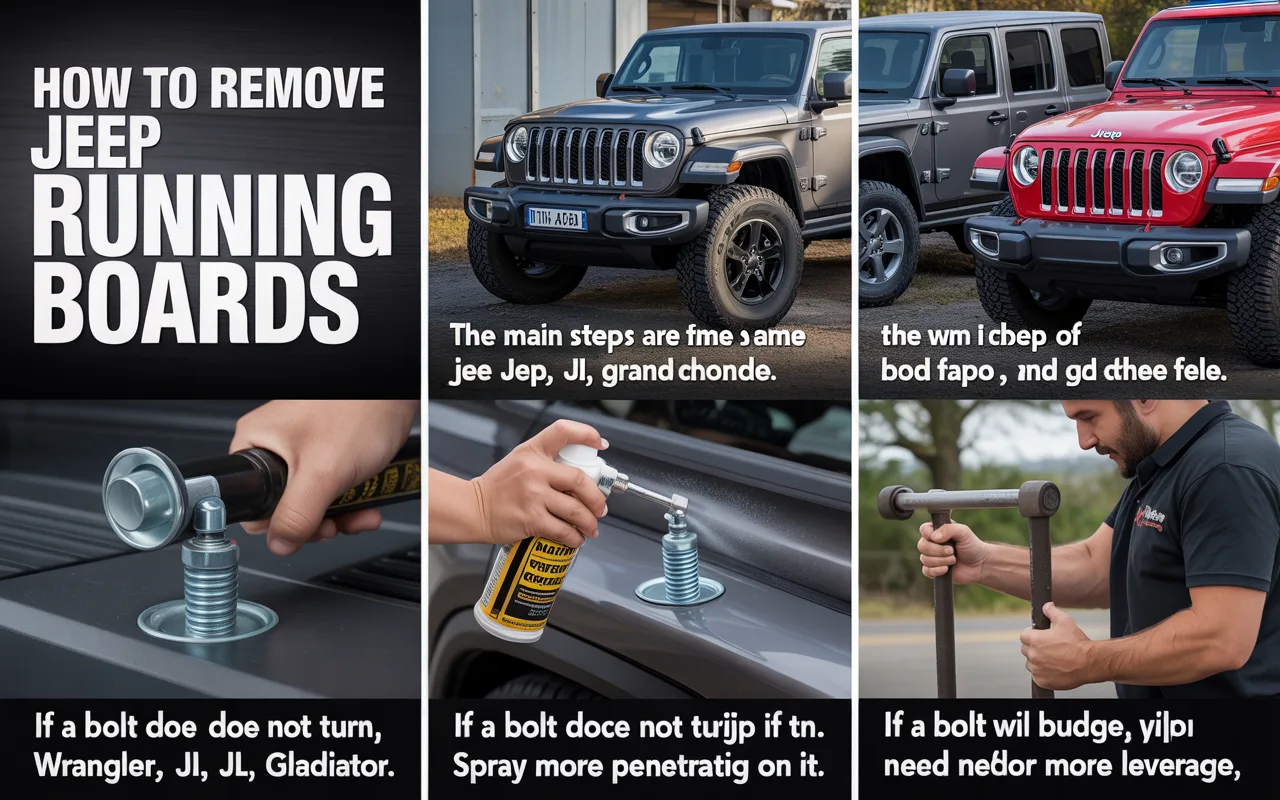
Learn the safe process to remove Jeep running boards with our clear guide. We show you how to remove jeep running boards using simple tools you likely own.
So you want to change the look of your Jeep or maybe put on a new set of steps. The first job is to take the old ones off. Do not worry. This is a job you can do. With some basic tools and a bit of time, you can remove jeep running boards yourself. This guide walks you through each step. We will cover different types of mounts and give you tips to make the work smooth.
Why You Might Want to Remove Your Running Boards
People take off their Jeep running boards for a few good reasons. Maybe the boards are damaged from a trail ride. You might want to install new rock sliders or a different style of step. Some owners just like the cleaner, higher look without them. Whatever your reason, it is a common first step for many Jeep projects.
As Jeep enthusiast and builder Nate McInnes says, “Modifying your Jeep starts with simple removals. Taking off the factory steps is often the first hands-on project that shows an owner what’s possible.”
What You Will Need: Tools and Safety
You do not need fancy tools for this job. Here is a basic list that will handle most Jeep running board setups:
- Socket set and ratchet (common sizes are 13mm, 15mm, 18mm)
- Wrench set
- Screwdrivers (flat-head and Phillips)
- Penetrating oil (like WD-40)
- A friend to help hold the board
- Safety glasses and gloves
Always put on safety glasses before you start. Gloves will keep your hands clean and safe from sharp edges. If your Jeep has been driven in winter salt or on muddy roads, the bolts might be stuck. Spray them with penetrating oil and let it sit for 15 minutes before you try to turn them.
Step-by-Step: Removing Your Jeep Running Boards
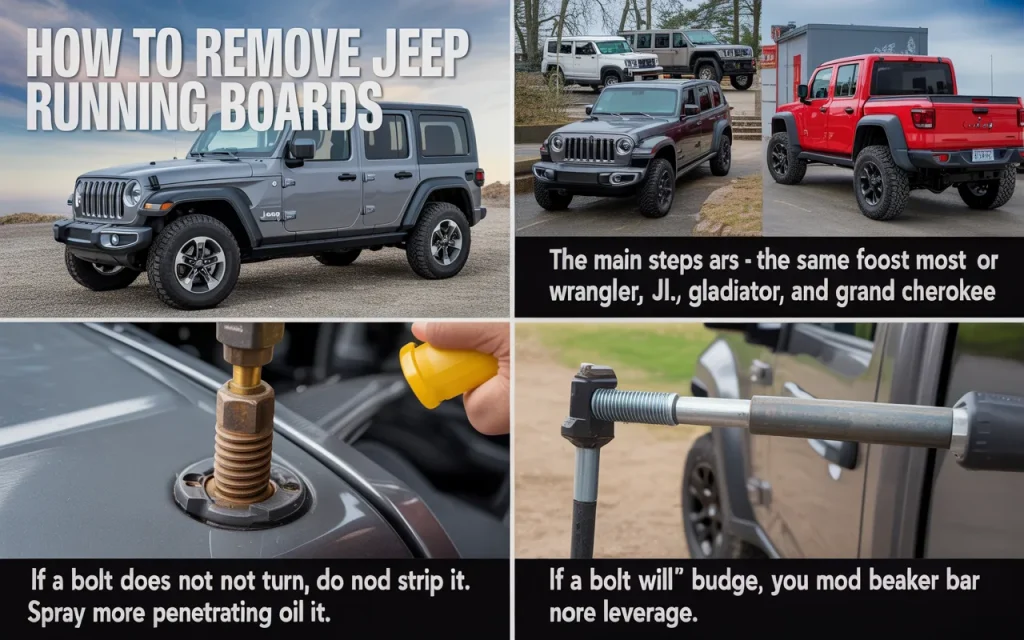
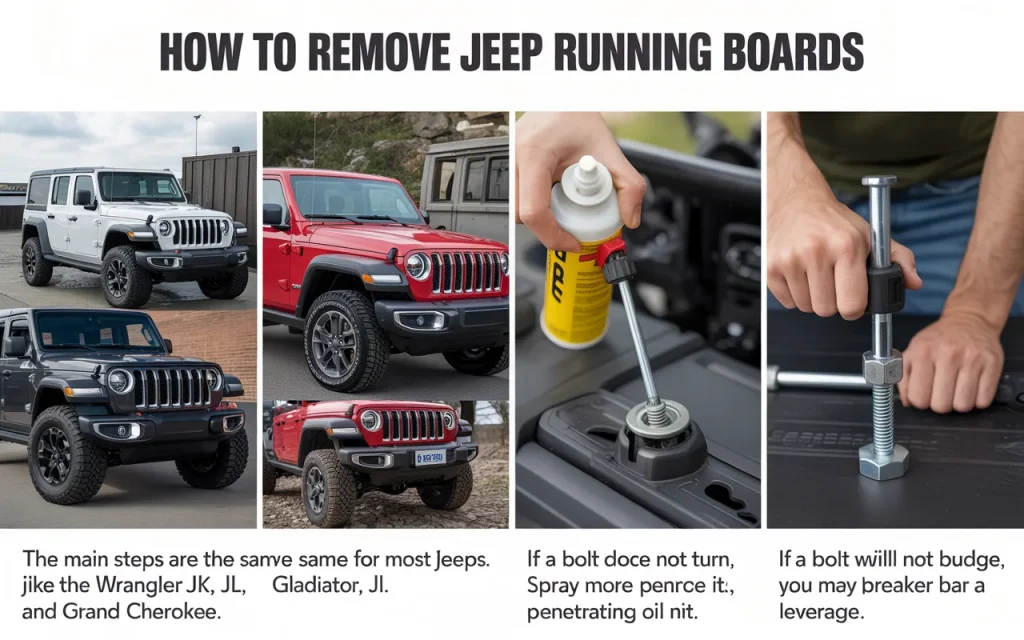
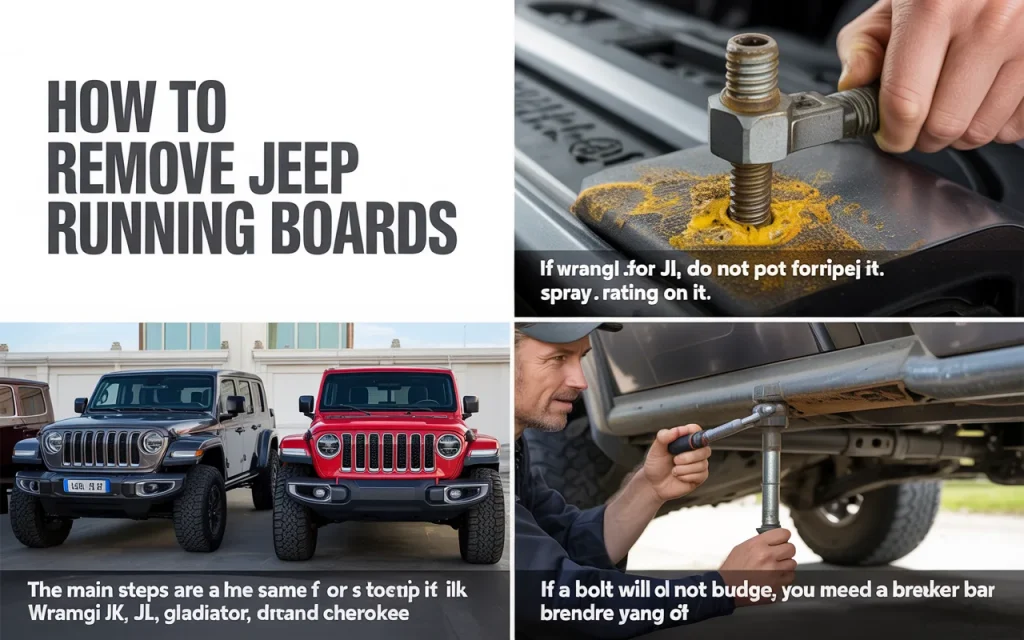
The main steps are the same for most Jeeps like the Wrangler JK, JL, Gladiator, and Grand Cherokee. Always check your owner manual for specific notes about your model.
1. Prepare Your Jeep and Tools
Park your Jeep on a flat, solid surface. Put the transmission in Park (or first gear for a manual) and set the parking brake firmly. For extra safety, you can place wheel chocks behind the tires. Gather all your tools and lay them out where you can reach them.
2. Locate and Loosen the Mounting Bolts
Crawl under the Jeep and look where the running board meets the body frame. You will see a series of bolts or nuts holding brackets in place. The number varies. A common setup uses three or four bolts per bracket, with two or three brackets per side.
3. Deal with Stuck or Rusty Bolts
If a bolt does not turn, do not force it and strip it. Spray more penetrating oil on it. Tap the bolt head gently with a hammer to help the oil seep in. Use a six-point socket for a better grip. Steady, firm pressure is better than a fast, hard jerk.
4. Remove the Bolts and Brackets
Once all bolts are loose, take them out completely. Keep them in a small cup or bag so you do not lose them. Some brackets will fall off as the bolts come out. Others might stay on the running board itself. You can remove them after the board is off the Jeep.
5. Safely Detach and Lower the Running Board
This is when your friend is very helpful. Support the weight of the running board with one hand. With your other hand, gently pull the board away from the Jeep body. It might be held on by plastic clips or just be snug. Slowly lower it to the ground. Be careful not to scratch your Jeep’s paint.
6. Repeat on the Other Side
Go through the same steps on the opposite side of the vehicle.
Common Mounting Types and What to Expect
Not all running boards attach the same way. Here is a quick table to help you know what you might find.
| Mount Type | Description | Common Jeep Models |
|---|---|---|
| Direct Frame Bolt-On | Brackets bolt straight to holes in the frame. Simple and strong. | Wrangler (JK, JL), Gladiator |
| Body Pinch Weld Mount | Uses clips or bolts on the body seam under the doors. | Cherokee, Grand Cherokee |
| Factory Step System | May have extra bolts or wiring for lights. Check for connectors. | Higher trim levels (Overland, etc.) |
Troubleshooting Common Issues
- Rusted Bolts: If a bolt will not budge, you may need a breaker bar for more leverage. Heat from a hairdryer can also expand the metal and help break the rust seal.
- Spinning Bolts: Sometimes the nut on the back side spins. You might need a second wrench to hold that nut in place while you turn the bolt head.
- Hidden Fasteners: Look for plastic end caps or covers on the running board. These might pop off to reveal more bolts.
What to Do After Removal
Once the boards are off, you will see the mounting points on your Jeep’s frame. This is a good time to clean that area. Wipe off any dirt or road grime. If you see minor surface rust, you can sand it lightly and touch it up with matching paint. If you are not putting new steps on right away, you can leave the bolts out. Just know the holes are open. Some people put the bolts back in without the brackets to keep dirt out of the threads.
Frequently Asked Questions
Q: How long does it take to remove jeep running boards?
A: For a first timer, plan for about 1 to 2 hours for both sides. If the bolts are very rusty, it could take longer. With practice, you can do it in under an hour.
Q: Can I remove them by myself?
A: Yes, it is possible. But having a helper makes it much safer and easier when lowering the heavy board. If alone, be sure to fully support its weight.
Q: Will removing the running boards affect my Jeep?
A: It will not affect how your Jeep drives. It changes the look and makes the step-in height taller. Be ready for that if you have shorter passengers.
| Question | Short Answer |
|---|---|
| Do I need to lift the Jeep? | No, you can do this on the ground. |
| What if I break a bolt? | You would need to extract it with a special tool. |
| Can I sell the old running boards? | Yes, there is a good used market for them. |
Putting It All Together
Taking off your running boards is a straightforward task. It gives you a chance to work on your Jeep and learn how things are put together. The key is to be patient, especially with rusty bolts. The right tools and a helper make the job go fast.
Remember, the goal is to get the job done without stress or damage. As auto repair expert Sarah Chen notes, “The difference between a frustrating job and a satisfying one is often just taking five extra minutes to prepare your tools and apply lubricant.”
Once the boards are off, you can enjoy the new look. Or, you are ready for your next project, like installing new steps or rock guards. This simple task opens the door to more custom work.
Conclusion
You now know how to remove jeep running boards. It is a perfect first project for any Jeep owner. You save money on labor and gain the confidence to tackle more work on your vehicle. Gather your tools, be safe, and take your time. Before you know it, those old steps will be off. You will be ready for the next change to your Jeep.
Jeep owner and trail guide Mike Rodriguez sums it up well: “Each modification, even a removal, makes the Jeep more truly yours. It starts with a single bolt.” So get out there, get your hands a little dirty, and enjoy the process of making your Jeep fit your vision. Happy wrenching
1 thought on “How to Remove Jeep Running Boards”