
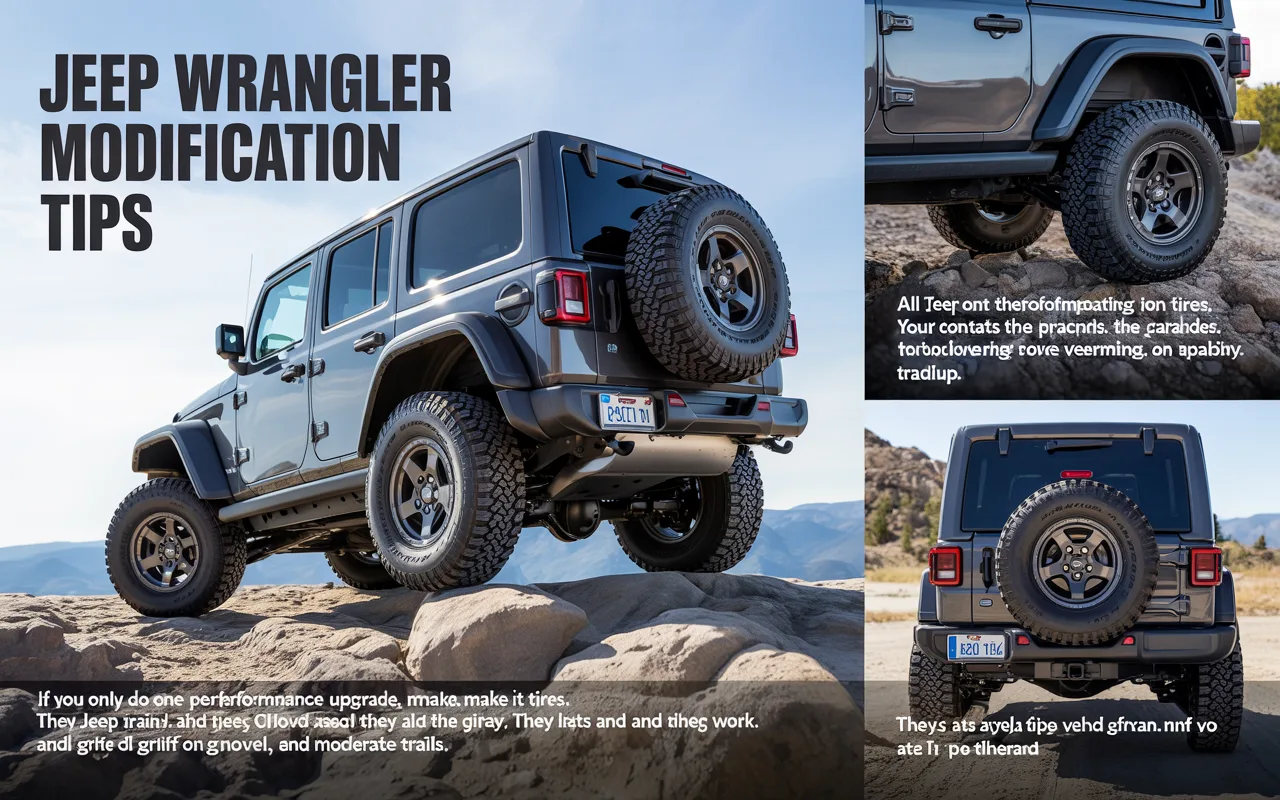
Looking for practical jeep wrangler modification tips? Learn which upgrades work best for daily driving and off-road trails. Simple advice from experienced owners to help you build your dream rig.
So you finally got a Jeep Wrangler. Congrats. Whether it is a JK, JL, or an older TJ, you are now part of a community that sees vehicles as more than just transportation. Walking out to a stock Wrangler in the parking lot feels different than walking out to a regular car. You know it has potential. You know it can go places other vehicles cannot. But maybe it needs a little something to make it feel like yours.
That is where modification comes in. But here is the thing most new owners learn the hard way: jeep wrangler modification tips are everywhere, and not all of them are good. Some people will tell you to rush out and buy a six-inch lift and forty-inch tires before you have even taken the top off. That is a mistake. Building a Jeep should be fun, not frustrating. It should also make sense for how you actually drive.
Let us talk about the smart way to approach this. We will cover the basics that protect your investment, the upgrades that improve capability, and the small touches that make daily life with a Wrangler better. No fluff. Just real advice from people who have been there.
Where to Start? Think About Your Real Driving First
Before you order anything online, take a honest look at how you use your Wrangler. This is the most important step in the whole process.
Do you drive thirty miles to work each day on the highway? Do you live somewhere with harsh winters? Are you planning to hit rocky trails every weekend, or is this more about having a cool vehicle for beach trips and camping? Your answers change everything.
If you spend most of your time on pavement, you want upgrades that add capability without ruining your ride quality. If you are heading straight for the toughest trails, you need durability above comfort. There is no single right answer. There is only the right answer for you.
Quote: “The best Jeep modification is the one that gets you home safely. Don’t build for Instagram. Build for the places you actually want to go.” — David Freiburger, automotive journalist and off-road enthusiast
Protection First: Keep Your Jeep Safe from Damage
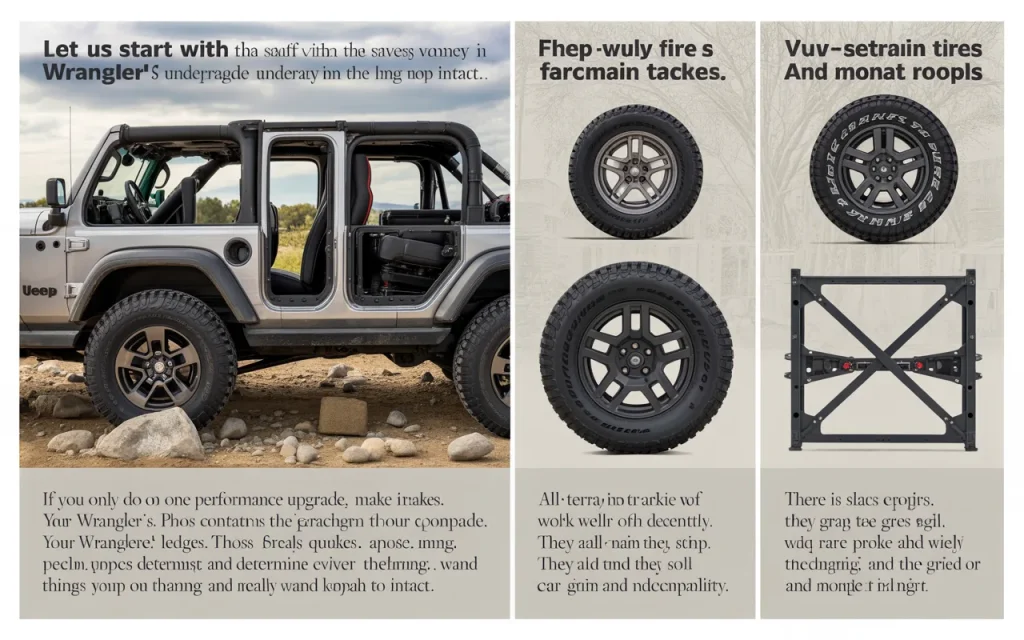
Let us start with the stuff that saves you money in the long run. Your Wrangler has vulnerable spots underneath. Rocks, stumps, and unexpected ledges can punch holes in things you really want to keep intact.
Skid Plates and Rock Sliders
The oil pan, transmission, and transfer case all hang down below the frame. They are exposed. Adding skid plates protects these expensive components. You do not need a full suite of titanium armor right away. Start with the transfer case skid plate. It is a common impact point.
Rock sliders are different from nerf bars or running boards. Real sliders bolt to the frame and take the full weight of the vehicle if you slide onto a rock. If you plan to off-road at all, these are non-negotiable. They also protect your body panels from trail damage and parking lot door dings.
| Protection Part | What It Guards | Why It Matters |
|---|---|---|
| Engine Skid Plate | Oil pan, front differential | Prevents oil loss and expensive engine damage |
| Transfer Case Skid | Transfer case, transmission pan | Protects the most vulnerable low-hanging parts |
| Rock Sliders | Rocker panels, door bottoms | Allow sliding over obstacles without crushing bodywork |
Tires and Wheels: The Biggest Bang for Your Buck
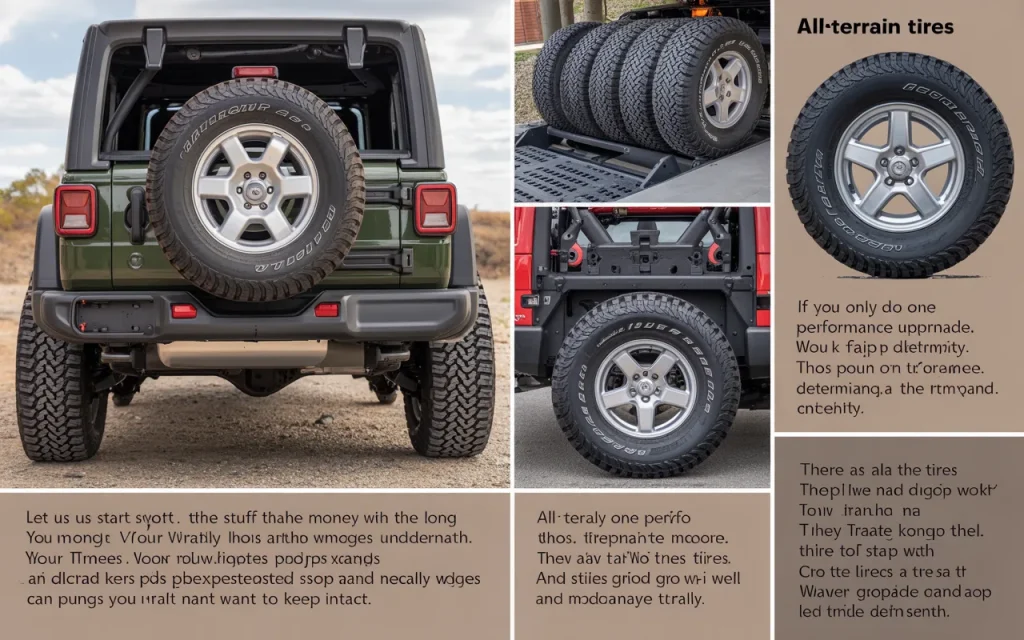
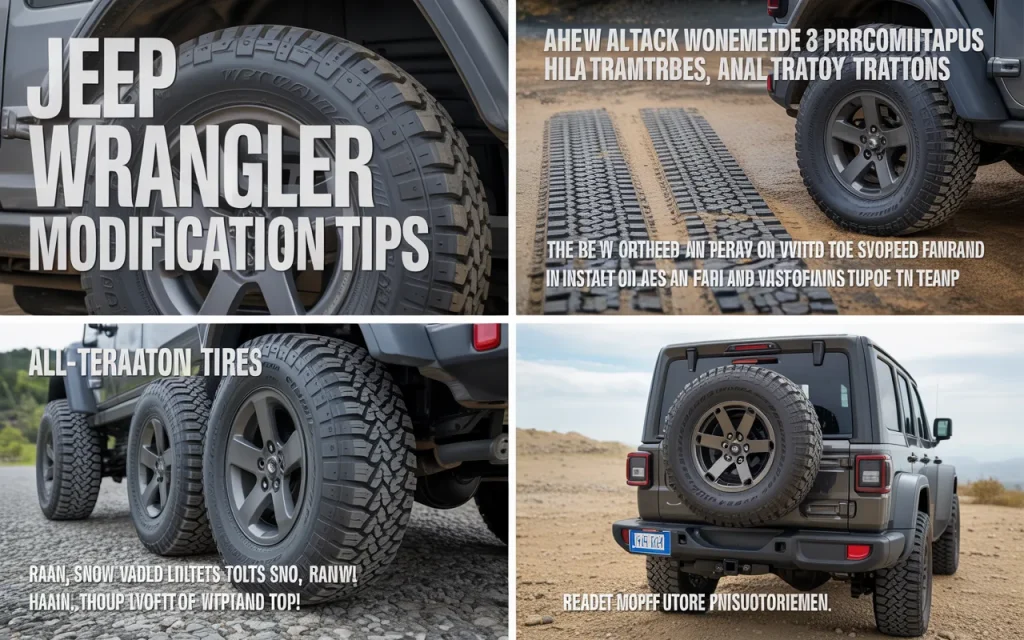
If you only do one performance upgrade, make it tires. Your Jeep contacts the ground in four small patches. Those patches determine everything about traction, braking, and capability.
Choosing the Right Tire Type
You have two main choices for off-road driving: all-terrain or mud-terrain.
All-terrain tires work well for most people. They handle rain and snow decently. They are quiet on the highway. They last a long time. And they still grip well on dirt, gravel, and moderate trails.
Mud-terrain tires look aggressive because they are aggressive. The big tread blocks dig into soft ground and clean out mud better. But they are louder on pavement. They vibrate more. They wear faster. Unless you regularly find yourself in deep mud or rock crawling, all-terrains probably serve you better.
Size Matters, But Not How You Think
Bigger tires look cool. Everyone knows that. But going too big without supporting mods hurts performance. A thirty-three inch tire fits most Wranglers with no lift. Thirty-fives usually need a lift and possibly new fender flares.
There is also the spare tire issue. That rear gate was designed for the stock tire weight. Slap a heavy thirty-five on there without reinforcing the mount, and you will eventually hear rattling. Then the gate starts sagging. Then you are buying hinges.
Quote: “Tires are the single most important upgrade you can make. A Jeep on good tires with stock everything else will out-perform a heavily modified Jeep on junk tires every single time.” — Matt Konkle, Quadratec Managing Editor
Suspension Lifts: Do It Right or Pay Twice
A lift kit does more than make your Wrangler look taller. It creates space for larger tires. It improves approach and departure angles. It lets the suspension articulate over obstacles.
Small Lifts vs. Big Lifts
For most people, a two to three inch lift is the sweet spot. You can fit thirty-three or thirty-five inch tires. The ride stays acceptable. You do not need to replace control arms or drive shafts right away.
When you go to four inches or more, everything changes. You need longer control arms to keep the axle positioned correctly. You might need a new front driveshaft. The steering geometry changes. It gets expensive fast.
Here is a quick comparison of what different lift sizes typically require:
| Lift Height | Tire Fitment | Additional Parts Usually Needed |
|---|---|---|
| 1.5 – 2 inches | Up to 33 inches | Nothing else required for basic fit |
| 2.5 – 3 inches | 33 – 35 inches | Longer sway bar links, bump stop extensions |
| 4+ inches | 35 – 37 inches | Adjustable control arms, longer driveshaft, new track bars |
Installation Reality Check
Putting on a lift kit is not impossible for a home mechanic, but it is serious work. Springs are under tension. Bolts can be rusted. Everything is heavy. If you are not comfortable with suspension work, pay a shop. It costs money, but so does fixing something you broke.
Quote: “After any suspension modification, check every single bolt at fifty miles. Then check again at two hundred miles. Things settle. Loose bolts ruin parts.” — Rancho Tech Tips
Gearing and Power: Making It All Work
Here is something nobody talks about at the parts counter: bigger tires change your final gear ratio. It is physics. Larger diameter tires effectively make your gears taller. Your engine works harder. Acceleration suffers. Transmission hunting becomes annoying on the highway.
When to Re-gear
If you go to thirty-five inch tires on a Wrangler that came with 3.21 or 3.73 gears, you will notice the difference. The Jeep feels sluggish. It downshifts constantly on hills. Fuel mileage drops.
Re-gearing means changing the ring and pinion in both differentials. It costs around two thousand dollars. But it brings back the pep. It lets the engine operate in the correct RPM range. If you plan to stay with thirty-threes, you can probably skip this. For thirty-fives and up, start saving.
Throttle Controllers as a Stopgap
There are little devices that plug into your Jeep and change how the throttle responds. They make the pedal feel more sensitive. The Jeep feels faster because it jumps off the line harder. These do not add power. They just change the signal from your foot to the engine. Some people love them. Some think they are a band-aid. They are much cheaper than re-gearing, but they do not fix the underlying issue.
Lighting: See and Be Seen
Factory headlights on older Wranglers are famously bad. Like, dangerously bad. Upgrading lights improves safety and makes night driving less stressful.
LED Conversions
LED headlights are a massive improvement. They are brighter. They use less power. They last practically forever. Drop-in replacements exist for every Wrangler model. The installation takes an hour or less.
Auxiliary lighting is great too. A light bar in the bumper or on the A-pillars lights up the trail at night. Just remember that off-road lights are for off-road use. Running them on highway blinds other drivers. Be considerate.
Fender and Rock Lights
Small lights mounted in the wheel wells or under the rock sliders help at night when you are picking a line over rocks. They also look cool at camp. These are easy to add and relatively cheap.
Interior Comfort and Storage
You spend time inside your Jeep. It should be comfortable and organized.
Seat Covers and Floor Liners
Wranglers get dirty. It is a fact of life. Muddy boots, wet dogs, sandy kids from the beach. Protecting your carpet and seats makes cleanup much easier.
Heavy-duty floor liners trap water and dirt. You pull them out, hose them off, and put them back. Neoprene seat covers handle moisture and wipe clean. These are inexpensive upgrades that keep your interior nice.
Organization Solutions
The center console in a Wrangler is a black hole of random stuff. Tray inserts create levels so you can find your phone and sunglasses without digging. Under-seat storage boxes use space that normally goes to waste. Cargo area organizers keep recovery gear from sliding around.
| Interior Upgrade | Purpose | Installation Difficulty |
|---|---|---|
| Floor Liners | Trap mud, snow, and water | Drop-in, no tools |
| Seat Covers | Protect upholstery from wear and dirt | Moderate, requires pulling and stretching |
| Console Tray | Organize small items inside console | Drop-in |
| Grab Handles | Help passengers enter lifted Jeeps | Wrap around roll bar |
Recovery Gear: Be Prepared
Off-roading carries risk. Not big risk, but real risk. You can get stuck. It happens to everyone. Having the right gear turns a bad situation into a story.
What to Carry
A recovery kit should include:
- A kinetic recovery rope (not a tow strap with metal hooks)
- Soft shackles (lighter and safer than metal D-rings)
- A pair of heavy gloves
- A shovel
If you go alone, a winch is worth its weight in gold. Winches let you pull yourself out without needing another vehicle. They require a strong bumper and proper installation. They are expensive, but they are also the ultimate get-home-free card.
Important Safety Note: Never wrap a strap around a steering component or tow ball. Those can break loose and become deadly projectiles. Use proper recovery points only.
Small Mods That Make a Big Difference
Not every upgrade needs to be about hardcore off-roading. Some of the best jeep wrangler modification tips are about small quality-of-life improvements.
Hood Latches
Factory hood latches on JK Wranglers let the hood flutter at highway speeds. It looks scary even if it is not dangerous. Aftermarket latches lock the hood down tight. Some are locking for security. Some just look better.
Stubby Antenna
The stock antenna whips around and hits garage doors. A short stubby antenna screws right on and fixes the problem. Reception stays the same. Cost is minimal.
Dead Pedal
Automatic Wranglers do not have a place to rest your left foot. It just floats there. An aftermarket dead pedal bolts in and gives you a comfortable foot rest. It makes long drives much better.
Grab Handles
Getting into a lifted Jeep is harder for passengers. Grab handles on the roll bar give them something to hold onto. They also help the driver brace during off-camber trails.
Build Your Jeep, Don’t Just Buy Parts
Here is the truth about modifying a Wrangler: it is a process. You add something, you drive it, you learn what works and what does not. The Jeep changes over time. You change over time. That is the point.
The best jeep wrangler modification tips are not about specific products. They are about approach. Start with protection. Move to tires. Lift it if you need more clearance. Add comfort items along the way. Skip the flashy stuff that does nothing useful.
Quote: “A Jeep is never finished. You just reach a point where you are happy with it for now. Then you see a trail that requires one more upgrade, and the cycle starts again.” — Ryan Miller, Jeep trail guide and builder
Frequently Asked Questions
What is the first modification I should make to my Jeep Wrangler?
Start with protection. Floor liners keep the interior clean. Rock sliders protect the body. Skid plates guard the underside. These upgrades preserve your Jeep’s condition and resale value while letting you learn your vehicle’s capabilities.
Do I need a lift kit to put bigger tires on my Wrangler?
Not always. Many Wranglers fit 33-inch tires with no lift. Some fit 35s with just fender changes and careful wheel choice. Check your model year and trim level before buying anything.
Will bigger tires hurt my gas mileage?
Yes. Larger tires weigh more and have more rolling resistance. You will see a mileage drop. Re-gearing helps restore some efficiency, but bigger tires always cost you at the pump.
Can I install a lift kit myself?
If you have mechanical experience, good tools, and a safe place to work, yes. If you are learning as you go, find a friend who has done it before or pay a shop. Safety matters more than saving money.
How do I choose between all-terrain and mud-terrain tires?
Think about your driving mix. All-terrains work for daily drivers who hit trails on weekends. Mud-terrains are for people who spend significant time in deep mud or rocks and accept the trade-offs in noise and wear.
What should I do with my spare tire when going to 35s?
You need to address the spare mount. Options include a tailgate reinforcement kit, a heavy-duty hinge replacement, or a bumper with a swing-out carrier. The stock mount was not designed for that weight.
Why does my Jeep wander on the highway after lifting it?
Lifting changes suspension geometry. You likely need a professional alignment and possibly adjustable control arms to correct caster angle. This is normal and fixable.
Are expensive shocks worth the money?
Generally, yes. Better shocks control the suspension more effectively. They improve ride quality on road and traction off road. Cheap shocks compromise both.
How often should I re-torque bolts after modifications?
Check everything at 50 miles, then again at 200 miles. After that, inspect before and after any serious off-road trip. Vibrations can loosen fasteners over time.
What recovery gear do I absolutely need?
A kinetic recovery rope, two soft shackles, and gloves cover most situations. Add a shovel for self-recovery. If you wheel alone or in remote areas, a winch becomes essential.
Conclusion
Building your Wrangler should feel good. It should be about creating something that fits your life and your adventures. The jeep wrangler modification tips that matter most are the ones that keep you driving, not wrenching in the driveway every weekend.
Take your time. Buy quality parts once instead of cheap parts twice. Ask questions in forums and clubs. Most Jeep owners love talking about their rigs and helping new people.
And remember: the goal is not to have the most modified Jeep in the parking lot. The goal is to have a Jeep that takes you where you want to go and brings you back safely. Everything else is just details.
Now go drive it.