
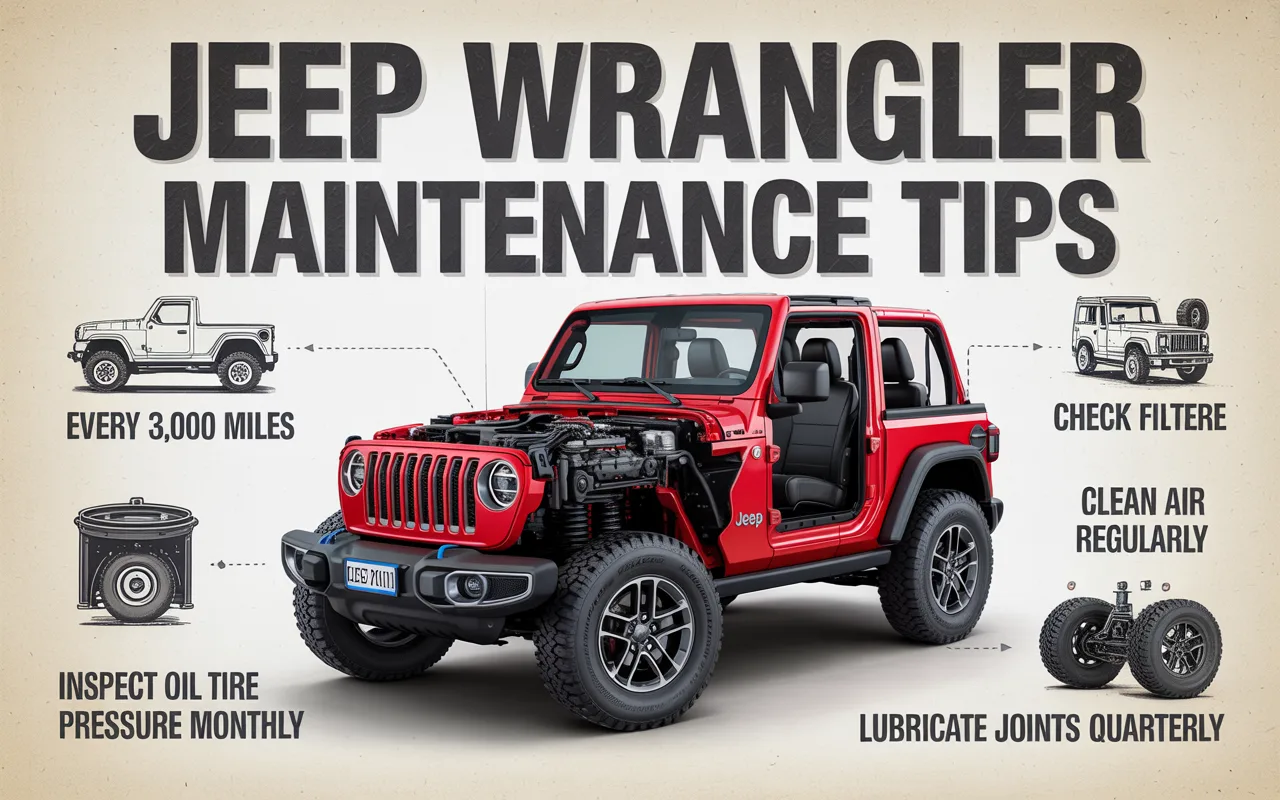
Want to keep your Jeep Wrangler running strong for years of trails and daily drives? Discover practical jeep wrangler maintenance tips that cover routine checks, off-road care, and fixes for common issues. Follow these steps to stay ahead of problems and enjoy every ride.
Why Regular Care Keeps Your Wrangler Reliable
Jeep Wranglers thrive on adventure, but they face dust, mud, water, and bumps that wear parts faster than most cars. Simple habits prevent big repairs and keep the vehicle safe on roads or trails. Owners who stay consistent report fewer breakdowns and higher resale value.
Start with your owner’s manual for model-specific details, like the JL series from 2018 onward. Many use an oil life monitor to signal changes, but real-world driving often calls for earlier service. In places with salt on roads or heavy rain, extra attention to the underbody pays off.
Regular checks build confidence. You spot small issues before they grow, saving time and money. This approach fits both casual drivers and serious off-roaders.
Basic Routine Maintenance Schedule
Follow a clear plan based on mileage and use. For most modern Wranglers with 3.6L V6 or 2.0L turbo, aim for oil changes every 5,000 to 7,500 miles, or sooner in tough conditions like frequent short trips or dust.
Tire rotations every 6,000 to 8,000 miles even out wear and improve grip. Check fluid levels monthly: engine oil, coolant, brake fluid, and transmission.
At 20,000 miles, inspect brakes, suspension, and CV joints. Change air filters around 30,000 miles, or earlier if dusty. Transfer case and axle fluids need attention every 30,000 to 60,000 miles under severe use.
Severe duty includes off-roading, towing, or extreme weather, so shorten intervals. Many owners change oil every 5,000 miles for peace of mind.
| Mileage | Key Tasks |
|---|---|
| Every 5,000-7,500 | Oil & filter change, tire rotation, fluid checks |
| Every 20,000 | Brake inspection, suspension check, cabin filter |
| Every 30,000-60,000 | Transfer case fluid, axle fluid, air filter |
This table gives a quick reference for common intervals.
Engine and Oil Care
The heart of your Wrangler needs clean oil to stay smooth. Use the recommended synthetic blend or full synthetic for better protection in heat or cold. Change the filter each time to catch debris.
Watch for leaks around valve covers on older Pentastar engines. If you see spots under the vehicle, address them quickly. Spark plugs last longer in newer models, often up to 100,000 miles, but check during tune-ups.
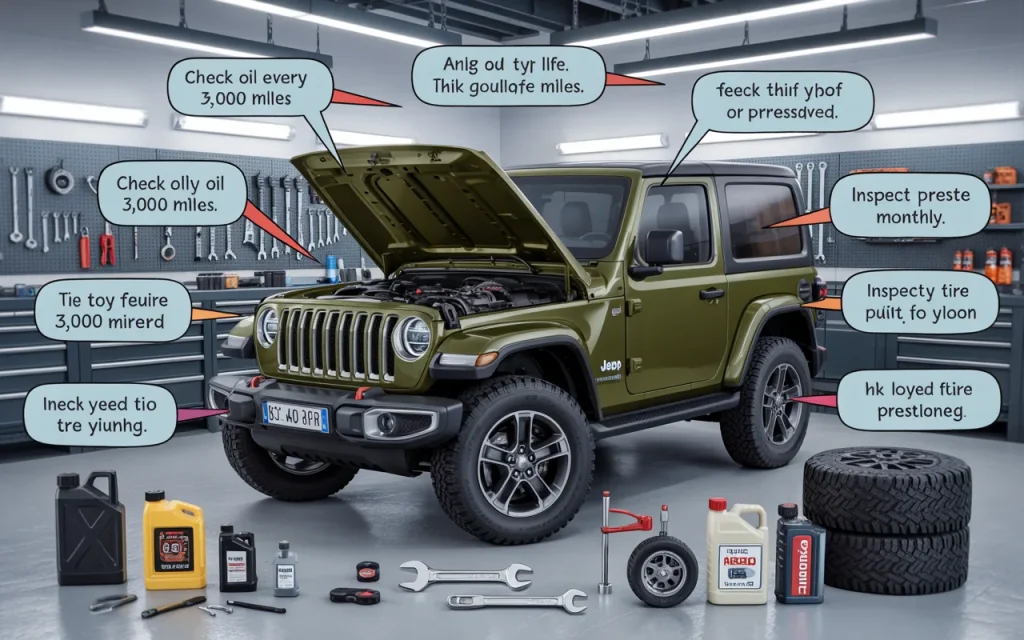
Coolant checks prevent overheating on long climbs. Flush and replace every few years or per the manual. A healthy engine means reliable power whether crawling rocks or cruising highways.
Regular oil changes are the single best thing you can do for engine life in a Wrangler,” says a long-time JL owner from forums.
Tire and Wheel Tips
Tires take the most abuse off-road. Keep pressure right for the terrain – lower for sand or rocks, normal for pavement. Rotate often to avoid uneven wear that causes vibrations.
Inspect for cuts, bulges, or embedded stones after trails. Balance and align wheels if you feel shakes. All-terrain or mud tires need extra care since they wear faster on roads.
Spare tire checks matter too. Many forget it until needed. Keep it inflated and mounted securely.
Brakes, Suspension, and Steering
Brakes wear quicker with heavy use or towing. Listen for squeals or grinding and inspect pads and rotors regularly. Flush brake fluid every couple years to avoid moisture buildup.
Suspension parts like ball joints, tie rods, and bushings take hits off-road. Check for play or leaks. Tighten bolts to spec after rough rides.
Death wobble – that scary front-end shake – often comes from worn parts or loose steering. Fix loose components early. Alignment helps too.
“Check your steering and suspension torque after every big trail day,” advises an experienced off-roader.
Fluids and Drivetrain Care
Jeeps have several fluids beyond oil. Transmission fluid changes every 60,000 miles or sooner in severe duty. Manual or auto, fresh fluid keeps shifts smooth.
Differentials and transfer case see stress in 4×4 mode. Change gear oil after water crossings or mud. Use the right type to avoid wear.
Power steering fluid and coolant need top-offs and periodic flushes. Leaks show as puddles or low levels on dipsticks.
| Fluid | Check Interval | Change Interval (Severe Use) |
|---|---|---|
| Engine Oil | Monthly | 5,000 miles |
| Transfer Case | Every oil change | 30,000 miles |
| Differentials | After off-road | 30,000-50,000 miles |
Use this to track drivetrain needs.
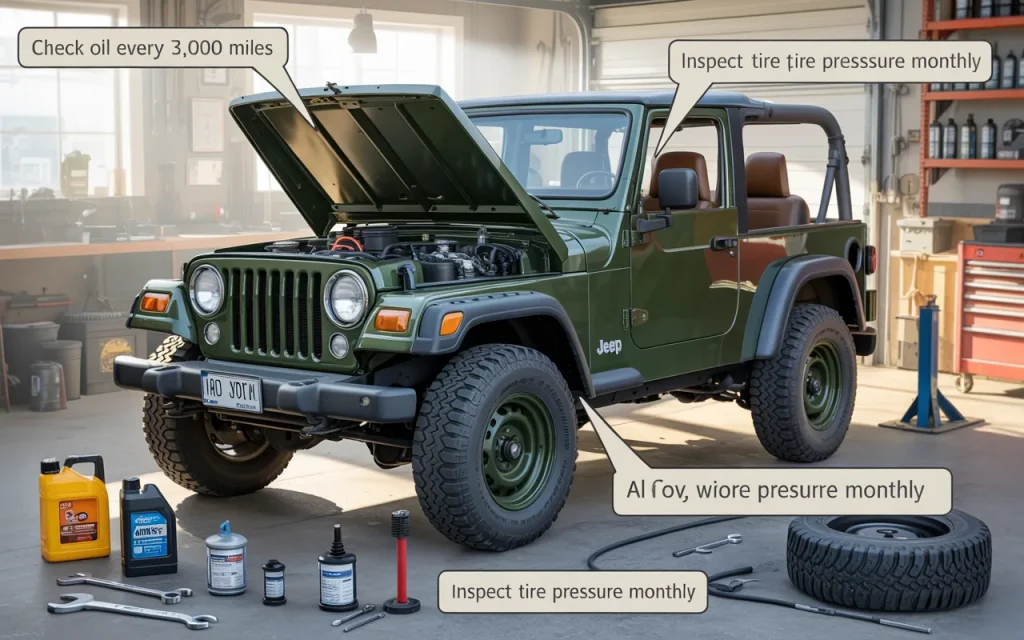
Off-Road Specific Maintenance
After trails, wash the undercarriage to remove mud and salt. Pressure rinse wheel wells and frame to stop buildup. Dry well to avoid trapped moisture.
Inspect skid plates for damage and clear debris from moving parts. Check axle seals and breather tubes for clogs.
Lubricate hinges and latches since doors get dusty. Grease fittings if equipped. Post-trail walks around the vehicle catch issues fast.
Rust hits hard in wet areas. Rinse salt off quickly and consider undercoating for protection. Drill small drain holes in frame low points if water pools.
Common Problems and Quick Fixes
Water leaks from doors or tops happen often. Check seals and drains. Rust on hinges or frame shows in salty regions – treat early with converters.
Electrical glitches like loose fuses or battery issues appear. Clean terminals and check grounds.
Transmission rough shifts may need fluid refresh. Steering wander ties to alignment or worn parts.
Address small things promptly to avoid bigger costs.
Cleaning and Protection
Wash regularly, especially after off-road. Use gentle soap and avoid high pressure on paint chips. Wax every few months for shine and protection.
Interior care includes vacuuming sand and wiping surfaces. Protect soft tops from sun with covers.
Battery terminals stay clean for reliable starts. Many use dielectric grease.
Tools and DIY Basics
Keep a basic kit: jack, tools, tire gauge, fluids. Learn simple tasks like oil changes or filter swaps to save money.
Follow torque specs for bolts. Use ramps for safe under-vehicle work.
When to See a Professional
Some jobs like alignments or major fluid flushes benefit from shops. Warranty work stays at dealers. Listen to unusual noises or lights.
Frequently Asked Questions
How often should I change oil in my Wrangler?
Every 5,000 to 7,500 miles, or sooner for off-road or dusty driving.
What causes death wobble and how to fix it?
Loose or worn steering parts like tie rods. Tighten or replace, then align.
How do I prevent rust on my Jeep?
Wash undercarriage after exposure to salt or mud, dry well, and apply protective coatings.
When to change differential fluid?
Every 30,000 miles in severe use, or after water crossings.
Is DIY maintenance safe for beginners?
Start with basics like oil changes and tire pressure. Use guides and take harder tasks to pros.
How often rotate tires?
Every 6,000 to 8,000 miles for even wear.
What if my Jeep leaks water inside?
Check door seals, drains, and soft top fit. Clear clogs.
Best way to check fluids?
Monthly with the engine off on level ground, using dipsticks.
Should I undercoat my Wrangler?
Yes, especially in wet climates, for extra rust protection.
How to spot suspension wear?
Look for leaks, unusual noises over bumps, or uneven tire wear.
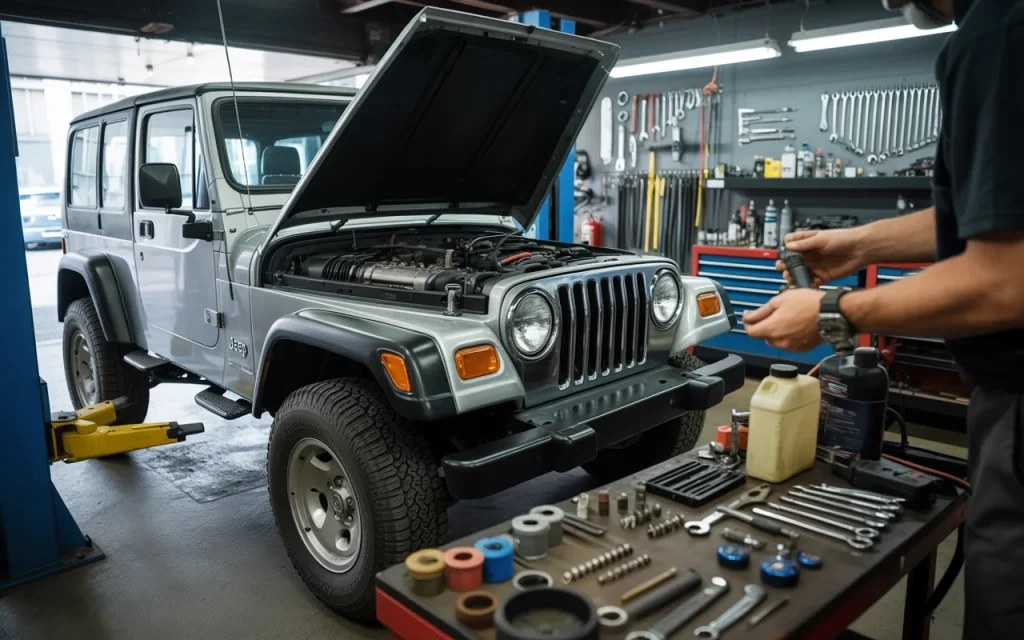
Wrapping It Up
Keeping up with jeep wrangler maintenance tips lets you enjoy trails and roads without worry. From oil changes and tire rotations to post-off-road washes and fluid checks, these steps protect your investment and keep performance high.
Apply what fits your driving style, whether daily commutes or weekend adventures. Track services in a notebook or app for reminders. Join Jeep forums for model-specific advice from other owners.
Your Wrangler stays ready for the next path with consistent care. Start small today, and you’ll see the difference in reliability and fun. Safe travels!