
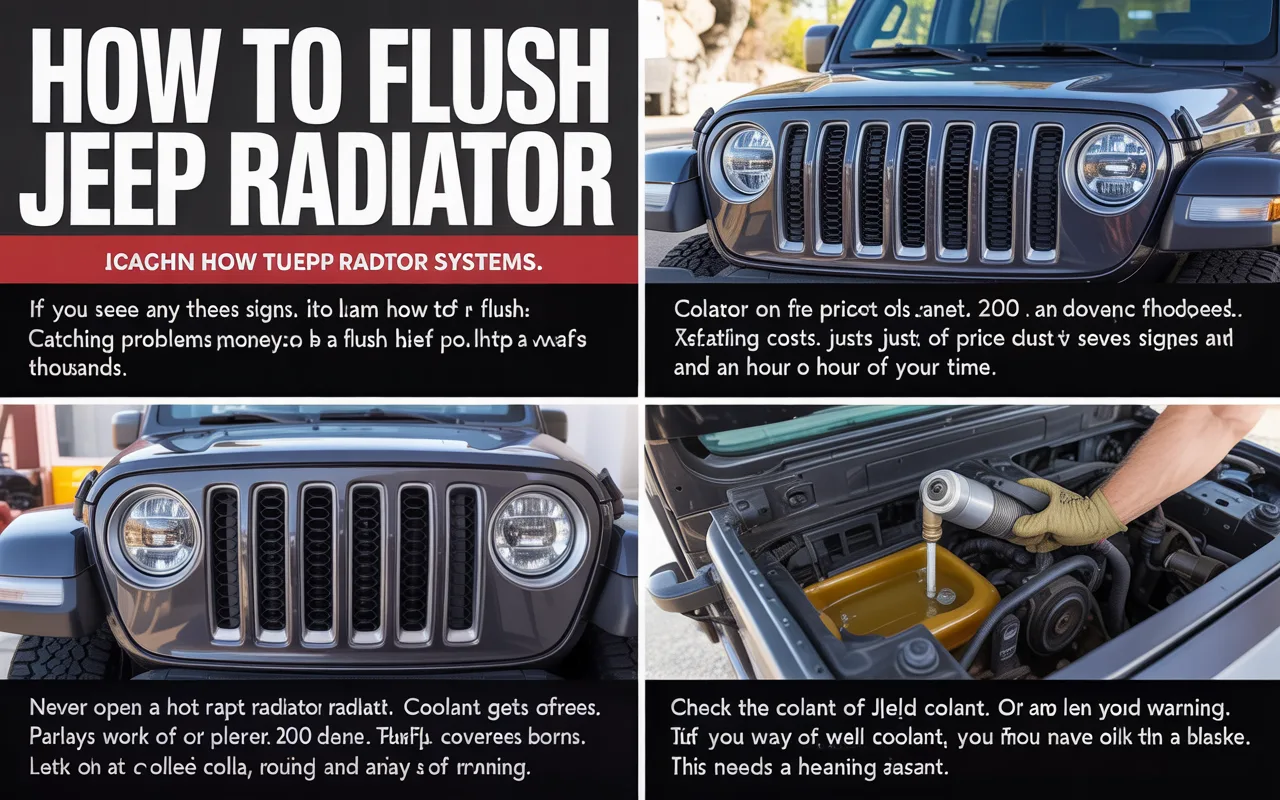
Is your Jeep running hot? Flush Jeep Radiator removes old coolant and dirt. This keeps your engine cool and prevents damage. You can do this job at home with basic tools. It takes about one hour and saves money on repairs.
Your Jeep works hard. It goes off-road, hauls gear, and drives in all weather. The cooling system works just as hard. Over time, old coolant breaks down. It turns acidic and can harm metal parts. Rust and scale build up inside. This blocks the small tubes in the radiator. When this happens, your engine gets too hot.
A clean cooling system helps your Jeep last longer. Fresh coolant has additives that stop rust. It also lubricates the water pump. The water pump is the heart of your cooling system. If it fails, you face big repair bills.
“Most cooling system failures come from neglected maintenance,” says Mike Thompson, a mechanic with 20 years of experience. “A simple radiator flush every two years prevents 90 percent of these problems.”
Regular flushes also keep your heater working well. The heater core is a small radiator inside your dash. When it gets clogged, you have no heat on cold mornings. Flushing the whole system keeps everything clear.
Signs You Need to Flush Jeep Radiator
Your Jeep tells you when it needs cooling system service. Watch for these warning signs:
| Warning Sign | What It Means |
|---|---|
| Temperature gauge runs high | Coolant flow is restricted |
| Coolant looks rusty or muddy | Rust and debris have built up |
| Sweet smell inside the Jeep | Coolant leak or overflow |
| Heater blows cold air | Heater core may be clogged |
| Low coolant level often | Possible leak or overheating |
If you see any of these signs, it is time to learn how to flush Jeep radiator systems. Catching problems early saves money. A new engine costs thousands. A flush costs just the price of coolant and an hour of your time.
What You Need Before You Start
Gather these items before you begin:
Tools and Supplies:
- Distilled water (2-4 gallons)
- New coolant (check your manual for the right type)
- Radiator flush solution (optional)
- Drain pan (holds at least 2 gallons)
- Funnel
- Safety glasses
- Gloves
- Pliers or screwdriver (for hose clamps)
- Wrench set
Safety First:
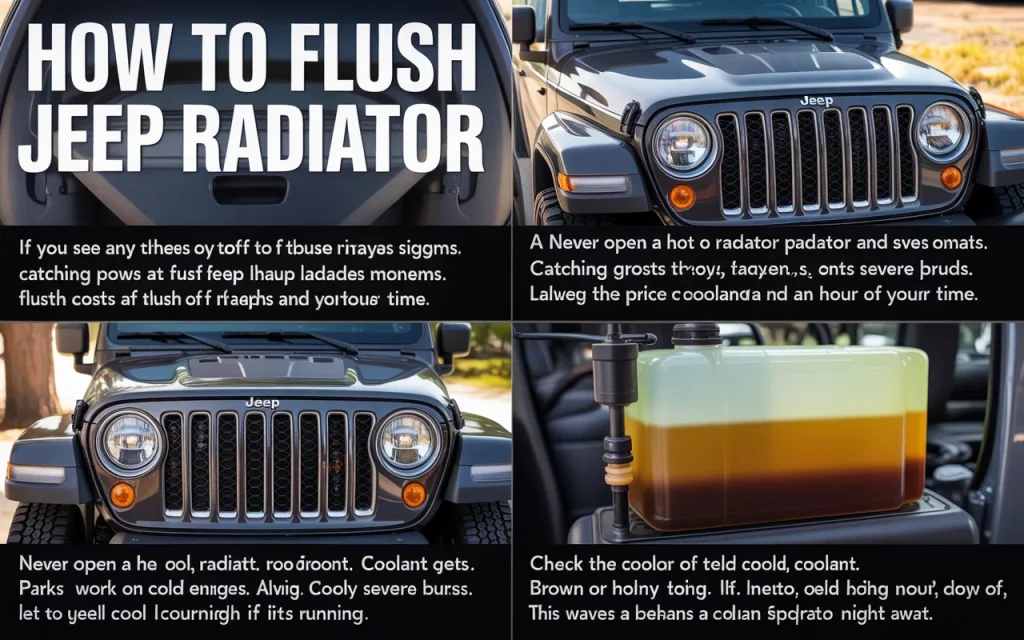
Never open a hot radiator cap. Coolant gets over 200 degrees and sprays with force. This causes severe burns. Always work on a cold engine. Park on level ground and let the Jeep cool overnight if it was running.
“I always tell my customers to use distilled water, not tap water,” notes Sarah Chen, an automotive engineer. “Tap water has minerals that leave deposits in your radiator. Distilled water keeps everything clean.”
Step-by-Step: How to Flush Jeep Radiator
Step 1: Locate the Radiator Drain
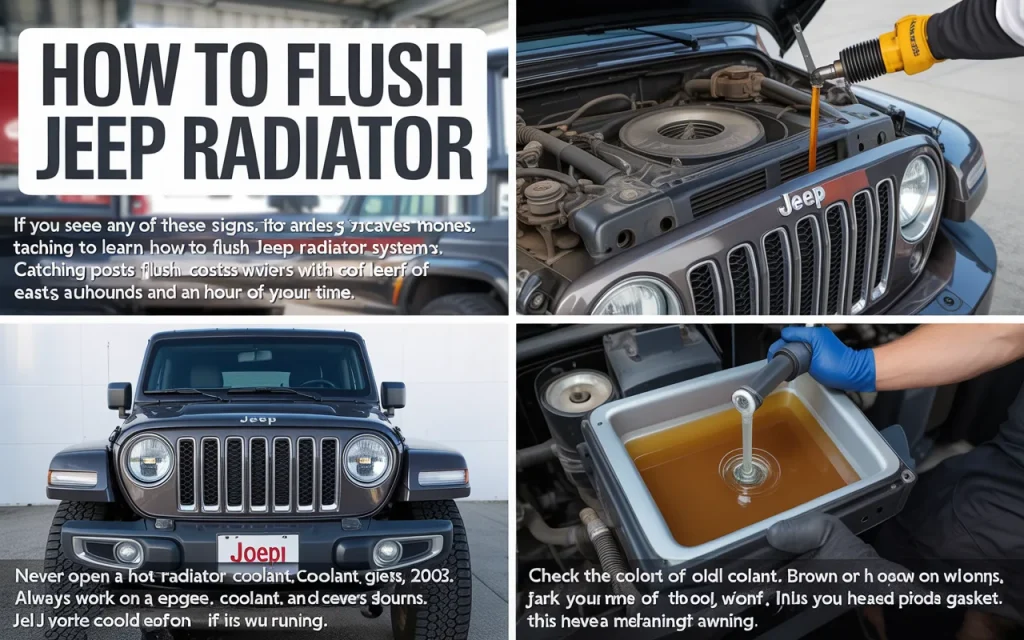
Find the drain valve at the bottom of your radiator. It looks like a small plastic wing nut or petcock. Some Jeeps have a drain plug instead. Place your drain pan under this valve. Make sure the pan is large enough to hold all the old coolant.
Step 2: Drain the Old Coolant
Open the radiator cap first. This lets air in and helps the fluid drain faster. Then open the drain valve by hand. If it is tight, use pliers gently. Do not force it or it may break. Let all the old coolant flow into the pan.
Check the color of the old coolant. Green, orange, or yellow is normal. Brown or rusty means you waited too long. If you see oil in the coolant, you may have a blown head gasket. This needs a mechanic right away.
Close the drain valve when empty. Dispose of old coolant properly. Auto parts stores take it for free. Never pour it on the ground or down drains. It is toxic to pets and children.
Step 3: Add Clean Water
Close the drain valve tight. Put the funnel in the radiator opening. Pour distilled water until full. Put the cap back on loosely. Start the engine and turn the heater to full hot. This opens the heater core valve so water flows through it.
Let the engine run for 10-15 minutes. The water circulates and loosens deposits. Watch your temperature gauge. If it gets too high, turn off the engine and let it cool.
Step 4: Drain Again
Turn off the engine and let it cool for 30 minutes. Place the drain pan back under the radiator. Open the drain valve again. The water will come out dirty. This is good it means you are cleaning the system.
Repeat steps 3 and 4 until the water runs clear. This may take 2-4 flushes. Each flush removes more rust and old coolant. Be patient. A thorough flush Jeep radiator process takes time but works best.
Step 5: Add Fresh Coolant
Close the drain valve tight. Find your owner’s manual. Look for the right coolant type and mixture. Most Jeeps use a 50/50 mix of coolant and distilled water. Some need special coolants like Mopar OAT or HOAT.
Mix the coolant in a clean jug before adding. Pour slowly to avoid air bubbles. Fill to the cold fill line on the overflow tank. Leave the radiator cap off for now.
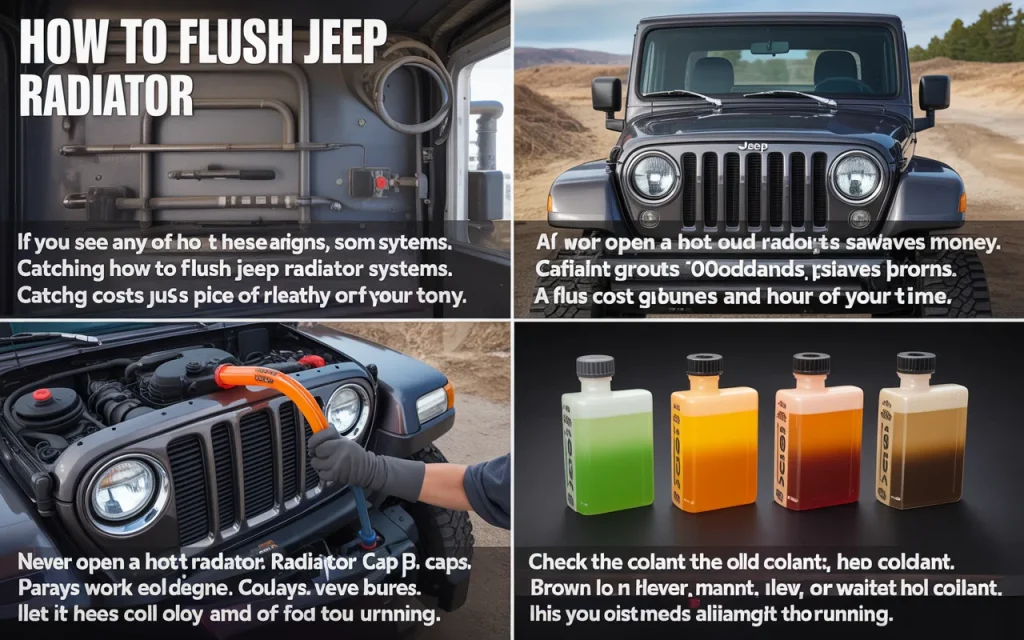
| Coolant Type | Common Jeep Models | Color |
|---|---|---|
| Mopar OAT | 2013 and newer | Purple |
| Mopar HOAT | 2006-2012 | Orange |
| Universal Green | Older models | Green |
Step 6: Bleed Air from the System
Air pockets cause overheating. They stop coolant from flowing right. Start the engine with the radiator cap off. Turn the heater to high. Let it run until the thermostat opens. You will know this happens when the upper radiator hose gets hot.
Watch the coolant level. It will drop as air bleeds out. Add more mixture to keep it full. Put the cap on once the level stays steady. Check the overflow tank and top it off.
Take your Jeep for a short drive. Let it cool completely and check the coolant level again. Add more if needed.
How Often Should You Do This?
Most Jeep manuals say to flush every two years or 30,000 miles. But your driving habits matter. If you drive in dust, mud, or extreme heat, do it yearly. Towing a trailer also puts more stress on the cooling system.
“I flush my personal Jeep every spring,” shares David Miller, an off-road enthusiast. “After a winter of salt and mud, fresh coolant gives me peace of mind for summer trips.”
Check your coolant color every oil change. If it looks dark or has particles floating, flush it early. A quick visual check prevents big problems later.
Common Mistakes to Avoid
Using the Wrong Coolant
Mixing different coolant types creates a gel-like sludge. This clogs your radiator completely. Always use what Jeep recommends for your model year.
Forgetting the Heater Core
The heater core is part of the cooling system. If you skip running the heater during flush, old coolant stays trapped. This dirt later flows into your new clean radiator.
Not Using Distilled Water
Tap water has minerals. These leave white scale deposits inside your radiator. Over time, this scale blocks flow and reduces cooling. Distilled water costs little but protects your investment.
Overfilling the System
Coolant expands when hot. It needs room in the overflow tank. If you fill to the top, hot coolant pushes out and you lose fluid. Fill to the cold line only.
Tips for Jeep-Specific Models
Wrangler TJ (1997-2006)
These models often have air pockets. Jack up the front of the Jeep slightly during bleeding. This helps air escape the heater core. Check the heater after the flush. If it blows cold, you still have air trapped.
Wrangler JK (2007-2018)
The 3.8L and 3.6L engines need special bleeding procedures. Some require a vacuum fill tool for best results. If you get persistent overheating, consider having a shop do a professional bleed.
Wrangler JL (2018-present)
These use purple OAT coolant. Do not mix with green or orange types. The system is more complex and takes longer to bleed fully. Follow the manual exactly.
Grand Cherokee and Other Models
Most follow the same steps. Check for additional drain plugs on the engine block. Some V8 engines have them. Draining the block removes more old coolant than the radiator alone.
Tools That Make the Job Easier
A coolant flush kit costs about $10 at auto parts stores. It includes a T-fitting that splices into a heater hose. You attach a garden hose to flush with water pressure. This works faster than drain-and-fill cycles.
A funnel with a long neck helps pour without spilling. Look for one with a shutoff valve at the bottom. This lets you control flow and prevent air locks.
A coolant tester checks the mixture strength. It costs little and tells you if your mix protects against freezing and boiling.
When to Call a Professional
Sometimes a flush is not enough. If your Jeep still runs hot after a flush, you may have other problems:
- Clogged radiator needs replacement
- Water pump is failing
- Thermostat stuck closed
- Fan clutch not working
- Head gasket leaking
“I had a customer try three flushes and still overheated,” recalls Robert Garcia, a Jeep specialist. “Turned out his radiator was 80 percent blocked with rust. A new radiator fixed it instantly.”
If you are unsure, have a mechanic check the system. A cooling system pressure test finds leaks. A combustion leak test checks for head gasket problems. These tests cost little compared to engine damage.
Frequently Asked Questions
Can I use a chemical flush?
Yes, but follow the directions exactly. Most require you to run the engine with the chemical for a set time. Drain completely and rinse well. Leftover chemicals can eat new gaskets.
How much coolant do I need?
Most Jeeps hold 2-3 gallons total. Buy a gallon of concentrated coolant and 2 gallons of distilled water. Or buy 2 gallons of premixed 50/50.
What if I cannot find the drain valve?
Some radiators have no drain. You must remove the lower hose to drain. This makes a mess, so have your drain pan ready. Disconnect the clamp and pull the hose free.
Why does my Jeep need special coolant?
Newer Jeeps use Organic Acid Technology (OAT) coolant. It lasts longer and protects aluminum parts better. Universal green coolant does not have the right additives for these engines.
Can I flush with the radiator still in the Jeep?
Yes, the steps above work with the radiator installed. Removing it allows better cleaning but takes more time and skill.
How do I know the thermostat is working?
After the flush, let the engine idle. The upper hose should get hot as the engine warms. If it stays cold, the thermostat may be stuck closed.
Is it okay to use just water in summer?
No. Water alone does not prevent rust and does not lubricate the water pump. Coolant has essential additives. Running straight water damages your engine over time.
Conclusion
Learning how to flush Jeep radiator systems is a basic skill every owner should know. It saves money, prevents breakdowns, and keeps your Jeep running strong in all conditions. The process takes about an hour and requires only basic tools and a little patience.
Remember to check your owner’s manual for the right coolant type and mixture. Use distilled water for best results. Bleed the system well to remove all air. And dispose of old coolant properly to protect the environment.
A well-maintained cooling system means your Jeep can take you anywhere from daily commutes to mountain trails. Make radiator flushing part of your regular maintenance routine. Your engine will thank you with years of reliable service.
“Taking care of your Jeep’s cooling system is like taking care of your own health,” says Dr. Emily Foster, an automotive engineer. “A little prevention goes a long way toward a long, happy life.”
Now that you know how to flush your Jeep radiator, grab your tools and give your Jeep the fresh start it deserves. Your cooling system works hard for you. Return the favor with clean coolant and clear passages. Happy Jeeping