Discover the essential duck plug for a Jeep, a small drain hole cover that prevents water and rust inside your Jeep’s frame. Learn why you need it, where it goes, and how to use it for proper Jeep care.
Ever hear a Jeep owner talk about a duck plug and wonder what on earth they meant? You are not alone. This small part causes big confusion. So, let us clear it all up. Simply put, a duck plug for a Jeep is a small rubber or silicone stopper. It is made to block a specific drain hole in the body of your Wrangler or Gladiator. Its main job is to stop water, mud, and road grime from getting inside the vehicle’s frame rails. This is a key piece of preventive care for any Jeep that sees puddles, rain, or car washes.
The name sounds funny, but it is not random. It comes from the part’s shape and function. The plug is often round with a little stem or tab, making it look a bit like a duck’s bill. More importantly, it “ducks” into the hole to block it. Jeep fans love a good nickname, and “duck plug” stuck. It is much catchier than “frame rail drain hole plug.”
Where Does the Duck Plug Go on a Jeep?
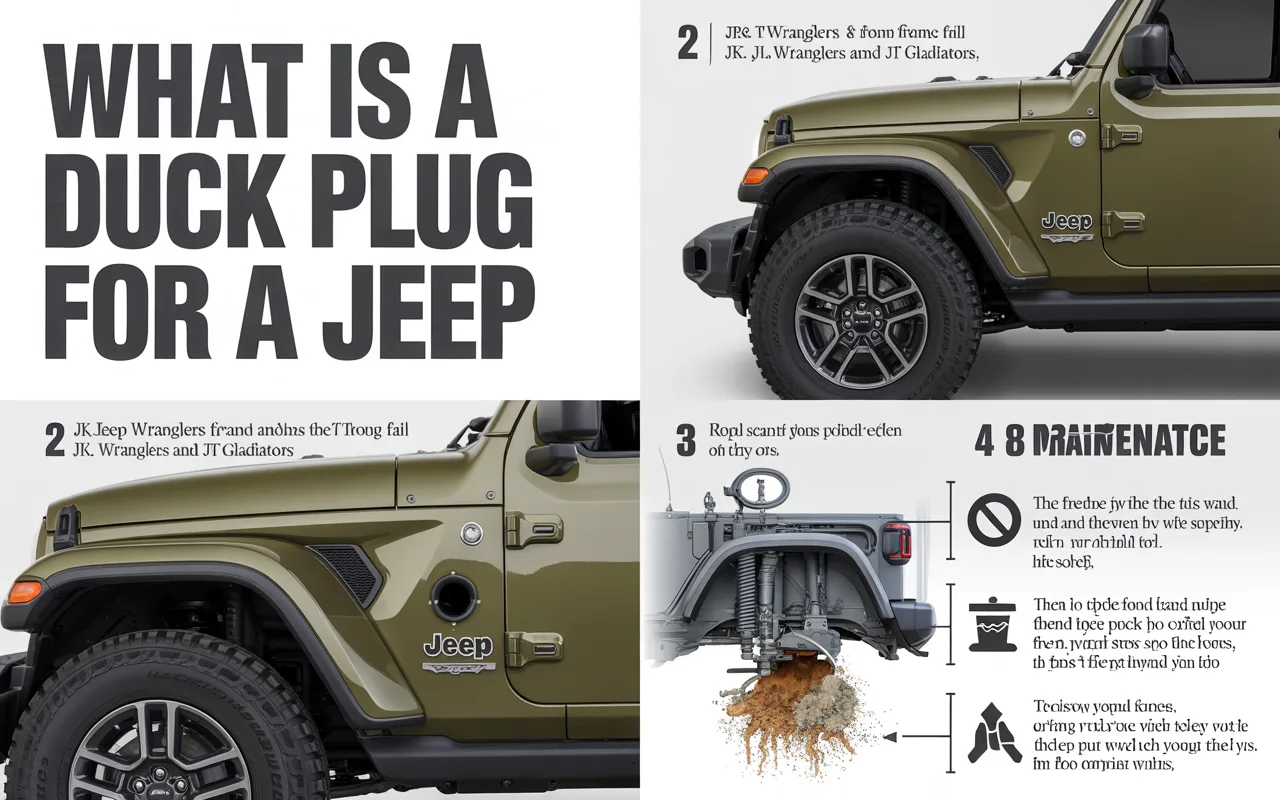
This is the most important part. The duck plug for a Jeep has a very specific home. On most modern Jeep Wranglers (JK, JL) and Gladiators (JT), you will find a small hole at the bottom of each front frame rail, right behind the front tires. This hole is meant to let water drain out if it gets inside the frame. The problem is, it also lets stuff in when you drive through water or slush. The plug sits snugly in this hole.
“The detail is not the detail. The detail makes the product.” – Charles Eames
Think of your Jeep’s frame like a box beam. It is strong, but it can trap water. The factory puts drain holes at the low points. The duck plug is an add on part that helps you control what goes in and out of those holes.
The Big Problem a Duck Plug Solves
Without a duck plug for a Jeep, the open drain hole can lead to real issues. The biggest worry is frame rust. Road salt, muddy water, and debris can splash up directly into the frame. Once inside, that moisture has a hard time escaping. It sits against the metal, speeding up corrosion from the inside out. This is a silent problem you might not see until it is serious.
Other problems include:
Clogged Drain Holes: Mud and leaves can pack into the hole, blocking it. Then, water that does get in cannot drain out.
Unwanted Guests: Small critters might find the hole a perfect entrance to make a home in your frame.
Water Ingression: Deep puddles can force a large amount of water up into the frame cavity very quickly.
Problem Without a Plug
Solution With a Duck Plug
Road salt and water enter frame
Blocks contaminants from entering
Mud and debris clog the drain
Keeps hole clear for when you need it
Promotes internal frame rust
Prevents moisture buildup, fighting rust
When Should You Use a Jeep Duck Plug?
This is a common question. The duck plug is not meant to be permanent. It is a tool for smart Jeep maintenance. You should put the duck plugs in during normal daily driving, especially in wet or winter conditions. They keep the bad stuff out. However, you must remember to take them out in two key situations:
Before Off-Roading: If you plan to go through deep water or mud, pull the plugs. This lets any water that gets into the frame drain out quickly.
After Pressure Washing/Underbody Wash: If you spray water directly at the frame, remove the plugs so trapped water can escape.
It is a simple routine: plugs in for the street, plugs out for the trail or wash.
How to Install a Duck Plug on Your Jeep
Putting in a duck plug for a Jeep is maybe the easiest job you will ever do on your vehicle. You do not need tools. Just follow these steps:
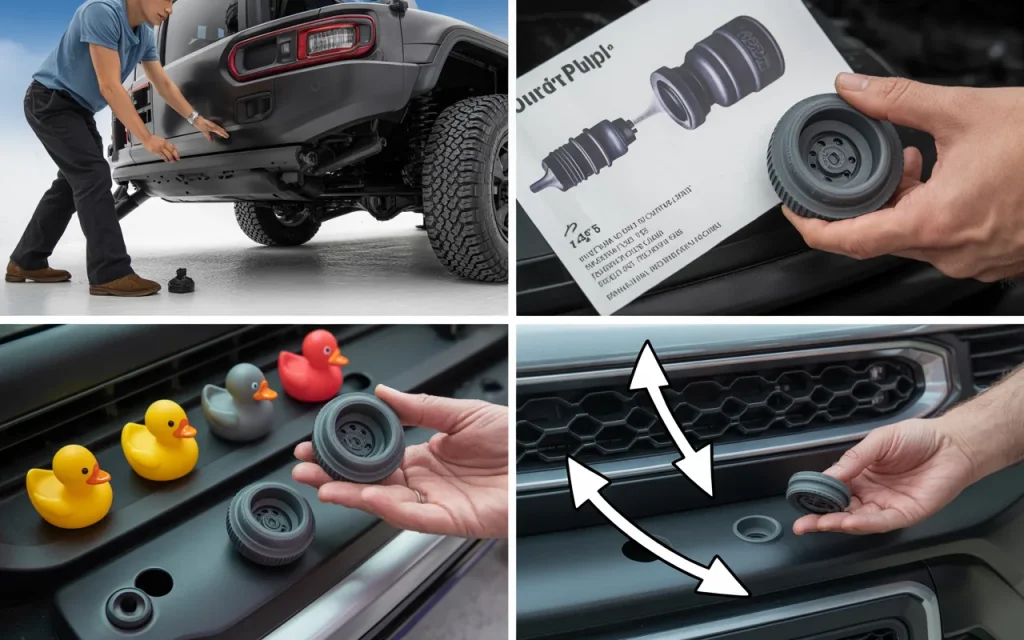
Locate the Holes: Park on level ground. Look at the underside of the front frame rails, just behind the front tires. You will see a small hole (about 3/4-inch wide) pointing downward.
Clean the Area: Wipe away any dirt or grease around the hole with a rag.
Insert the Plug: Take your rubber or silicone duck plug. Press the wider head of the plug into the hole. It should fit snugly and stay in place. You might hear a slight pop or click.
Check Fit: Give the plug a gentle tug to make sure it is secure. It should not fall out on its own.
That is it. The whole process takes less than five minutes for both sides.
Picking the Right Duck Plug for Your Jeep
Not all plugs are the same. Most are universal for JK, JL, and JT models, but it is good to check. You will find a few types:
Rubber Plugs: These are common, affordable, and flexible. They seal well.
Silicone Plugs: These often handle high and low temperatures better. They are very durable.
Branded Kits: Some off-road companies sell them in pairs, sometimes with a little bag for storing the plugs when they are not in use.
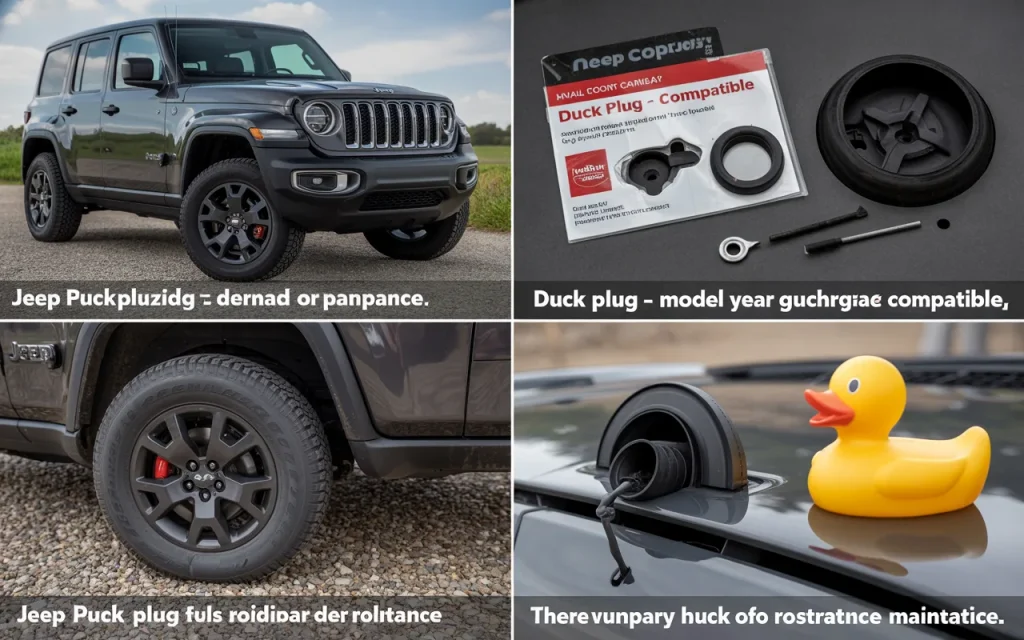
When you shop, read the product description to confirm it fits your model year. A good duck plug for a Jeep will be made from a strong material that can handle road chemicals and temperature swings without cracking.
“Simplicity is the ultimate sophistication.” – Leonardo da Vinci
Duck Plugs and Jeep Maintenance
Adding duck plugs is a sign of a proactive Jeep owner. It shows you care about the long-term health of your vehicle. This small step fits into a larger care plan. It works alongside other rust prevention steps like regular underbody washes in winter and checking for paint chips. Think of the duck plug as one part of keeping your Jeep solid for years of adventure.
Frequently Asked Questions
Q: Are duck plugs necessary for all Jeeps? A: They are very smart for any Jeep driven in rain, snow, or on salted roads. If you live in a dry climate and never see water, they are less critical, but still a good safety measure.
Q: Will using duck plugs void my Jeep’s warranty? A: No. They are a simple accessory and do not alter any factory systems. They are no different than using floor mats.
Q: Can I make my own duck plug? A: Some people use expanding foam plugs or other DIY solutions. This is not recommended. Official duck plugs are designed to fit perfectly, seal well, and be easy to remove. They are inexpensive, so it is best to buy the right part.
Q: How often should I check my duck plugs? A: Give them a quick look when you check your tire pressure. Make sure they are still in place and not cracked or damaged.
Jeep Model
Duck Plug Compatibility
Wrangler JK (2007-2018)
Yes
Wrangler JL (2018-Present)
Yes
Gladiator JT (2020-Present)
Yes
Older Models (TJ, YJ)
Check hole size; may vary
A Note on the “Ducking” Trend
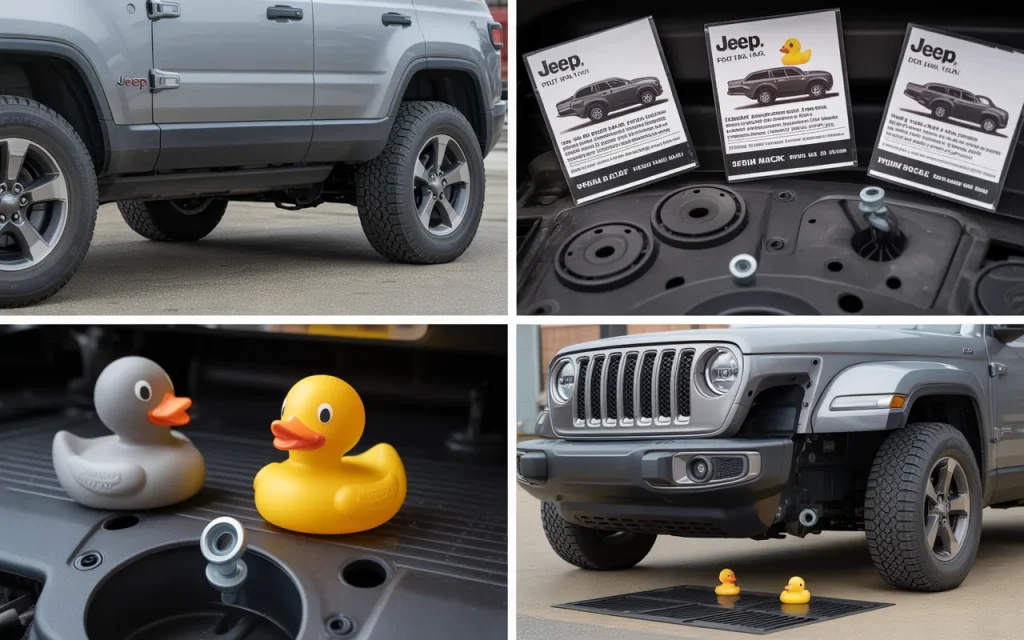
Do not mix up the duck plug with the “Jeep Ducking” trend. Jeep Ducking is a fun game where people leave rubber duckies on other Jeeps as a friendly greeting. They are totally unrelated. The duck plug is a functional part. The rubber duck is a cute toy. It is just a funny coincidence in names!
Conclusion
So, what is a duck plug for a Jeep? It is a tiny, clever guard for your Jeep’s frame. This small part plays a big role in stopping rust and keeping your vehicle’s foundation strong. For a few dollars and a minute of your time, it offers great peace of mind. It is a perfect example of how knowing your vehicle and taking small, simple steps can lead to huge long-term benefits. Whether you are a new Jeep owner or have had one for years, getting a set of duck plugs is a wise move. Your Jeep will thank you for many miles and adventures to come.
“Take care of your Jeep, and it will take care of you.” – A common saying in every Jeep club.
Remember, Jeep life is about freedom and fun. Let the duck plug handle the worry of water and rust, so you can focus on the next trail, the next trip, and the next horizon. Happy Jeeping