
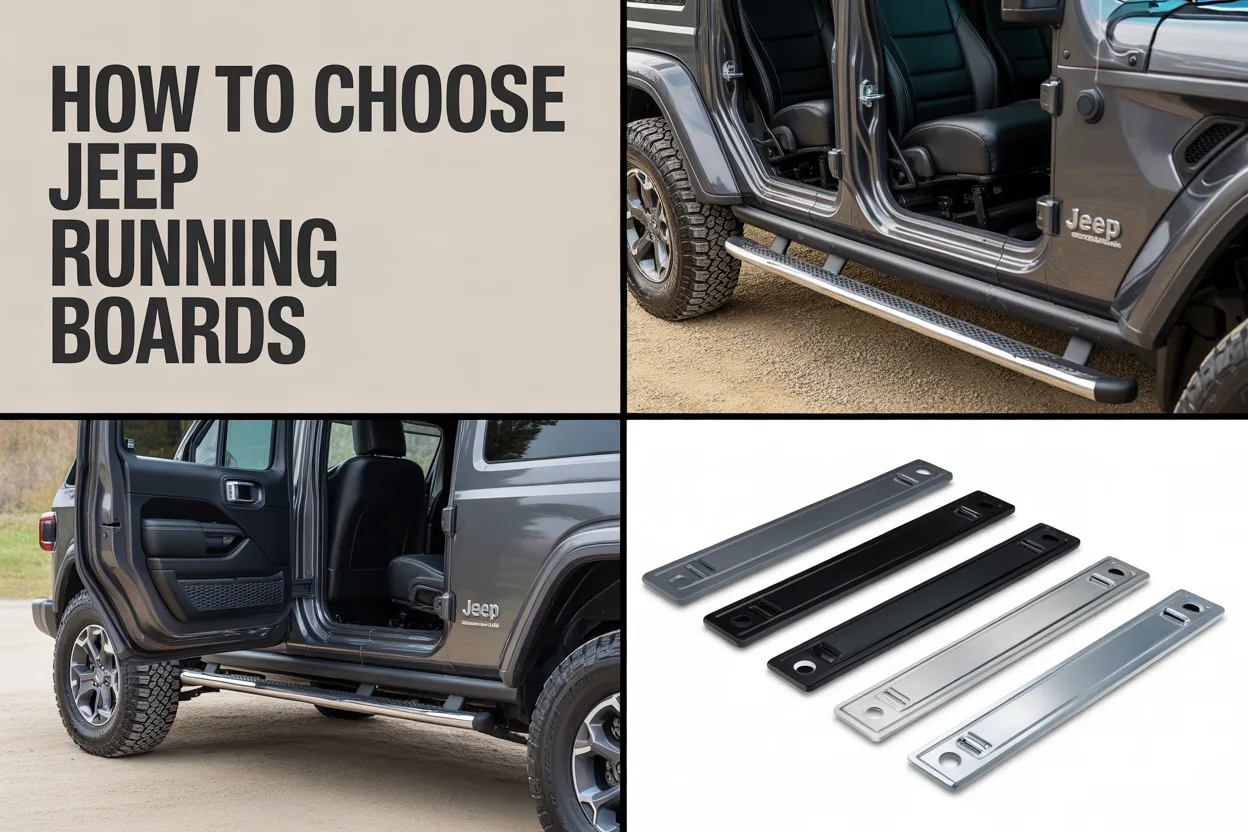
Wondering how to choose Jeep running boards? Learn key tips on selecting the perfect running boards for your Jeep with style, functionality, and durability in mind.
Understanding Jeep Running Boards
When it comes to accessorizing your Jeep, few upgrades offer as much utility and style as running boards. Jeep running boards not only improve the vehicle’s appearance, but they also provide a more practical solution for accessing your Jeep, especially for passengers who need an extra step up. Whether you’re a weekend off-roader, a daily commuter, or someone who wants to improve their Jeep’s overall accessibility, knowing how to choose Jeep running boards is a vital step.
This article will guide you through everything you need to know about how to choose Jeep running boards, from materials and design options to installation and functionality. By the end of this guide, you’ll be equipped to make an informed decision that fits both your needs and your Jeep’s aesthetic.
What Are Jeep Running Boards?
Jeep running boards are side-mounted accessories that provide an extra step for passengers to get in and out of the vehicle. They are particularly useful for taller Jeeps, where getting in can be a bit challenging. Apart from their functional role, running boards also add a custom look to your Jeep.
Running boards come in a range of designs, from simple fixed boards to more advanced, retractable options. They can be made of various materials, and they offer a variety of features that cater to different driving needs.
Types of Jeep Running Boards: Choose the Right One for You
When considering how to choose Jeep running boards, the first step is to understand the different types available. The market offers a variety of styles, each catering to specific needs, driving habits, and aesthetic preferences.
Fixed Running Boards
These are the classic style of running boards, attached securely to the sides of your Jeep. They offer a reliable, consistent step for passengers. Fixed running boards are durable and simple, requiring minimal maintenance.
Advantages:
- Easy to install
- Always available for use
- Budget-friendly
Disadvantages:
- No advanced features like retractability
Retractable Running Boards
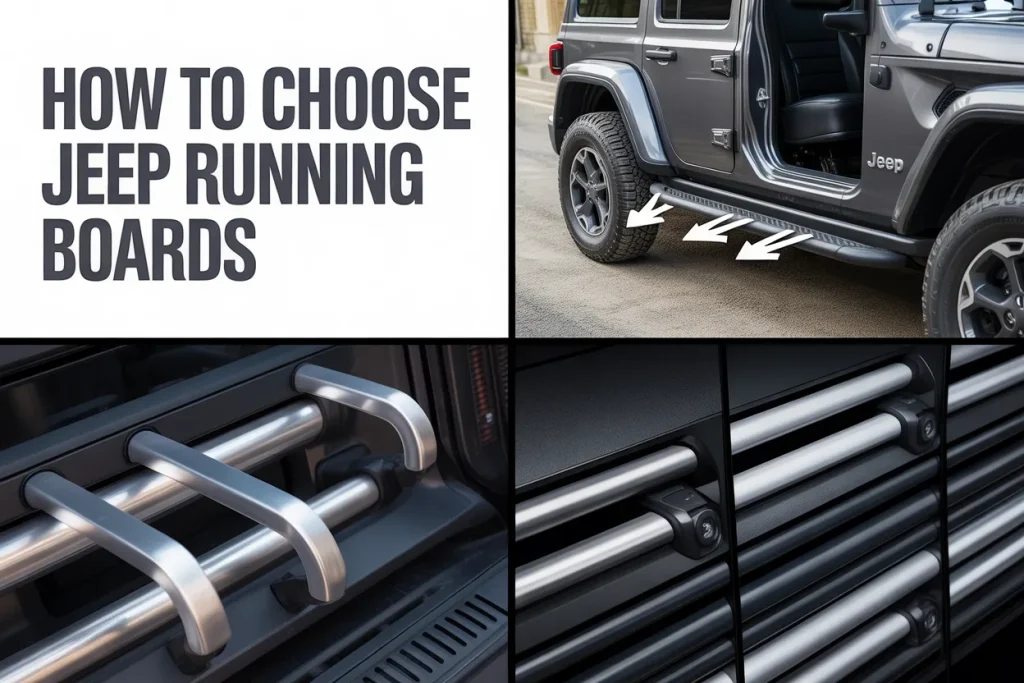
Retractable running boards are more high-tech. These boards automatically deploy when the doors are opened and retract back into place when the doors are closed. This type of running board is ideal for those who want a clean, sleek look without compromising on functionality.
Advantages:
- Clean look when retracted
- High-tech convenience
- Ideal for vehicles with limited space
Disadvantages:
- Higher cost
- May require professional installation
Nerf Bars
Nerf bars are tubular bars made from materials like stainless steel or aluminum. They are generally more rugged, making them a great option for off-road enthusiasts. The main difference between nerf bars and traditional running boards is their design. Nerf bars are often smaller and provide more ground clearance.
Advantages:
- Great for off-roading
- Adds a rugged, tough appearance
- Provides extra protection
Disadvantages:
- Narrower stepping surface
- Not always the best for daily use
Rock Slider Steps
Rock slider steps are designed for off-road use. These running boards protect the lower part of your Jeep while providing a solid stepping surface. They are often larger, offering greater protection against rocks, debris, and other off-road hazards.
Advantages:
- Ideal for off-road enthusiasts
- Protects the Jeep’s undercarriage
- Provides a wider stepping area
Disadvantages:
- Larger, more prominent design
- Higher price point
Materials Matter: Choosing the Best Material for Your Running Boards
Another key factor to consider when deciding how to choose Jeep running boards is the material. Running boards are made from various materials, each offering distinct advantages and disadvantages. The right material will depend on your usage needs, weather conditions, and personal style.
Aluminum Running Boards
Aluminum is one of the most common materials for Jeep running boards. It is lightweight, resistant to corrosion, and highly durable. Aluminum running boards are a popular choice for those who want a sturdy board without adding unnecessary weight to their Jeep.
Advantages:
- Lightweight
- Corrosion-resistant
- Easy to maintain
Disadvantages:
- May be prone to dents and scratches
- Can be more expensive than plastic options
Stainless Steel Running Boards
Stainless steel is a great choice for durability and aesthetics. It is a strong, rust-resistant material that can withstand harsh weather and rough terrains. Stainless steel running boards are often chosen for their sleek, polished finish.
Advantages:
- Extremely durable
- Stylish and sleek appearance
- Rust-resistant
Disadvantages:
- Heavier than aluminum
- Requires regular maintenance to keep it looking polished
Plastic Running Boards
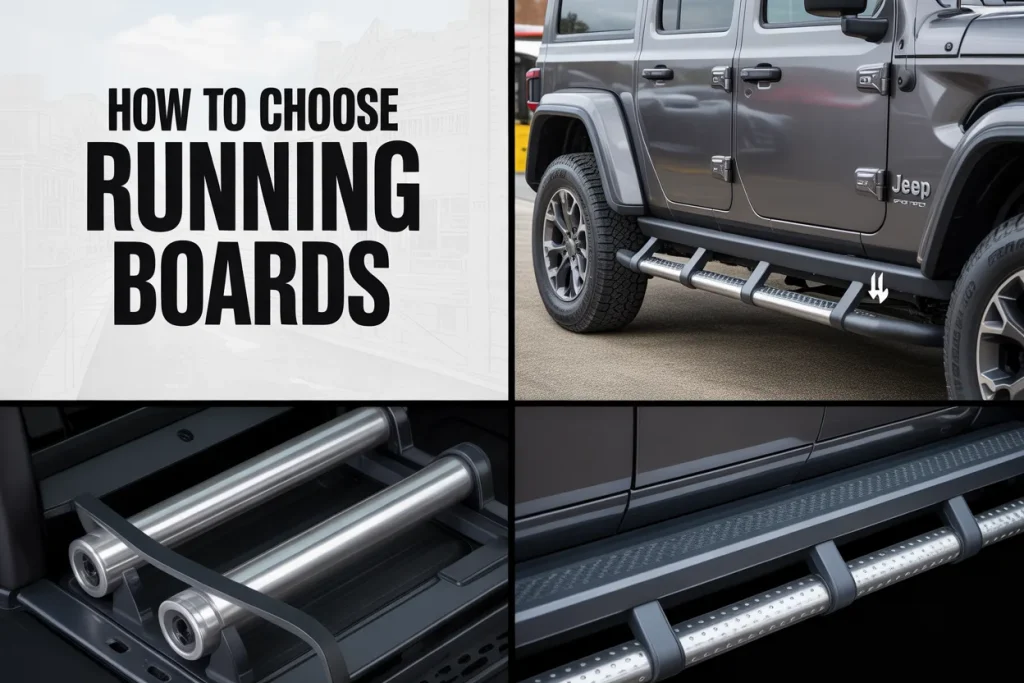
Plastic running boards are a more budget-friendly option. They are typically lighter than metal boards and can still provide a safe stepping surface. However, plastic boards may not be as durable in harsh conditions or off-road scenarios.
Advantages:
- Budget-friendly
- Lightweight
- Easy to install
Disadvantages:
- Less durable in rough conditions
- May not offer as much protection
Step 1: Installation Process
When you’re deciding how to choose Jeep running boards, the installation process is another key consideration. Some running boards can be easily installed yourself, while others may require professional help.
DIY Installation
For those who enjoy working on their vehicles, many running boards come with easy-to-follow instructions. Fixed running boards are usually the easiest to install, often requiring just a few basic tools.
Professional Installation
If you choose retractable or rock slider steps, it may be best to have them professionally installed. These running boards often require more complex wiring or modifications to the vehicle’s structure.
Choosing the Right Style and Design
In addition to functionality, the style and design of your Jeep running boards are essential for matching your Jeep’s overall look. The right design will complement the aesthetic of your Jeep, whether you’re aiming for a sleek, modern appearance or a rugged off-road style.
Color and Finish
Running boards come in a variety of finishes, including matte, gloss, or polished stainless steel. You can also find them in a range of colors to match or contrast with your Jeep’s body color.
Popular Finishes:
- Matte black
- Polished stainless steel
- Glossy finishes
Table: Comparing Jeep Running Boards and Their Features
| Type | Ideal Use | Material | Price Range |
|---|---|---|---|
| Fixed Running Boards | Everyday and all-terrain use | Aluminum, Steel | $100 – $500 |
| Retractable Boards | Clean appearance, city driving | Aluminum, Steel | $500 – $1,500 |
| Nerf Bars | Off-road enthusiasts | Stainless Steel | $150 – $700 |
| Rock Slider Steps | Off-road protection | Steel, Aluminum | $400 – $1,200 |
Considerations for Off-Road and Daily Use
If you’re using your Jeep for off-roading, durability and ground clearance are key factors. For daily driving, you may prioritize aesthetics, ease of access, and comfort. By knowing how you intend to use your Jeep, you can make the best choice in terms of style and function.
Off-Road Use
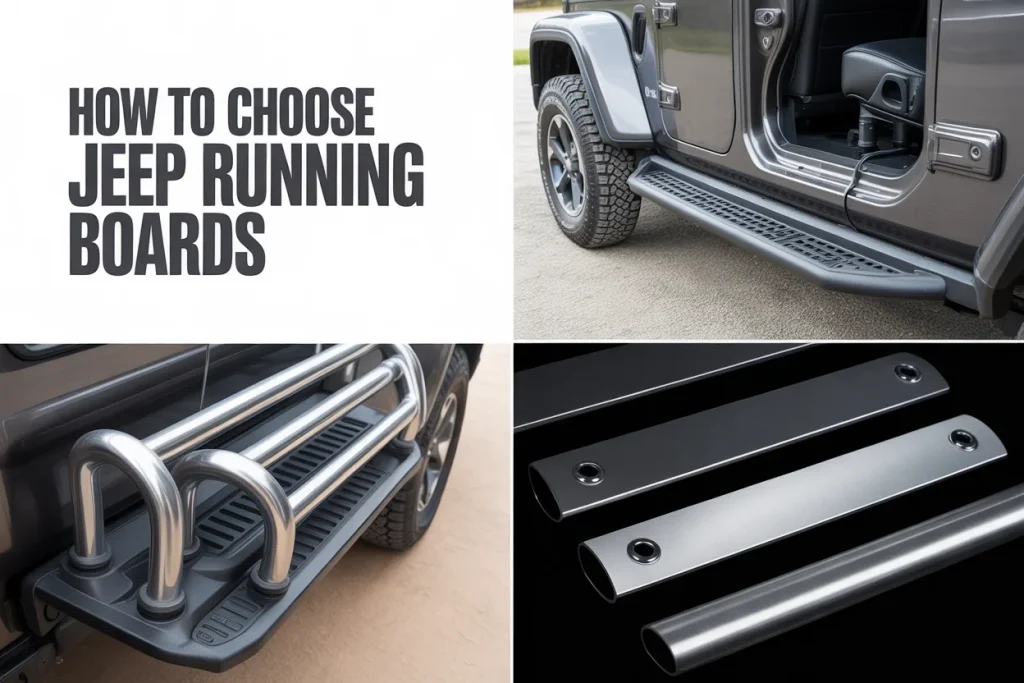
Off-road enthusiasts often opt for rock slider steps or nerf bars for their rugged durability and protective features. These boards offer the most ground clearance and provide extra protection when driving over rocks and uneven terrain.
Daily Use
For daily use, you might prefer fixed or retractable running boards. These provide consistent access and offer a clean look for city driving. Retractable running boards are especially appealing for those who want functionality without compromising aesthetics.
Table: Jeep Running Boards Comparison for Different Uses
| Use Case | Recommended Type | Benefits |
|---|---|---|
| Off-Roading | Rock Slider, Nerf Bars | Protects Jeep, offers durability |
| Daily Driving | Fixed, Retractable Boards | Provides ease of access and style |
Frequently Asked Questions
1. How much weight can Jeep running boards support?
Jeep running boards are generally designed to support the weight of an average adult, typically around 300 to 400 pounds. Always check the weight capacity for the specific model you’re considering to ensure safety and performance.
2. Are retractable running boards worth the investment?
Retractable running boards offer the convenience of a clean, sleek look with the added benefit of automatic deployment. While they are more expensive than fixed boards, they are worth the investment if you want both aesthetics and functionality.
3. Can I install running boards myself?
Yes, many Jeep running boards come with instructions for easy DIY installation. However, if you opt for more complex retractable or off-road running boards, you may want to hire a professional for installation.
4. How do I maintain my Jeep running boards?
To keep your running boards in good condition, regularly clean them to remove dirt, mud, or salt that could cause corrosion. For metal boards, apply a protective coat to prevent rust.
Conclusion:
Final Thoughts on How to Choose Jeep Running Boards
Choosing the right Jeep running boards involves more than just picking the first set you see. Consider the type of driving you do, the material, and the style of the running boards. Whether you’re driving around the city or exploring rugged trails, the right set of running boards will enhance both the functionality and appearance of your Jeep. By following the advice in this guide, you can confidently choose Jeep running boards that meet your needs and budget.
As you select your running boards, think about how they will contribute to your Jeep’s overall experience. With the right boards, getting in and out of your Jeep will be safer, easier, and more enjoyable.
“The best choice is always the one that balances your style with practical needs.” – John Doe
“Investing in the right accessories can enhance both the look and utility of your Jeep for years to come.” – Jane Smith
“Durability and design should go hand in hand when choosing Jeep running boards.” – Alan Brown
2 thoughts on “How to Choose Jeep Running Boards”