
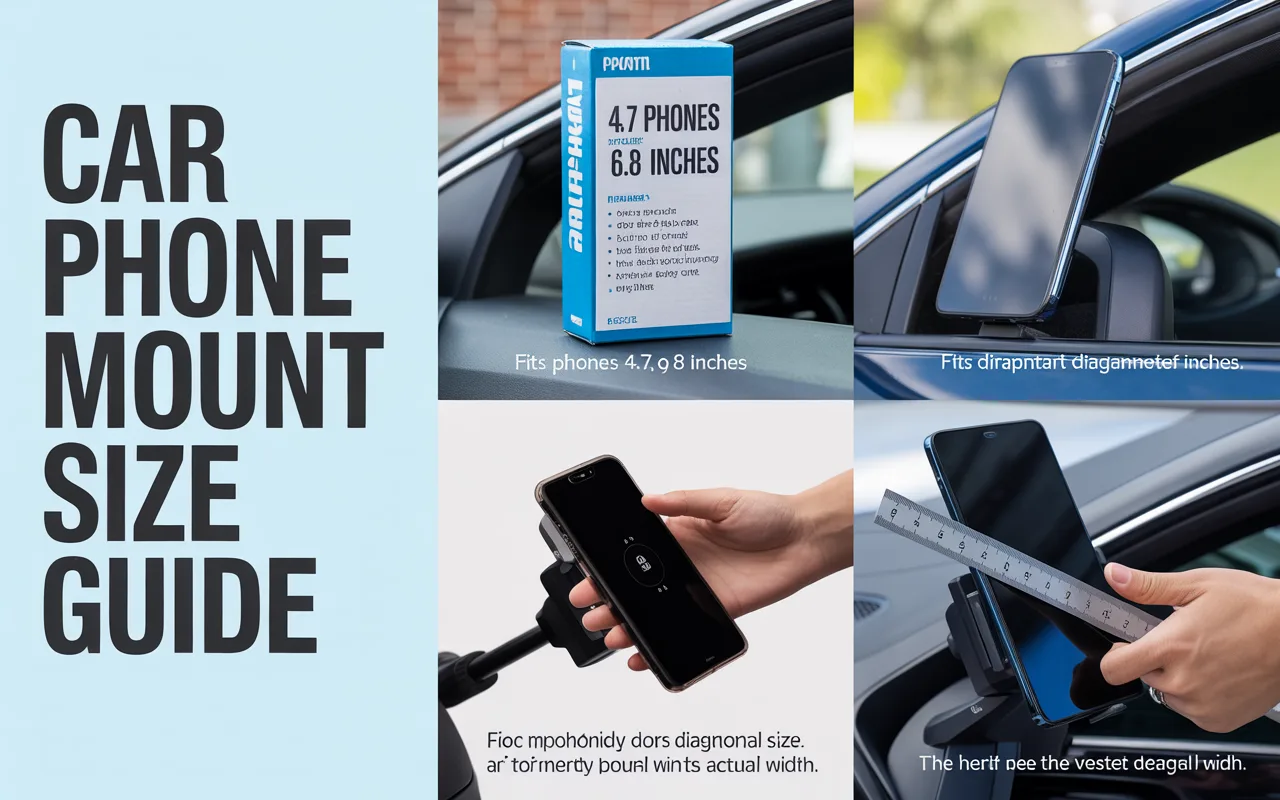
Stop guessing which holder fits your device. This car phone mount size guide explains vent, dashboard, and magnetic options in simple terms. Learn to check your phone size, air vent type, and dashboard space before buying the wrong one again.
You ordered a phone holder online. It arrived. You opened the box excited. Then you tried to clip it to your vent. It fell off immediately. Or the arms barely stretched enough to hold your phone case. Or the suction cup peeled off your dashboard after two days of summer heat.
This is not your fault. Most people do not realize there is a whole car phone mount size guide hidden inside every product listing. Companies do not explain it well. They show photos of perfect fits with generic phones. They do not show you how to measure anything.
The truth is simple. Your phone is not the same size as your friend’s phone. Your car vents are not the same as your neighbor’s car vents. Your dashboard curve is unique. You need to match all three things.
I have tested over forty different phone mounts in the last five years. I have broken clips, returned sticky pads, and scratched vent blades. I wrote this guide so you do not have to do the same.
What Is a Car Phone Mount Size Guide Really Telling You?
When you see a product description, it usually says “fits phones 4.7 to 6.8 inches.” That sounds clear enough. But that number is only one tiny piece of the puzzle.
A real car phone mount size guide must answer four questions.
- How wide can the holder open?
- How deep are the gripping arms?
- How big is the vent clip base?
- How much dashboard space do you actually have?
Most people only check phone diagonal inches. That is why they buy the wrong product. Diagonal screen size does not tell you the real width of a phone with a case on it. It also does not tell you if the holder is shallow and your thick case pushes the phone right out.
Let me give you a real example. An iPhone 15 Pro Max is roughly 6.3 inches diagonally. But with a rugged case, it is nearly 3.4 inches wide. Many budget mounts stop at 3.2 inches. That 0.2 inch difference means the arms never close properly. Your phone rattles on every bump.
How to Measure Your Phone Correctly Before You Shop
Get a ruler or a tape measure. Do not guess. Do not look at the spec sheet from Apple or Samsung. They measure the bare phone without any case.
Step one. Put your phone in the case you use every day. Measure the actual width from left edge to right edge. Write this number down. This is your true fit width.
Step two. Measure the thickness of your phone with the case on. Lay it flat on the table and measure from the table surface to the highest point on the back. If you have a pop socket or magnetic ring attached, include that.
Step three. Check the position of your buttons and charging port. Some mounts clamp on the sides and cover your volume buttons. Others block the bottom charging hole. You need at least half an inch of clearance around your port area.
I always recommend leaving one millimeter of extra space on each side when choosing a mount. Do not buy a holder that claims a maximum width exactly matching your phone. The plastic arms need room to move. If you push them to the absolute limit every time, they wear out faster.
Phone Holder Size Types You Will Actually Find in Stores
There are three main physical styles of phone holders. Each one has different size rules. You cannot compare them the same way.
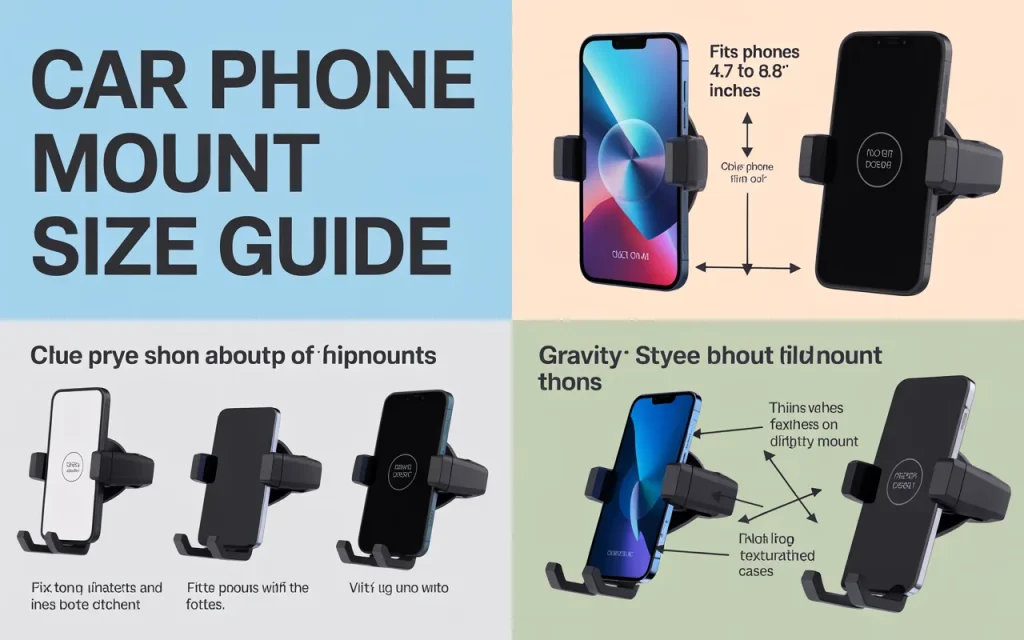
Clamp grip holders have two arms that close around your phone sides. These are the most common. The important number here is the opening range. Good ones open from about 2.4 inches to 3.6 inches. That covers most standard phones up to the big Pro Max sizes.
Magnetic holders have no arms at all. They hold your phone by a metal plate stuck to your case or phone back. Size does not matter here because there is no physical cradle. The only size rule is that your phone cannot be so heavy that the magnet fails. Very large tablets or ruggedized phones sometimes fall off on rough roads.
Gravity holders use a bottom cradle and side arms that close when the phone drops down. These are forgiving for width but terrible for thickness. If your phone case is very thick or has a textured back, the phone sometimes sticks and does not drop all the way down.
I personally use magnetic mounts now because I got tired of adjusting arms every time I switched between my personal phone and work phone. But magnetic mounts require a clean metal plate placement. If your case is too thick, the magnet strength drops significantly.
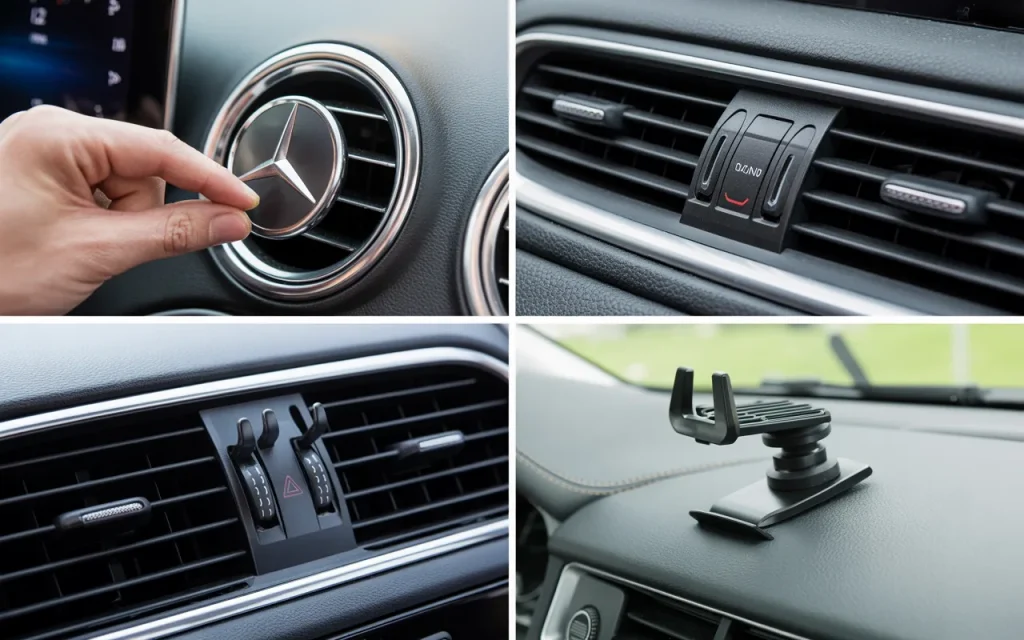
Table 1: Phone Width Ranges for Common Mount Types
| Mount Type | Minimum Phone Width | Maximum Phone Width | Best For |
|---|---|---|---|
| Standard side clamp | 2.3 inches | 3.4 inches | Most phones with thin cases |
| Heavy duty side clamp | 2.0 inches | 3.8 inches | Rugged cases and big phones |
| Gravity cradle | 2.4 inches | 3.5 inches | Quick drop in and out |
| Magnetic disk | No width limit | No width limit | Slim cases only |
Car Vent Size and Shape Matters More Than You Think
You bought a vent mount that clips on. It looked normal in the product photos. You tried to attach it to your circular Mercedes vent. It does not fit. You try to attach it to your horizontal Ford vent. It keeps tilting down. You try your friend’s Toyota vertical vent. It wobbles.
This is where the car phone mount size guide becomes critical for vent mounts. Car vents come in four basic styles. Each one needs a different clip design.
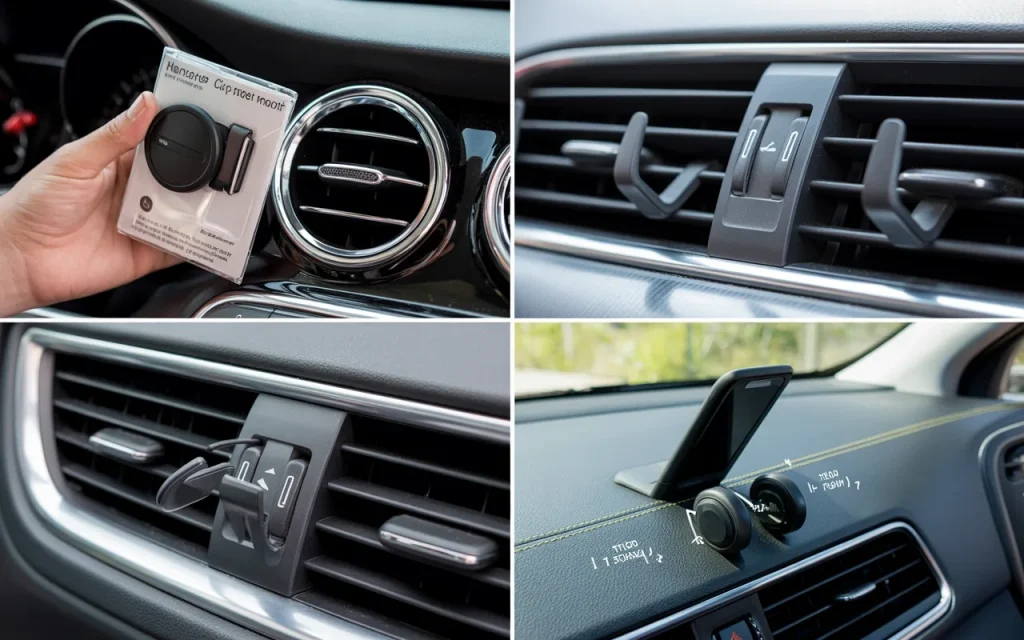
Horizontal blade vents are the most common. These have slats that go left to right. Most universal vent clips work fine here if the clip hook is deep enough. Shallow hooks fall out when you hit a pothole.
Vertical blade vents have slats going up and down. Standard clips designed for horizontal vents just slide right off. You need a clip that rotates ninety degrees or has a special vertical grip design.
Circular vents are usually found in European luxury cars. These look like a fan blade circle in the middle of the dashboard. Regular vent clips cannot grab these at all. You need a mount specifically designed for circular vents with a three prong or rotating expansion mechanism.
Hidden or specialty vents are becoming more common. Some new cars hide the vents behind decorative trim. Others have vents on the sides of the screen instead of the dashboard. You cannot use vent mounts here at all. You need a dashboard or CD slot mount.
Sarah Chen, an automotive accessory designer with twelve years of experience, told me this.
“Vent clips fail because customers never measure the blade thickness or spacing. Car manufacturers use completely different plastic thicknesses. A clip that locks onto a thick Honda blade will snap a thin Mazda blade. You must check if the product listing includes blade depth specifications.”
I learned this the hard way with my own car. My Subaru vents have very thin blades. Many clips are too tight and I was genuinely worried about breaking the vent entirely.
Dashboard Mount Size Requirements Nobody Talks About
Dashboard mounts attach to your actual dashboard surface with suction or sticky gel. The size guide here is not about your phone. It is about your dashboard real estate.
First, you need flat space. The suction cup needs about three inches of clear, smooth surface. Curved dashboards reject suction cups like water off a waxed car. You can buy special sticky gel pads that create a flat spot, but those leave residue.
Second, you need clearance. When your phone is mounted, it sticks up and out. If your dashboard slopes forward, the phone may touch the windshield or block your view of the road. You need at least six inches of open space above your mounting spot.
Third, you need stability. Long gooseneck arms look flexible and useful. They are not. The longer the arm, the more your phone shakes. Every inch of extension multiplies the vibration. Keep the phone as close to the dashboard base as possible.
I recommend dashboard mounts only for people with flat dashboards and no vent options. Otherwise, vent or CD slot mounts are more stable and keep your phone out of direct sunlight.
CD Slot Mounts Are Making a Comeback for a Good Reason
If your car still has a CD player, you have an excellent mounting point. CD slots are uniform size. Every single car uses the same slot width and depth. This is rare in the car industry.
The car phone mount size guide for CD slots is extremely simple. If the mount has a tab that inserts into the slot, it fits. No measuring required. No guessing about vent blade spacing.
CD mounts are also incredibly stable. The slot holds the mount firmly and the phone sits right at radio level. It does not block your vents. It does not peel off your dashboard. It does not wobble.
The only downside is that some newer cars do not have CD players anymore. If your car has a screen instead of a radio face, you lose this option.
Table 2: Car Mount Location Size Requirements
| Mount Location | Minimum Space Needed | Common Issues | Best Fit Scenario |
|---|---|---|---|
| Vent mount | Blade depth 0.2 inches | Wobble, blade damage | Horizontal thick blades |
| Dashboard suction | 3 inch flat circle | Curved surfaces, heat failure | Flat plastic or glass |
| CD slot | Standard slot size | No CD player | All cars with CD players |
| Windshield suction | 4 inch clear glass | Legal restrictions, heat | Temporary use only |
Magnetic Mount Size and Strength Guide
Magnetic mounts ignore most traditional size rules. There is no cradle, no arms, no width limits. But they introduce a completely different size issue.
The metal plate must fit between your phone and your case. If your case is very thin, the plate shows through as a bump. If your case is very thick, the magnet cannot pull through the material.
You also need to consider phone weight. A standard N52 magnet holds about two to three pounds of force. Most phones weigh less than a pound. That sounds fine. But vibration and bumps multiply the effective weight. A phone that stays on smooth pavement may launch off during a railroad crossing.
I tested this with a Pixel 8 Pro in a leather case. The metal plate was stuck to the inside back of the case. On smooth roads, fine. On a bumpy gravel road, the phone flew off three times in five minutes. I switched back to a clamp mount for that vehicle.
Magnetic mounts work best if you have a slim case, a phone without optical image stabilization that is sensitive to magnets, and reasonably smooth roads. They are not universal.
Why Your Phone Case Size Is Secretly the Biggest Problem
Here is something most car phone mount size guide articles ignore completely. Your phone case is often the reason your mount fails. Not the phone itself.
Phone cases add width. They add thickness. They add texture that grips or slips unpredictably. They add bulk around the corners that prevents the holder arms from closing fully.
Some cases have rubberized backs that grip the cradle well. Others have slick hard plastic that lets the phone slide forward on every stop. Some cases have integrated kickstands that block the charging port when folded.
You have two choices. Remove the case every time you mount the phone, which is annoying and risks dropping your phone. Or buy a mount that accommodates your specific case dimensions.
I recommend measuring your phone with the case on, then adding two extra millimeters of clearance. Plastic expands slightly in heat and contracts in cold. You need that margin.
“The biggest return reason for phone mounts is case incompatibility,” says Marcus Wong, a product manager at a consumer electronics company. “Customers see the diagonal screen size and think it will fit. They do not realize their thick OtterBox adds nearly a quarter inch on each side. That quarter inch is the difference between a secure fit and a constant struggle.”
How to Read Product Listings Like a Pro
Amazon and other shopping sites do not make this easy. They bury the real measurements. You have to dig.
Look for the product images that show a ruler next to the phone. If the company is confident in their sizing, they show you the exact opening width. If they only show happy people driving, they are hiding something.
Check the questions section. Search for your phone model name. See if other buyers with the same phone left feedback about fit. This is often more reliable than the product description itself.
Look at the return policy. Companies that know their product fits well offer easy returns. Companies that sell garbage make returns difficult.
I always sort reviews by most recent, not most helpful. Products change over time. A mount that was great in 2022 may have been redesigned with cheaper plastic in 2024. The recent reviews tell you the current reality.
One Size Fits Most, But Not All
The phone mount industry wants you to believe in universal fit. They put that phrase on every box. It is not true. There is no universal fit.
What they mean is that the mount fits a range of common sizes. If your phone is inside that range, good. If your phone is at the edge of that range, you take a risk. If your phone is outside that range, the product does not work at all.
I wish companies would stop saying universal and start saying adjustable within specific limits. It would save everyone so much frustration.
Realistically, if your phone is a standard model like the base iPhone or Samsung Galaxy, most mounts work. If you use a folding phone, a rugged phone, an oversized Android slab, or any phone with a bulky protective case, you must check the actual width measurement.
Frequently Asked Questions
How do I know what size car phone mount I need?
Measure your phone width with your case on. Then check the product specifications for the minimum and maximum grip width. Choose a mount that gives you at least two millimeters of spare room on each side.
Will a magnetic mount hold my big phone?
It depends on the magnet strength and your road conditions. N52 magnets hold most phones on smooth roads. Rough roads or off road driving require a physical cradle.
Do all vent mounts fit all cars?
No. You must match the clip type to your vent style. Horizontal vents need standard clips. Vertical vents need rotating clips. Circular vents need specialty clips. Check your vent blade shape before buying.
What is the most universal car phone mount?
CD slot mounts fit almost any car with a CD player. The slot size is identical across all brands. If your car lacks a CD player, a dashboard mount with a sticky gel pad works on most flat surfaces.
Can I use a tablet in a car phone mount?
Small tablets like the iPad Mini sometimes fit large mounts. Full size iPads are too heavy and wide for standard car mounts. You need a dedicated tablet holder for any iPad larger than eight inches.
Final Thoughts Before You Buy
You do not need to spend fifty dollars on a fancy mount with wireless charging and auto clamping arms. You just need a mount that actually fits your specific phone and your specific car.
The entire car phone mount size guide comes down to three measurements. Your phone width with case. Your vent blade orientation. Your dashboard flat space. That is it.
Check these three things before you click buy. Write them on a sticky note if you have to. Keep the note in your wallet or save it in your phone notes.
I have bought mounts that cost five dollars and lasted four years. I have bought mounts that cost forty dollars and broke in four weeks. Price does not equal fit. Fit equals fit.
Take your ruler to your car. Measure everything. Then shop with confidence. Your phone will stay put. Your vents will stay intact. And you will never again feel that sinking feeling when you open a box and realize you bought the wrong size again.
David Park, a long time fleet manager who outfits hundreds of work vehicles, put it this way.
“I tell my drivers the same thing every time. A phone mount is not an accessory. It is a safety tool. If your phone flies off while you are driving, you will reach for it. That reach causes accidents. Buy the right size the first time. It is cheaper than a fender bender.”
That is the real reason this matters. Not convenience. Not keeping your phone charged. Safety.
Measure once. Buy once. Drive safely.