
How to Calculate Winch Recovery Capacity: A Step-by-Step Guide
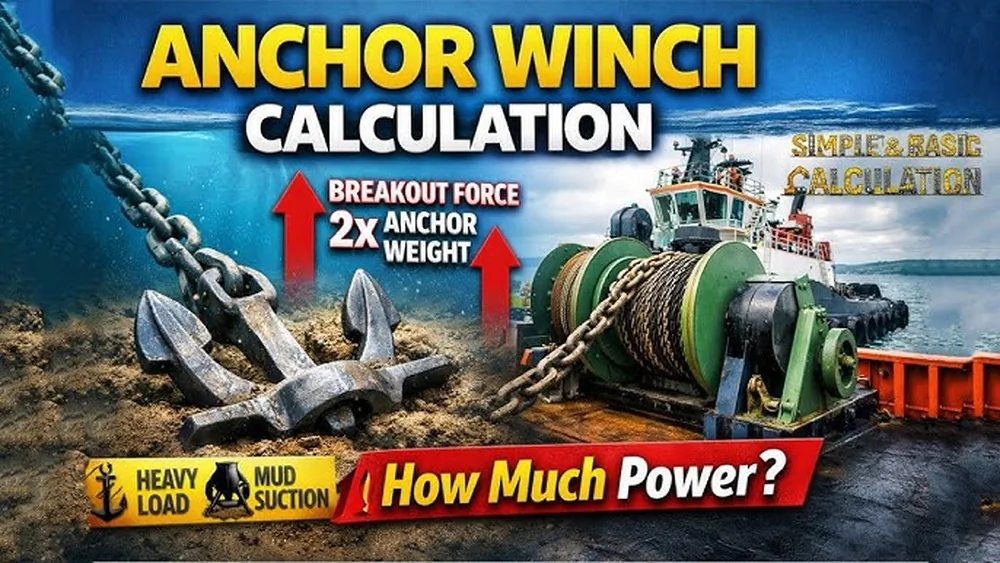
Calculating winch recovery capacity is essential for anyone who uses a winch, whether on a 4×4 vehicle, ATV, or in industrial settings. Choosing the wrong winch can leave you stranded or damage your equipment. Many beginners make mistakes because they misunderstand key factors like weight, resistance, and line pull.
This guide explains how to calculate the right winch recovery capacity, offers practical examples, and highlights the details that matter most for safe and effective winching.
What Is Winch Recovery Capacity?
Winch recovery capacity is the maximum load a winch can pull safely. This rating is usually measured in pounds (lbs) or kilograms (kg). Manufacturers calculate it under ideal conditions, which rarely match real-world scenarios. Knowing how to adjust this number for your situation is vital.
Why Accurate Calculation Matters
A winch that’s too weak may fail when you need it most. Overestimating what your winch can handle can cause cable snaps, motor burnout, or even injuries. On the other hand, buying an oversized winch adds unnecessary weight and cost.
Precise calculations help you pick a winch that matches your needs without overspending or risking safety.

Credit: www.piercearrowinc.com
Core Factors Affecting Winch Recovery Capacity
Several factors influence the required winch capacity:
- Gross Vehicle Weight Rating (GVWR): This is the maximum total weight of your vehicle, including fuel, passengers, and cargo.
- Resistance Types: The kind of terrain and situation, like mud, sand, or an incline, increases resistance.
- Line Pull: This is the force the winch can apply on its first wrap.
- Safety Margin: Extra capacity ensures safety and accounts for unpredictable challenges.
Step-by-step Guide To Calculating Winch Recovery Capacity
1. Find Your Vehicle’s Gvwr
Check the vehicle manual or the plate inside the driver’s door. For example, if your truck’s GVWR is 6,000 lbs, this is your starting point.
2. Apply The Winch Capacity Formula
The most common formula is:
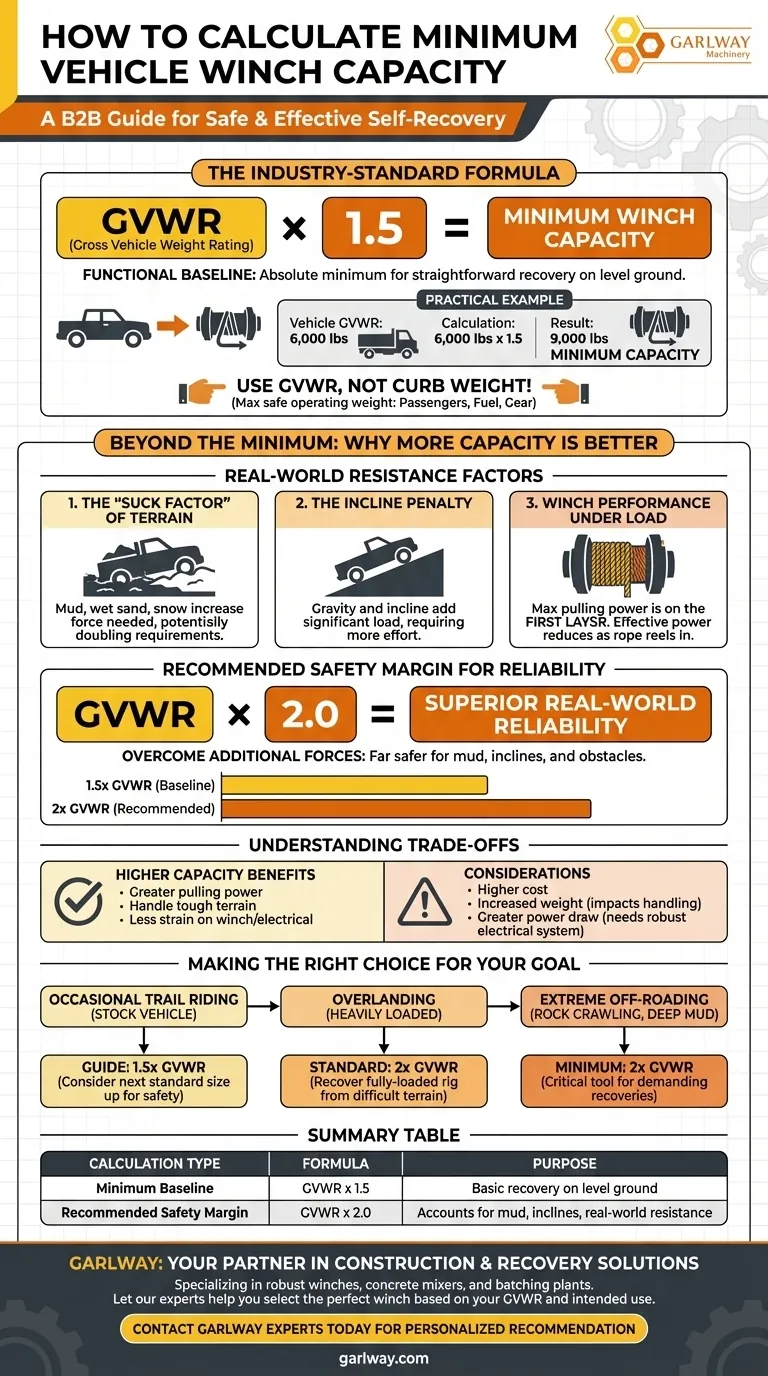
Required Capacity = GVWR x 1.5
So, for a GVWR of 6,000 lbs:
6,000 lbs x 1.5 = 9,000 lbs
This means you need a winch rated for at least 9,000 lbs.
3. Consider Terrain Resistance
Different terrains add resistance:
- Level, hard surface: No extra resistance
- Mud or sand: 2x to 3x GVWR
- Inclines: Add 10% per 10 degrees
If you often recover in deep mud, you may need a winch with a capacity 2-3 times your GVWR.
4. Factor In Accessories And Loads
Rooftop tents, gear, or towing increase total weight. Add these to your calculation. For example, with 500 lbs of gear:
6,500 lbs x 1.5 = 9,750 lbs
5. Add A Safety Margin
Always round up to the nearest available winch size. If your calculation is 9,750 lbs, choose a 10,000 lbs winch.
Real-world Example
Imagine you have a Jeep Wrangler with a GVWR of 5,800 lbs and you often drive in muddy conditions.
- GVWR: 5,800 lbs
- Gear: 400 lbs
- Muddy terrain (multiply by 2): (5,800 + 400) x 2 = 12,400 lbs
In this case, a 12,000 lbs winch or higher is recommended.
Winch Capacity And Rope Layer
Winches are rated for the first wrap on the drum. As the rope stacks up, pulling power drops. Here’s a comparison:
| Layer | Line Pull (%) | Example (10,000 lbs winch) |
|---|---|---|
| 1st | 100% | 10,000 lbs |
| 2nd | 87% | 8,700 lbs |
| 3rd | 79% | 7,900 lbs |
| 4th | 73% | 7,300 lbs |
To maximize pulling power, use as little rope as possible on the drum.
Common Mistakes When Calculating Winch Recovery Capacity
- Ignoring the weight of accessories like bumpers or rooftop tents.
- Not considering terrain resistance. Winching out of mud is much harder than on a flat road.
- Forgetting line pull reduction as the winch cable layers up.
- Choosing based on vehicle weight alone. Always use GVWR, not just empty weight.
- Not rounding up. Always pick the next size up for safety.
How To Compare Winch Sizes
Looking at winches rated at 8,000 lbs, 10,000 lbs, and 12,000 lbs? Here’s how they compare for a 6,000 lbs vehicle:
| Winch Size | Suitable for Flat Ground | Suitable for Mud/Sand | Weight Penalty |
|---|---|---|---|
| 8,000 lbs | Yes | No | Low |
| 10,000 lbs | Yes | Maybe | Medium |
| 12,000 lbs | Yes | Yes | High |
A higher-rated winch is heavier, but offers more safety and flexibility.

Credit: www.amazon.com
Useful Tips For Accurate Winch Selection
- Check manufacturer specs for your winch and vehicle.
- Plan for the worst case. If you off-road in remote areas, go bigger.
- Use snatch blocks to double pulling power in tough situations.
- Keep your battery and wiring upgraded; bigger winches draw more power.
- Test your winch before you need it in the field.
Advanced Insight: The Importance Of Snatch Blocks
A snatch block is a pulley that lets you double the pulling force of your winch. For example, using a snatch block with a 10,000 lbs winch can pull up to 20,000 lbs (with reduced speed). This tool is critical if you want extra safety margin without upgrading your winch.
Credit: garlway.com
Winch Recovery Capacity In Industrial Use
For industrial winching, calculations are even more critical. Loads may be heavier, and the consequences of failure are higher. Always consult the equipment manual and consider legal safety regulations. In these cases, using certified rigging and consulting engineering references like the OSHA winch safety guide is essential.
Frequently Asked Questions
How Do I Know My Vehicle’s Gvwr?
Check the sticker inside the driver’s door or the owner’s manual. GVWR includes your vehicle’s total allowed weight with passengers and cargo.
Can I Use A Winch With Less Capacity Than The Calculation?
It’s risky. A smaller winch can overheat, fail, or snap the cable. Always use the calculated minimum or the next size up.
Does Synthetic Rope Affect Winch Capacity?
No, winch capacity is based on the winch, not the type of rope. However, synthetic ropes are lighter and safer if they break.
What Happens If I Use All The Rope On The Drum?
Pulling power decreases as more rope is wrapped on the drum. Try to keep the pull on the first layer for maximum strength.
Is It Worth Using A Snatch Block For Heavy Pulls?
Yes. A snatch block can double your winch’s pulling power and reduce strain, making it a smart addition to your recovery kit.
Calculating winch recovery capacity is about more than just numbers. It’s about understanding your vehicle, your environment, and being ready for the unexpected. With the right calculation and a little extra safety margin, you’ll have confidence in every recovery situation.
Related posts
 Why You Should Use a Foam Cannon for Car Washing: Ultimate Guide
Washing your car is more than just making it look good. It protects the paint, keeps the value high, and makes driving feel better. But if…
 How to Clean Leather Seats Without Damaging Them: Expert Tips
Keeping your leather seats clean can be a challenge. Leather looks beautiful and feels luxurious, but it needs special care. Many people worry about damaging their…
 Why Using a Ceramic Coating Spray is Important for Your Car’s Shine
If you care about your car’s appearance and value, you probably wash and wax it regularly. But did you know there’s a better way to protect…