
How To Clean Jeep Fuel Injectors
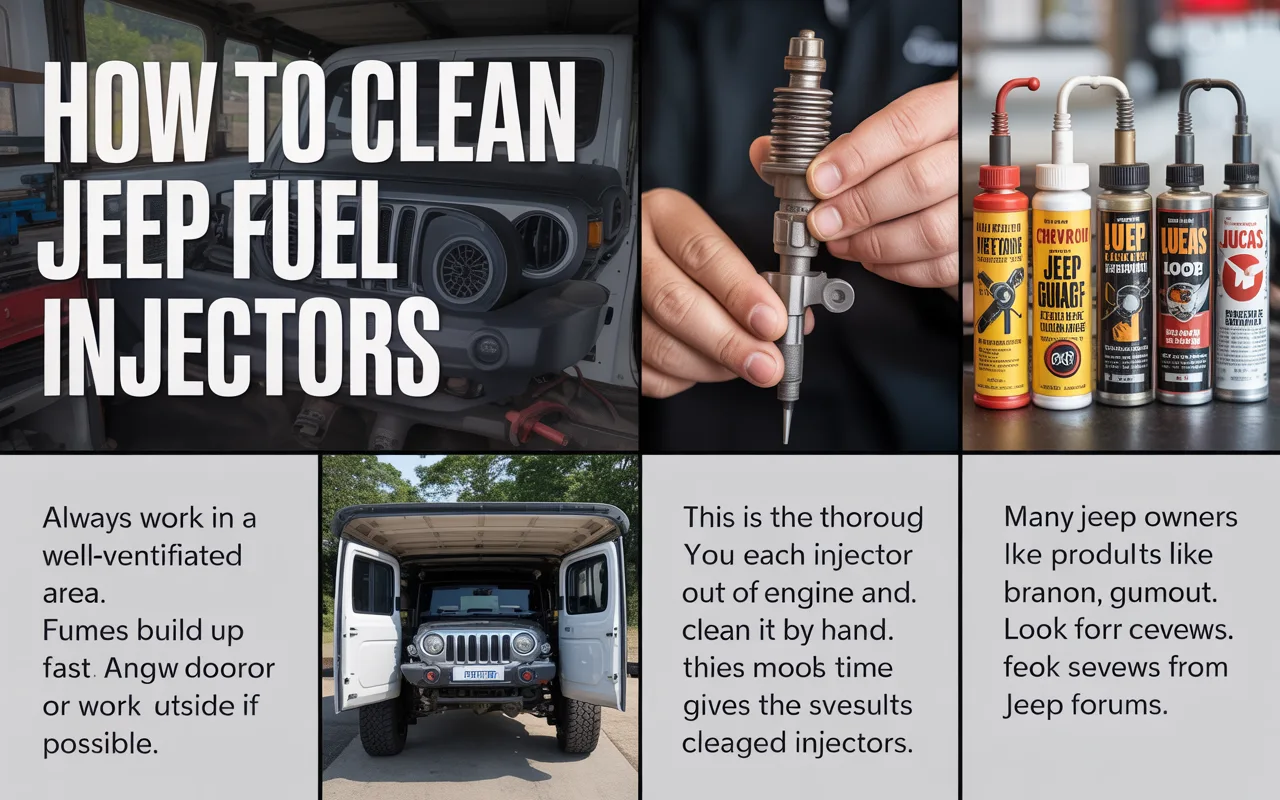
Learn exactly how to clean Jeep fuel injectors with this easy guide. We cover symptoms, methods, tools, and tips to get your Jeep running smoothly again without expensive shop visits.
Your Jeep works hard. It takes you to work, carries your gear, and brings you home after adventures. But over time, fuel injectors get dirty. This happens because fuel contains small particles and leaves deposits behind. When injectors clog, your engine cannot get the right amount of fuel. This leads to problems you can feel every time you drive.
Many Jeep owners notice their vehicle does not run as well as it used to. The engine might shake at stop lights. You might feel less power when you step on the gas. Your fuel bill might even go up. These are all signs that it might be time to clean Jeep fuel injectors.
The good news is you can handle this job at home. You do not need to be a mechanic. You just need some basic tools and a little time. This guide will show you exactly what to do.
Signs Your Jeep Fuel Injectors Are Dirty
Before you start any work, you should confirm that dirty injectors are really the problem. Here are the most common signs:
Rough Idle
When you sit at a stop light, does your Jeep shake or vibrate? Clean injectors spray fuel in a fine mist. Dirty injectors spray unevenly. This makes the engine run rough when idling.
Poor Acceleration
Do you press the gas and feel like your Jeep takes too long to respond? Clogged injectors cannot deliver enough fuel quickly. This means slower acceleration and less power.
Lower Gas Mileage
Dirty injectors mess up the air-fuel mixture. Your engine might run too rich, which means it uses more fuel than needed. If you find yourself filling up more often, injectors could be the cause.
Engine Misfires
When an injector gets really clogged, that cylinder might not fire at all. This feels like a sudden jerk or stumble while driving. The check engine light might also come on.
Hard Starting
Your Jeep might crank longer before starting. In bad cases, it might not start at all. Clean fuel delivery is crucial for quick starts.
“Most fuel system problems I see in Jeeps come from neglected maintenance. A simple injector cleaning every 30,000 miles prevents 90 percent of these issues.” – Mark Thompson, Master Mechanic and Jeep enthusiast for 25 years
What You Need Before You Start
Gather these items before you begin. Having everything ready makes the job easier.
Basic Tools:
- Socket set with metric sizes
- Screwdrivers (flat and Phillips)
- Safety glasses
- Shop rags or paper towels
- Gloves to keep hands clean
Cleaning Supplies:
- Fuel injector cleaner solution
- Fuel injector cleaning kit with pressure bottle
- Battery terminal brush (if needed)
- Clean fuel hose pieces
Optional but Helpful:
- Multimeter to test injectors
- Fuel pressure gauge
- Compression tester
- Digital camera or phone to take before photos
Safety First: Important Precautions
Working with fuel systems requires care. Gasoline is very flammable. Follow these rules to stay safe:
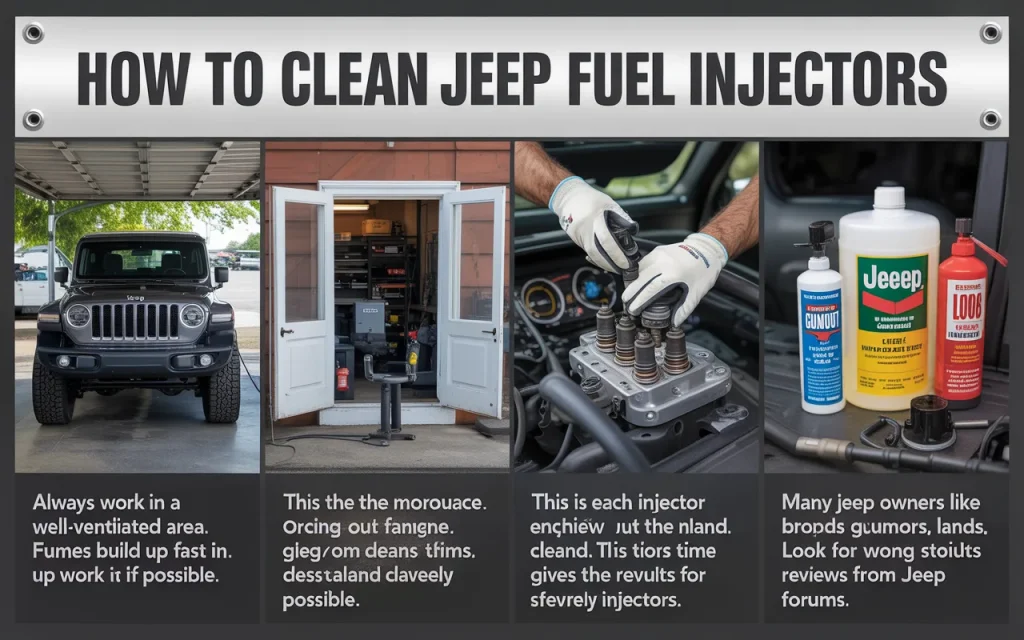
Always work in a well-ventilated area. Fumes build up fast in garages. Open the door or work outside if possible.
Disconnect the battery before you start. This prevents any sparks while you work near fuel lines.
Keep a fire extinguisher nearby. Make sure it works for fuel fires. Check the gauge.
Do not smoke or have any open flames near your work area. Put away lighters and matches.
Wear safety glasses. Fuel can splash when you disconnect lines. Protect your eyes.
Let the engine cool down completely. Hot parts can burn you and hot fuel is more dangerous.
Method 1: Using Fuel Additive Cleaners
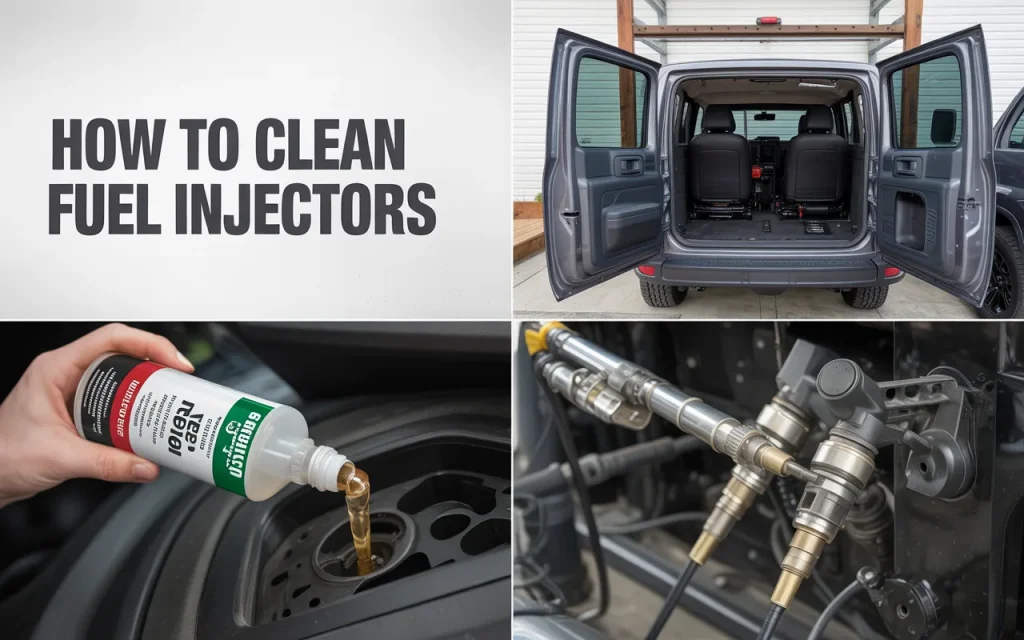
This is the easiest way to clean Jeep fuel injectors. It takes almost no mechanical skill. You just pour a bottle into your gas tank.
How It Works:
Fuel additive cleaners contain chemicals that dissolve deposits. When you add them to your tank, they mix with the gas. As you drive, the cleaner flows through the injectors and slowly removes buildup.
Steps to Follow:
- Buy a quality fuel injector cleaner from an auto parts store. Look for brands that specifically mention injector cleaning.
- Wait until your tank is almost empty. This makes the cleaner more concentrated.
- Pour the entire bottle into your fuel tank.
- Fill up with fresh gas. This helps mix everything.
- Drive your Jeep normally. The cleaner needs time to work.
- Repeat if needed. Some products recommend using them for two or three tanks in a row.
Pros and Cons:
| Pros | Cons |
|---|---|
| Very easy to do | Takes time to work |
| No tools needed | Not good for severe clogs |
| Costs less than $15 | Results vary by brand |
| Safe for all Jeeps | May need multiple treatments |
This method works best for regular maintenance. If your Jeep has minor issues, a good cleaner might fix them. But if your injectors are really clogged, you need a stronger method.
“Additive cleaners are like vitamins for your fuel system. They help prevent problems but won’t cure serious illnesses.” – Sarah Chen, Automotive Engineer and fuel systems specialist
Method 2: Professional-Strength Cleaning with a Kit
For better results, use a pressurized cleaning kit. This method pushes cleaner directly through the injectors at high pressure. It removes more buildup than additives.
How It Works:
A cleaning kit includes a can of cleaner and a pressure bottle with hoses. You disconnect the fuel pump and connect the kit to your fuel rail. The kit uses its own pressure to push cleaner through the system while the engine runs.
Steps to Follow:
- Find the fuel rail on your engine. It is a metal tube that connects to all the injectors.
- Locate the fuel pump relay or fuse. Remove it so the pump stops working.
- Start the engine and let it run until it stalls. This relieves fuel pressure.
- Disconnect the battery.
- Find the fuel line connection at the rail. It might have a quick-disconnect fitting or bolts.
- Connect your cleaning kit according to its instructions. Usually, you attach a hose from the kit to the fuel rail.
- Fill the kit bottle with cleaner and pressurize it.
- Reconnect the battery and start the engine. It will run on the cleaner from the kit.
- Let the engine run until the cleaner is gone. This takes about 15-30 minutes.
- Reconnect the fuel line and replace the relay or fuse.
- Start the engine and check for leaks.
Important Tips:
Read your kit instructions carefully. Different brands work slightly differently.
Have a helper ready. One person can watch the engine while another watches the cleaner level.
Work slowly and label any hoses you disconnect. This helps when putting things back.
| Tools Needed | Approximate Cost |
|---|---|
| Cleaning kit with pressure bottle | $40-$70 |
| Replacement cleaner cans | $15-$25 each |
| Basic hand tools | You probably have these |
Method 3: Removing and Cleaning Injectors
This is the most thorough method. You take each injector out of the engine and clean it by hand. This takes more time but gives the best results for severely clogged injectors.
Steps to Follow:
- Relieve fuel pressure by removing the fuel pump fuse and running the engine until it stalls.
- Disconnect the battery.
- Remove the fuel rail bolts. The rail holds all the injectors.
- Carefully lift the rail. The injectors will come out with it.
- Remove each injector from the rail. Note their positions if they are specific to cylinders.
- Clean the outside of each injector with a shop rag and cleaner.
- Use an electrical tester to check each injector’s resistance. Write down the readings.
- Clean the injector tips with a small brush. Be gentle.
- Back-flush each injector using a cleaning kit or a 9-volt battery and cleaner spray. This pushes deposits out the way they came in.
- Replace the small O-rings on each injector. These seals wear out.
- Reinstall everything in reverse order.
- Start the engine and check for leaks.
When to Use This Method:
- If your Jeep has more than 100,000 miles
- If you have tried additives with no improvement
- If you are replacing other parts like spark plugs
- If you have a misfire code for a specific cylinder
Testing Your Injectors After Cleaning
After you clean Jeep fuel injectors, you should test them. This confirms your work helped.
Listen for Changes:
Start the engine and listen. Does it sound smoother? Rough idle should improve.
Check Engine Light:
If the light was on, it might go out after driving a while. You can also clear codes with a scanner.
Test Drive:
Take your Jeep for a drive. Accelerate from a stop. Does it feel stronger? Pass a car on the highway. Does it have more power?
Check Fuel Mileage:
Fill your tank and track your miles. If mileage improves, your cleaning worked.
Use a Scanner:
A good OBD2 scanner can show you fuel trim numbers. These numbers should be closer to zero after cleaning. Positive numbers mean the engine adds fuel. Negative means it removes fuel. Clean injectors help these numbers look normal.
“I always tell my customers to check fuel trims before and after cleaning. The numbers don’t lie. Clean injectors almost always improve the readings.” – James Wilson, Independent Jeep Specialist for 18 years
How Often Should You Clean Jeep Fuel Injectors?
Regular cleaning prevents problems. Here is a simple schedule:
Every Oil Change:
Use a fuel additive cleaner. This takes five minutes and costs little. It keeps minor deposits from building up.
Every 30,000 Miles:
Consider a pressurized cleaning. This deeper clean removes deposits that additives miss.
Every 60,000 Miles:
Think about removing and cleaning injectors. At this mileage, O-rings might need replacement anyway.
When You Notice Problems:
Do not wait. Clean them as soon as you feel rough idle or power loss.
Comparison of Cleaning Methods
| Method | Difficulty | Time Needed | Cost | Effectiveness |
|---|---|---|---|---|
| Additive cleaner | Very easy | 5 minutes | $10-$20 | Good for prevention |
| Pressurized kit | Moderate | 1-2 hours | $50-$100 | Very good |
| Remove and clean | Hard | 3-5 hours | $30-$80* | Excellent |
*Cost depends on buying O-rings and cleaner. You reuse your injectors.
Common Mistakes to Avoid
Using Cheap Cleaners:
Not all products work well. Stick with brands that mechanics recommend. Read reviews online.
Forcing Connections:
Fuel lines have clips and locks. If something does not come apart easily, you missed a clip. Do not force it.
Mixing Up Injectors:
If you remove injectors, mark them. Some engines need specific injectors for each cylinder.
Skipping O-Rings:
Old O-rings leak. Always replace them when you remove injectors. They cost little but save big headaches.
Not Testing After:
Always test your work. A quick test drive confirms success.
When to Replace Instead of Clean
Cleaning works great for most Jeeps. But sometimes you need new injectors. Here is when to replace:
Physical Damage:
If an injector tip is broken or bent, cleaning will not fix it.
Electrical Failure:
Injectors that fail resistance tests need replacement. No cleaner fixes electrical problems.
Very High Mileage:
After 200,000 miles, injectors wear out. The internal parts can fail. New injectors might be better.
Severe Rust:
If you see rust inside the injector, replace it. Rust means water got into the fuel system.
No Improvement:
If you clean thoroughly and nothing changes, the injector might be beyond saving. Replace it.
Keeping Injectors Clean Longer
After you clean Jeep fuel injectors, you want them to stay clean. Here are simple habits that help:
Use Top-Tier Gasoline:
Some gas stations sell fuel with more detergents. Look for the Top Tier logo. These fuels keep injectors cleaner.
Change Fuel Filters:
Your fuel filter catches big particles before they reach injectors. Change it on schedule.
Avoid Running on Empty:
When your tank gets very low, sediment from the bottom can enter the fuel system. Keep your tank above quarter full.
Drive Occasionally:
Short trips where the engine does not get fully warm can cause more deposits. Take your Jeep for longer drives when possible.
Use Additives Seasonally:
Even if you do not use additives every fill-up, use them a few times per year. This maintenance keeps injectors happy.
Frequently Asked Questions
Can I clean Jeep fuel injectors without removing them?
Yes. You can use additive cleaners or a pressurized cleaning kit. Both work without removing parts.
How long does it take to clean fuel injectors?
Additives take minutes to add but work over a full tank of gas. Pressurized cleaning takes about an hour. Removing and cleaning takes several hours.
Will cleaning injectors improve gas mileage?
Yes, in most cases. Clean injectors spray fuel correctly. This helps your engine use fuel efficiently. Many drivers see better mileage after cleaning.
Is it safe to use injector cleaner in old Jeeps?
Yes. Quality cleaners are safe for all engines. They are designed to remove deposits without harming seals or other parts.
How much does professional injector cleaning cost?
A shop might charge $150 to $300 for professional cleaning. Doing it yourself costs much less.
Can dirty injectors damage my engine?
Yes. Running too lean from clogged injectors can cause overheating. Misfires can damage catalytic converters. Cleaning prevents these problems.
Do I need special tools for Jeep injectors?
Basic hand tools work for most Jeeps. Some models might need special fuel line tools. Check your year and model before starting.
What is the best fuel injector cleaner for Jeeps?
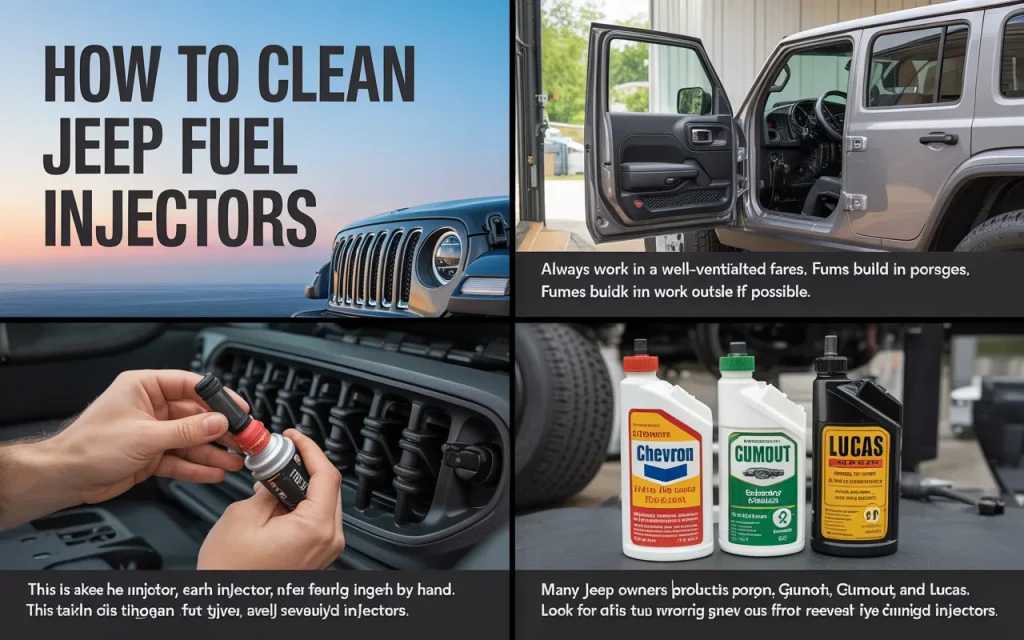
Many Jeep owners like products from brands like Chevron, Gumout, and Lucas. Look for cleaners with strong reviews from Jeep forums.
Conclusion
Learning how to clean Jeep fuel injectors saves you money and keeps your vehicle running well. You have three main options. Additive cleaners are easy and good for maintenance. Pressurized kits offer deeper cleaning without removing parts. Removing and cleaning gives the best results for severe problems.
Pay attention to how your Jeep runs. Rough idle, poor power, and bad gas mileage all point to dirty injectors. Catching these problems early makes cleaning easier. Waiting too long can lead to more expensive repairs.
Regular maintenance matters. Use good fuel, change filters on time, and add cleaners occasionally. These small habits prevent big problems later. Your Jeep works hard for you. Keeping the fuel system clean helps it last longer and perform better.
You can handle this job yourself. Take your time, follow safety rules, and do not rush. Your Jeep will thank you with smoother running and better power. Clean injectors mean a happy engine and a happier driver.
Related posts
 Best Car Mats for All-Weather Use 2026: Top Picks for Every Driver
Keeping your car clean is tough, especially when rain, mud, and snow are involved. That’s where the best car mats for all-weather use make a difference.…
 Best Custom-Fit Floor Mats for Nissan Titan: Top Picks 2026
These custom-fit mats provide reliable coverage and help protect your Nissan Titan’s interior from dirt and spills. It’s Monday morning, you’re rushing out the door with…
 Best Car Cleaning Wipes for Interior: A Buyer’s Guide
Discover the best car cleaning wipes for your interior. Compare options for dashboards, leather, and tough stains to keep your car spotless and well-maintained. Keeping your…