Jeep Wrangler Winter Preparation Guide
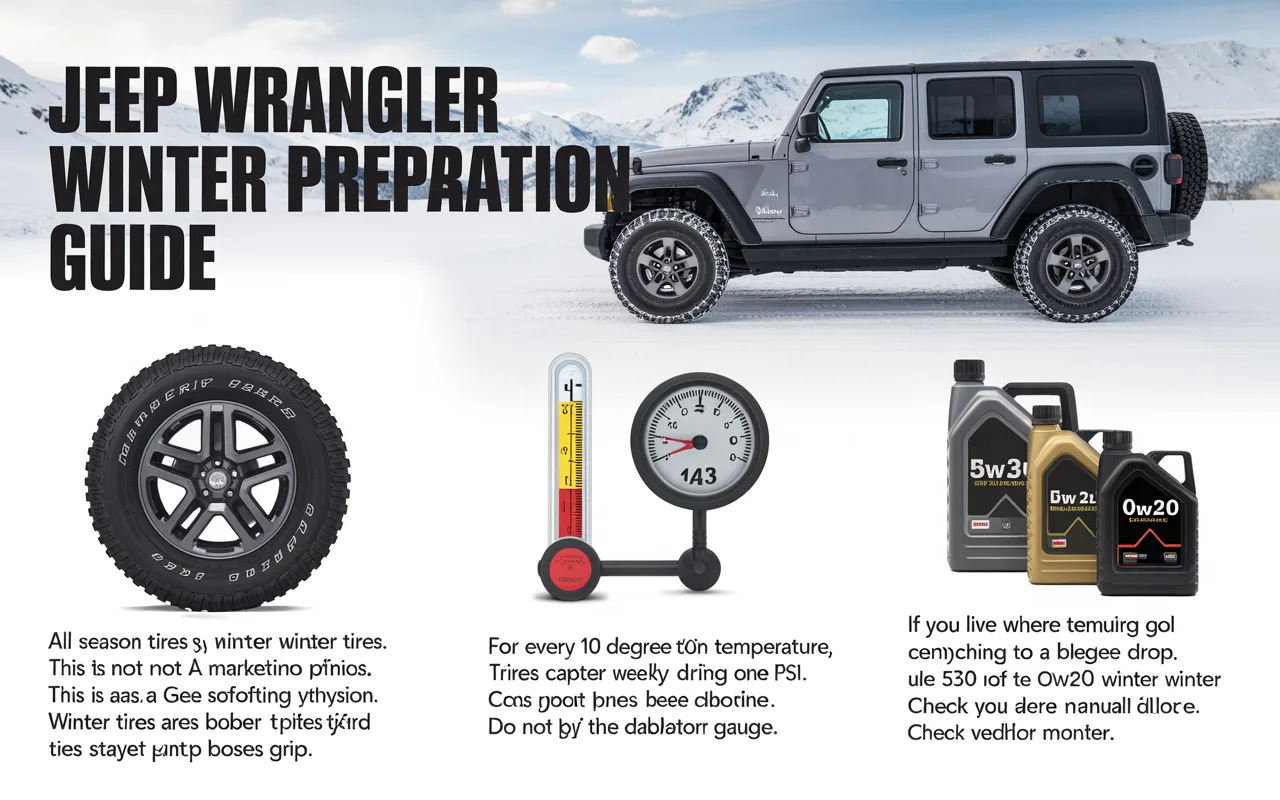
Follow this complete Jeep Wrangler winter preparation guide to keep your 4×4 reliable in snow and ice. Learn about tires, fluids, soft tops, emergency kits, and battery care from an experienced owner.
I live in Colorado and drive a Jeep Wrangler JL all year. Winter here starts early and stays late. I learned the hard way that a Jeep needs different care when temperatures drop. One year I ignored my battery until it was too late. I got stuck at a trailhead at 9 PM with a dead engine and no cell signal. That night taught me more than any manual could.
Since then I have developed a solid Jeep Wrangler winter preparation guide that works for any model year. Whether you drive a JK, JL, or TJ, this guide will help you stay safe and mobile when the roads get bad. I share only what I have tested myself or learned from trusted mechanics who work on Jeeps daily.
Why Winter Prep Matters for Your Jeep
Jeeps are tough but they have quirks in cold weather. The large tires, soft tops, and open wheel wells let snow and salt get into places cars never expose. If you skip winter prep you risk starting issues, rust, and poor visibility.
Many people think four wheel drive makes them invincible. Four wheel drive helps you move but it does not help you stop or steer on ice. Winter preparation is about more than just traction. It is about reliability, safety, and protecting your investment.
Battery and Electrical System Check
Cold weather is hard on batteries. A battery loses about 35 percent of its strength at 32 degrees and over 50 percent at zero degrees. If your battery is three years old or older, get it tested before the first freeze.
What I do: I replace my Jeep battery every four years whether it needs it or not. I also clean the terminals and make sure the connections are tight. A loose ground cable caused my dead Jeep that night in the mountains.
Table 1: Battery Temperature Performance
| Temperature | Battery Power Loss | Cranking Difficulty |
|---|---|---|
| 32°F (0°C) | 35% reduction | Noticeable slower crank |
| 0°F (-18°C) | 50% reduction | Hard start common |
| -20°F (-29°C) | 60%+ reduction | May not start |
*Mike Thompson, Jeep mechanic for 22 years in Montana: “Nine out of ten winter no-starts I see are battery related. People test in October but the battery fails in January. Test again in December.”*
Tires Are Your Only Contact With the Road
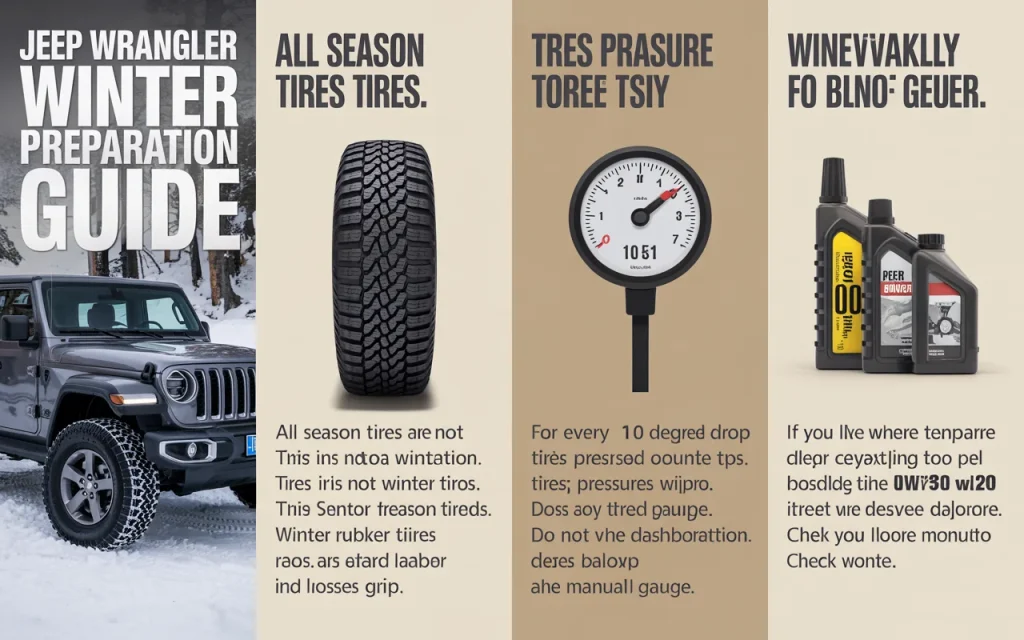
All season tires are not winter tires. This is not a marketing opinion. It is physics. Winter tires use softer rubber that stays flexible below 45 degrees. All season rubber gets hard and loses grip.
I run dedicated winter tires on my Wrangler from November through March. The difference in braking distance on packed snow is dramatic. If you cannot store two sets of tires, at least make sure your all terrains have the three peak mountain snowflake symbol. That symbol means the tire meets severe snow service standards.
Air pressure drops in cold weather. For every 10 degree drop in temperature, tires lose about one PSI. Check pressures weekly during winter. Do not go by the dashboard monitor alone. Use a manual gauge.
Fluids Matter More Than You Think
Your Jeep uses several fluids that thicken in cold weather. Here is what I check every fall.
Engine oil: If you live where temperatures stay below zero, consider switching to a lighter oil like 5W30 or 0W20 if your engine allows it. Check your owner manual first.
Coolant: Test the freeze point with a cheap tester from any auto parts store. Coolant mixture should be 50/50. Straight water will freeze and crack your engine block. I learned this when my neighbor cracked his block last January. His Jeep sat for two months waiting on parts.
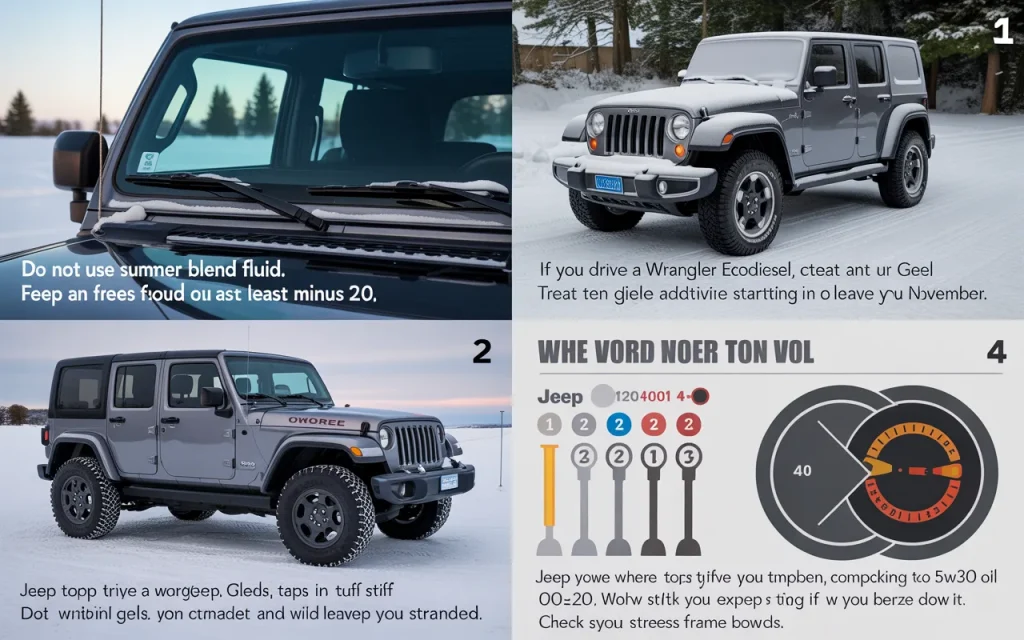
Windshield washer fluid: Do not use summer blend fluid. It freezes on the glass. Buy fluid rated to at least minus 20. Keep an extra gallon in the back because you will use more in winter.
Diesel owners: If you drive a Wrangler EcoDiesel, treat the fuel with antigel additive starting in November. Diesel gels in cold temperatures and will leave you stranded.
Soft Tops and Hardtops: Winter Care
Jeep tops take a beating in winter. Cold vinyl gets stiff and can crack if you force it. Snow weighs more than you expect and can stress frame bows.
Soft top care: Do not open or close the soft top when the temperature is below 50 degrees. Wait until the sun warms the fabric or park in a heated garage if you need to lower it. I keep 303 fabric guard on hand to treat my soft top in late fall. This helps water bead off instead of soaking in and freezing.
Hardtop care: Check the seals around freedom panels and the liftgate. Dry rubber seals shrink in cold air and let in cold drafts and moisture. Apply silicone grease to all weather stripping once per winter. This keeps the rubber flexible and prevents leaks.
Drain plugs: Jeep Wranglers have drain plugs in the floor. Snow melts off your boots and pools on the floor mats. If that water reaches the drain holes and freezes, it blocks future drainage. Pull the mats and check the drains monthly.
Door Seals and Lock Cylinders
Wrangler doors are famous for freezing shut. Water gets into the seal channel and freezes overnight. You pull the handle and nothing moves. Do not yank hard. You can damage the latch mechanism.
Prevention: Wipe the door seals dry before you park for the night if the Jeep is wet. Apply a thin layer of dielectric grease or silicone spray to the rubber seals. This creates a barrier that ice cannot stick to.
Frozen locks: If your key does not turn, do not force it. Use a lock deicer spray. Better yet, replace your key fob battery and use remote entry all winter. I have not used a physical key to open my Jeep in three winters.
Sarah Chen, Overland guide in Wyoming: “I tell my clients to spray their door latches and hinges with fluid film in October. It does not wash off easily and ice slides right off. This tip saves hours of frustration.”
Heated Seats, Defrosters, and Visibility
You cannot drive safely if you cannot see. Winter visibility is often poor. Your Jeep needs every defroster working at peak efficiency.
Front defroster: Test this before you need it. If airflow is weak, check the cabin air filter if your model has one. A clogged filter restricts air even when the fan is on high.
Rear defroster: Look at the grid lines on the rear window. Broken lines will not defrost. Repair kits exist but sometimes replacement is the only fix. I replaced my entire rear window glass two years ago after a cargo box scratched the defroster grid.
Heated seats and steering wheel: If your Jeep has these features, use them. They warm your body directly and you can keep the cabin temperature lower, which saves fuel. My 2018 JL has heated seats that take about four minutes to get warm. I turn them on before I scrape the windows.
Mirrors: Keep a spray bottle of isopropyl alcohol in the garage. Spray frozen mirrors and the ice melts instantly. Do not pour hot water on glass. It will crack.
Four Wheel Drive System and Transfer Case
Your four wheel drive system needs to engage smoothly. If you have not used four wheel drive since last spring, the linkage or actuator may be sticky.
Find a clear stretch of dirt or gravel. Shift into four high and drive slowly for a quarter mile. Then shift into four low and move forward a few feet. Then shift back to two wheel drive. This circulates fluid and confirms the system works.
Check the transfer case fluid. Most owners never check this. Transfer case fluid does not burn off like engine oil but it does break down over time. If your Jeep is over 60,000 miles and you have never serviced the transfer case, winter is a good time.
Emergency Gear You Actually Need
I see many online lists suggesting thirty seven items for winter emergency kits. Most of that gear stays in the bag until you throw it away years later. Here is what I actually use and what has helped others I know.
Must have items:
Traction boards or traction mats. Not sand, not cat litter. Real traction boards work instantly. I use MaxTrax but generic versions work too.
A real shovel. Not a folding emergency shovel. A full size trenching shovel with a handle long enough to give you leverage. Snow is heavy. You need leverage.
Jump starter pack. Not jumper cables. A lithium jump pack lets you self rescue without another vehicle. I keep mine charged in the house, not the Jeep. Cold kills battery packs too.
Heavy blanket or sleeping bag rated for your climate. If you are stuck for hours, the Jeep will not stay warm without the engine running.
High visibility vest and gloves. If you are changing a tire on a snowy highway, cars cannot see you. Wear bright colors.
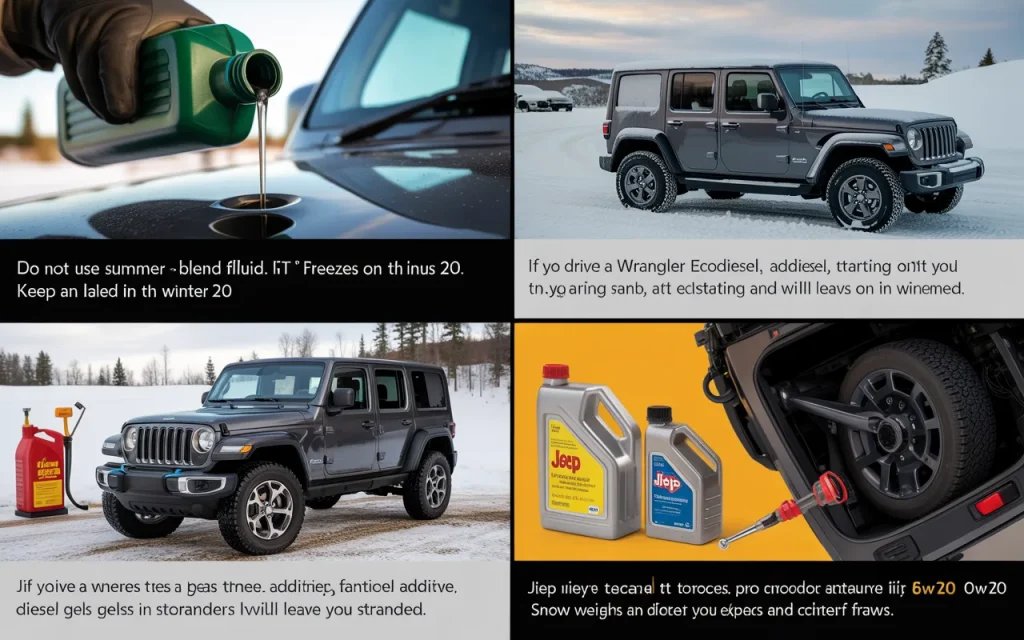
Table 2: Winter Emergency Kit Essentials
| Item | Why You Need It | My Recommendation |
|---|---|---|
| Traction boards | Self recovery from snow and ice | MaxTrax or generic copies |
| Lithium jump starter | Start dead battery without second car | NOCO or Audew brand |
| Full size shovel | Dig out tires and snow banks | 36 inch trenching shovel |
| Cold rated sleeping bag | Survival if stranded overnight | 0°F rated or lower |
| Headlamp with fresh batteries | Hands free light for repairs | Black Diamond or similar |
John Vasquez, Search and Rescue volunteer: “We pull over a dozen Jeeps out of ditches every winter. Half of them had no shovel or traction aid. They had fancy bumpers and lights but nothing to get unstuck. Gear only helps if you carry it.”
Rust Prevention and Undercarriage Care
Jeeps rust. It is a fact of life. But you can slow it down. Road salt is aggressive and Wranglers have many exposed metal parts. Frame rust is the biggest killer of older Jeeps.
Fluid Film or Woolwax: I apply Fluid Film to my frame and suspension components every October. It is a lanolin based spray that stays wet and prevents salt from contacting metal. One $15 can covers the critical areas. Do this on a dry day and expect some drips in your driveway for a few days.
Car washes: Run your Jeep through a touchless car wash with undercarriage spray every two weeks during salt season. Do not use brushes that hold dirt and scratch paint. The undercarriage wash is what matters.
Drain holes: Jeep frames have drain holes. They are there for a reason. If these get plugged with dirt, water sits inside the frame and rusts from the inside out. I stick a piece of wire in each hole once per winter to clear them.
Gasoline and Fuel System
Keep your gas tank at least half full during winter. This prevents condensation inside the tank. Water in fuel lines freezes and blocks flow. I fill up when I hit half a tank, not when the light comes on.
Fuel stabilizer: If you have a Wrangler that sits for days between drives, add fuel stabilizer in November. Ethanol blended gas absorbs water over time. Stabilizer helps prevent phase separation.
Gas cap and seal: Check the rubber gasket on your gas cap. If it is cracked or hard, cold air enters the tank. This increases condensation. A new gas cap costs about twelve dollars.
Wipers and Washer System
Winter wipers are thicker and have a rubber boot that prevents ice buildup on the arm. I switch to winter blades in November and store my summer blades in the garage. Do not wait until the first ice storm. Every store sells out immediately when snow is forecast.
Heated wipers: Some Jeep models offer heated wiper parking areas. If you have this option, turn it on. If not, lift your wipers off the glass when you know freezing rain is coming. They freeze to the glass and the rubber tears when you turn them on.
Washer hose antifreeze: Some Jeep owners add a splash of isopropyl alcohol to the washer reservoir to lower the freeze point. I do not recommend this. It can damage sensors and paint. Buy proper winter washer fluid instead.
Daily Winter Driving Habits
Winter preparation is not just about the Jeep. It is about how you drive it.
Warm up time: Modern engines do not need long idling. Thirty seconds is enough before driving. Driving gently warms the engine faster than idling. I start my Jeep, scrape the windows, and drive. Extended idling wastes fuel and increases engine wear.
Four wheel drive use: Do not use four wheel drive on dry pavement. It binds the drivetrain and can damage the transfer case. Use it only when the surface is slippery.
Following distance: Increase your following distance to six seconds or more on snow. Your Jeep may accelerate quickly but it stops like any other vehicle on ice.
Parking brake: In very cold conditions, the parking brake cable can freeze engaged. If you park on level ground, leave the parking brake off and put the transmission in park. For manual transmissions, leave it in gear.
Frequently Asked Questions
Do I really need winter tires on my Jeep if I have four wheel drive?
Yes. Four wheel drive helps you move forward. Winter tires help you stop and turn. They serve different purposes. I run winter tires and have never regretted it.
How often should I warm up my Jeep in extreme cold?
If temperatures are below zero, start the engine and let it run for two to three minutes before driving. This allows the transmission fluid to warm slightly. Longer than five minutes is wasteful.
Can I pressure wash my Jeep frame in winter?
Yes but dry it afterward. Drive around for ten minutes with the heat on to evaporate moisture from frame cavities. Moisture left inside will freeze and expand, potentially cracking welds.
Why does my soft top leak air around the door surrounds?
Door surrounds compress against the door seal. Over time they lose tension. Adjust the torx bolts on the windshield hinge to pull the surround tighter against the door.
Is it bad to shift into four wheel drive while moving?
You can shift into four high at speeds under 50 mph on most Wranglers. Shift into four low only when stopped or creeping at 1-2 mph.
What temperature is too cold for a Jeep soft top?
Do not operate the soft top mechanism below 50 degrees. The vinyl becomes stiff and can crease or crack. If you must lower it, park in a heated space first.
Conclusion
Winter does not have to mean your Jeep stays parked. With proper preparation you can drive all year with confidence. I have used this Jeep Wrangler winter preparation guide on my own vehicles for the past eight years. It has kept me moving through blizzards, ice storms, and subzero cold snaps.
Start with the battery and tires. Those are the two systems that fail most often. Then move to fluids, seals, and emergency gear. Spread these tasks across October and November so you are not rushing when the first snow falls.
The Jeep Wrangler winter preparation guide I shared here comes from real experience and real mistakes. I have broken door handles, frozen my locks, and replaced a cracked battery case. You do not need to repeat those errors. Take the time now to prep your Jeep and you will enjoy winter driving instead of dreading it.
Stay warm, keep the rubber side down, and wave to other Jeepers even when it is snowing.
Related posts
 Best Car Mats for All-Weather Use 2026: Top Picks for Every Driver
Keeping your car clean is tough, especially when rain, mud, and snow are involved. That’s where the best car mats for all-weather use make a difference.…
 Best Custom-Fit Floor Mats for Nissan Titan: Top Picks 2026
These custom-fit mats provide reliable coverage and help protect your Nissan Titan’s interior from dirt and spills. It’s Monday morning, you’re rushing out the door with…
 Best Car Cleaning Wipes for Interior: A Buyer’s Guide
Discover the best car cleaning wipes for your interior. Compare options for dashboards, leather, and tough stains to keep your car spotless and well-maintained. Keeping your…