
Best Type of Car Phone Mount for Everyday Driving
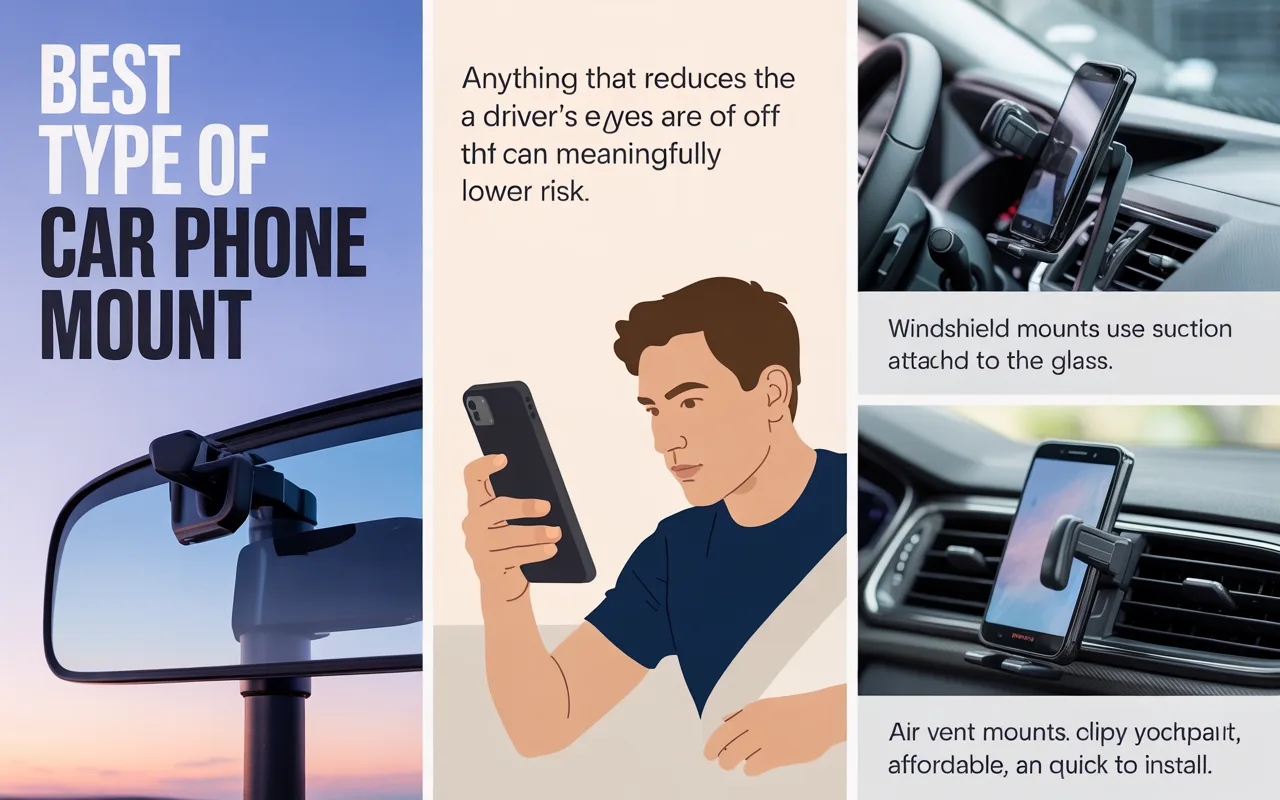
Find the best type of car phone mount for daily driving, navigation, and calls, with clear guidance on styles, safety, placement, and real-world usability.
Car phone mounts have become a daily driving essential. Whether you rely on your phone for maps, hands-free calls, music control, or traffic updates, the right mount keeps your screen visible and your hands where they belong. Still, many drivers struggle to choose the right option because there are many designs, attachment methods, and price ranges. Each style works well in certain situations and poorly in others.
This guide focuses on one simple goal: helping you decide the best type of car phone mount for your driving habits, vehicle interior, and phone usage. You will learn how each mount works, where it performs best, and what tradeoffs matter in real life. By the end, you should feel confident choosing a mount that feels natural to use and safe on the road.
As automotive safety engineer John Nielsen once said,
“Anything that reduces the time a driver’s eyes are off the road can meaningfully lower risk.”
That idea shapes every recommendation in this article.
Why the type of car phone mount matters
A phone mount might seem like a small accessory, but it plays a big role in comfort and safety. A poorly placed or unstable mount can block your view, distract you, or even send your phone flying during a sudden stop. The right mount, on the other hand, keeps information easy to glance at without pulling your attention away from driving.
The best type of car phone mount depends on three practical factors. First is visibility. Your phone should sit within your natural line of sight so you do not need to lean or turn your head. Second is stability. The mount must hold your phone firmly on smooth roads and rough ones. Third is usability. You should be able to place and remove your phone with one hand, without frustration.
Vehicle design also matters. A sedan with a flat dashboard offers different options than a truck with deep air vents. A compact car with a steep windshield angle may limit suction mounts. Even climate plays a role, since heat can weaken adhesives over time.
Dashboard phone mounts
Dashboard mounts attach directly to the top of the dashboard using adhesive pads, weighted bases, or gel suction. They are popular because they place the phone close to eye level without blocking the windshield.
These mounts work especially well for drivers who rely heavily on navigation. The screen sits in a natural glance zone, similar to built in infotainment displays. Many dashboard mounts also allow flexible arm adjustment, letting you fine tune angle and distance.
However, dashboard mounts require a suitable surface. Textured or curved dashboards can reduce grip. Extreme heat can soften adhesives, especially in cars parked outdoors for long hours. Removing adhesive mounts may also leave residue if not done carefully.
Dashboard mount strengths and limits
| Feature | What to expect |
|---|---|
| Visibility | Very good, close to road view |
| Stability | Strong on flat surfaces |
| Installation | Moderate, needs clean surface |
| Interior impact | Can leave marks if removed |
For many drivers, especially commuters, a dashboard mount represents the best type of car phone mount because it balances visibility and ease of use without interfering with airbags or vents.
Windshield phone mounts
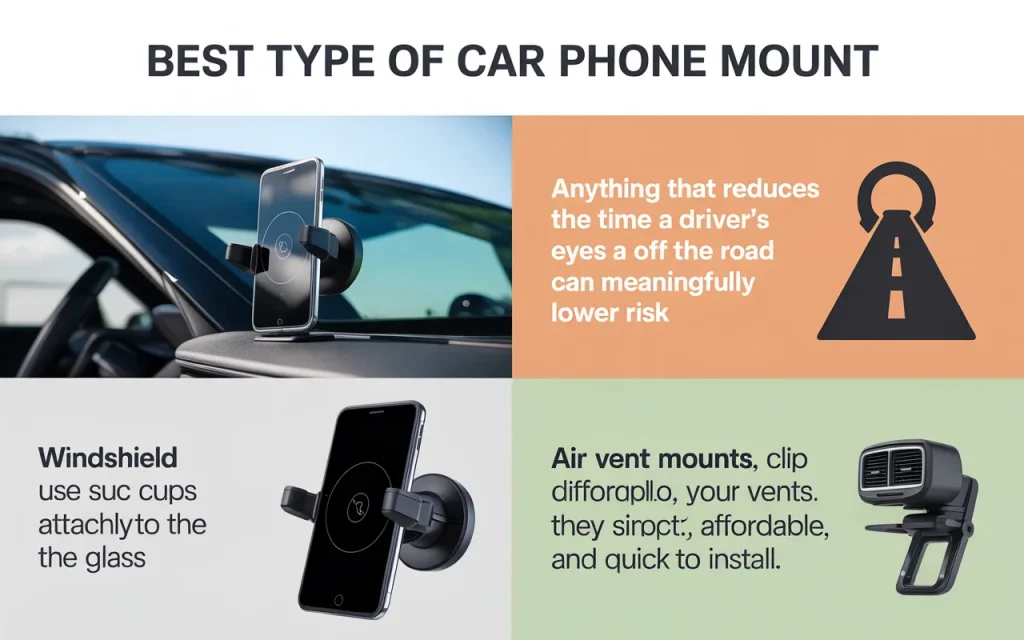
Windshield mounts use suction cups to attach directly to the glass. They were among the earliest car phone mount designs and are still widely used.
The biggest advantage of windshield mounts is placement flexibility. You can position the phone higher than dashboard mounts, which some drivers prefer for navigation. Suction cups also avoid adhesive residue, making them easy to remove or reposition.
On the downside, windshield mounts can block part of your view if placed poorly. In some regions, laws restrict windshield mounted objects. Temperature changes can also weaken suction, especially in very cold or hot conditions.
Windshield mount strengths and limits
| Feature | What to expect |
|---|---|
| Visibility | High, adjustable height |
| Stability | Good with quality suction |
| Installation | Easy, tool free |
| Legal concerns | Restricted in some areas |
Drivers who value adjustability often see this as the best type of car phone mount, but it requires careful placement and awareness of local rules.
Air vent phone mounts
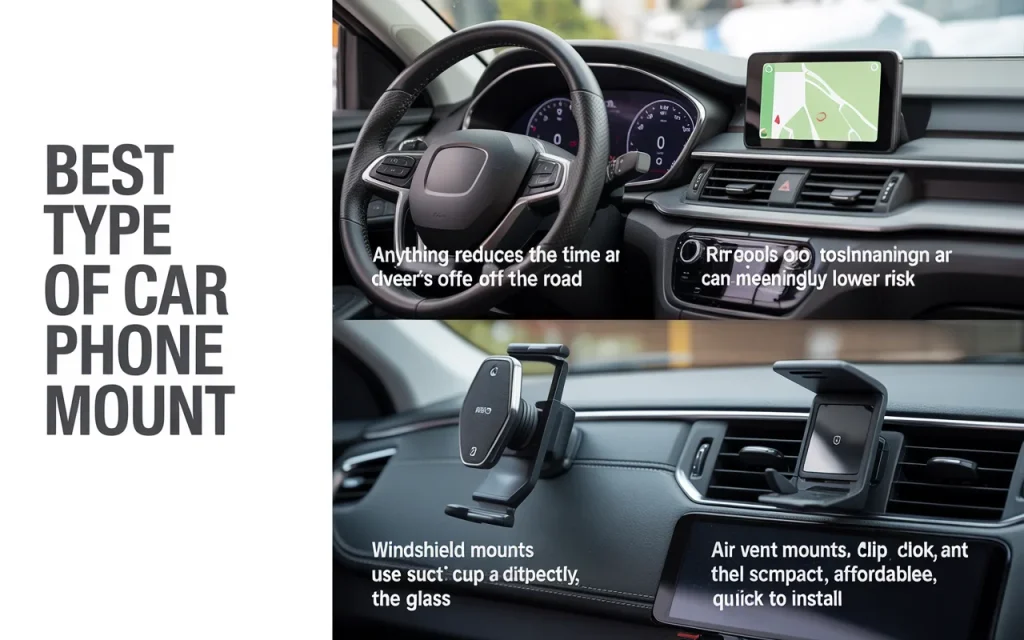
Air vent mounts clip directly onto your vehicle’s air vents. They are compact, affordable, and quick to install.
These mounts shine in simplicity. There is no adhesive, no suction, and no permanent change to the interior. Many drivers like how close the phone sits to hand level, making it easy to tap or swipe briefly.
There are drawbacks, though. Vent strength varies between vehicles. Thin or soft vents may bend under phone weight. In hot weather, air blowing directly on the phone can cause overheating or battery stress. Vent mounts also place the phone lower than eye level, which may increase glance time.
Despite this, for short trips and casual use, many people still consider vent mounts the best type of car phone mount due to convenience and low cost.
CD slot phone mounts
CD slot mounts insert into the car’s CD player slot and lock into place. While CD players are used less today, many vehicles still include them.
These mounts offer surprising stability because the CD slot provides a firm anchor. The phone usually sits centrally and does not block vents or the windshield. Installation is quick and reversible.
The main limitation is compatibility. If your car lacks a CD slot, this option disappears. Using the mount also means sacrificing access to the CD player, which may matter to some drivers.
For vehicles that support it, this option often feels like the best type of car phone mount because it stays solid even on rough roads.
Magnetic phone mounts
Magnetic mounts use strong magnets to hold the phone in place. A metal plate attaches to the phone or case, allowing quick mounting and removal.
Ease of use is the biggest draw here. You can place the phone on the mount with one hand, without clamps or arms. Magnetic mounts are available in dashboard, vent, and windshield styles.
Concerns often center on magnet strength and phone safety. High quality magnets do not damage modern phones, but weaker ones may struggle with larger devices. Some users dislike attaching metal plates to their phone or case.
Industrial designer Mark Wilson once noted,
“Good product design disappears when it works well.”
That idea fits magnetic mounts perfectly when chosen wisely.
Suction versus adhesive mounts
Choosing between suction and adhesive attachment is a common decision point.
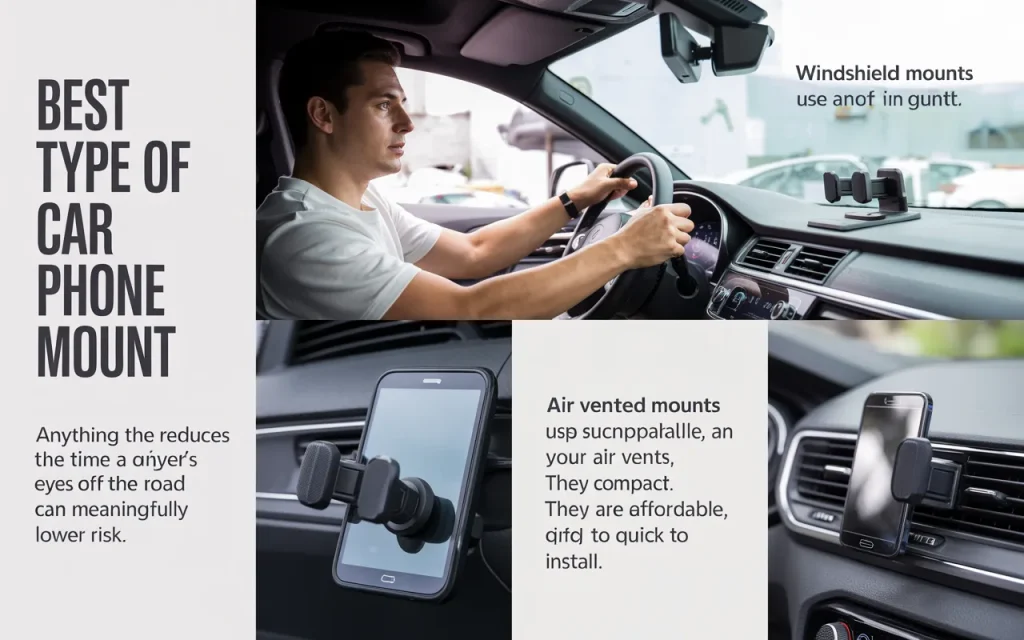
Suction mounts rely on vacuum pressure and work best on smooth surfaces. They are easy to remove and reposition, making them ideal for drivers who switch vehicles often.
Adhesive mounts create a more permanent bond. They resist vibration better and handle heavier phones, but removal requires care.
Your driving environment should guide the choice. Frequent temperature swings and rough roads favor adhesive. Rental cars and shared vehicles favor suction. In many cases, the best type of car phone mount is less about style and more about how it attaches.
Safety, legality, and placement considerations
Mount placement is just as important as mount type. Even the best design becomes unsafe if placed poorly.
Your phone should never block your view of the road, mirrors, or dashboard indicators. It should also stay clear of airbag deployment zones. Side curtain airbags, in particular, can turn a mount into a hazard if obstructed.
Local laws vary. Some regions limit windshield-mounted devices or specify allowed locations. Checking these rules protects you from fines and safety risks.
Ergonomics matter as well. If you must lean or twist to see the screen, your mount placement needs adjustment. The safest setup allows quick glances, similar to checking a speedometer.
How phone size and vehicle type affect your choice
Large phones weigh more and need stronger mounts. A mount that works well for a small phone may fail with a larger model. Clamp width, magnet strength, and arm length all matter here.
Vehicle type also changes the equation. Trucks and SUVs often have deeper dashboards and larger vents, which support heavier mounts. Compact cars may need lighter designs.
Drivers who switch phones frequently should prioritize adjustability. The best type of car phone mount for one device may not suit another without flexible arms or expandable grips.
Comparing mount types by daily use
Below is a practical comparison based on everyday driving scenarios.
| Use case | Best suited mount type |
|---|---|
| Long navigation trips | Dashboard or windshield |
| Short city driving | Vent or magnetic |
| Rough roads | CD slot or adhesive dashboard |
| Shared vehicles | Suction windshield |
This table helps narrow options based on real habits rather than marketing claims.
Installation tips for long-term reliability
No matter which style you choose, installation affects performance. Always clean the surface with alcohol wipes before attaching any mount. Dust and oils weaken grip.
Allow adhesive mounts to cure for several hours before driving. Avoid placing suction cups on textured or curved surfaces. Test stability by gently shaking the mount before trusting it on the road.
Regularly check tightness and alignment. Heat, vibration, and time can loosen even the strongest mounts.
Frequently Asked Questions (FAQ)
Are magnetic mounts safe for smartphones?
Yes, high-quality magnetic mounts do not harm modern smartphones or affect GPS, Bluetooth, or cellular signals. Problems usually come from weak magnets that fail to hold larger phones securely.
Can a phone mount damage my dashboard?
Adhesive mounts can leave residue if removed improperly. Using heat and gentle peeling reduces risk. Suction mounts are less likely to cause marks but may leave temporary rings.
Is windshield mounting legal everywhere?
No. Some regions restrict windshield-mounted devices. Always check local traffic laws before installing a mount on the glass.
What mount works best for heavy phones?
Adhesive dashboard mounts, CD slot mounts, and strong magnetic systems handle heavier phones better than basic vent clips.
How high should my phone be placed?
The ideal height allows you to glance at the screen without moving your head far from the road view. Similar height to built in displays is usually safest.
Conclusion
Choosing the right mount is about matching design to real driving needs. There is no single option that fits every vehicle or habit, but there is a clear path to making a smart choice. Consider visibility, stability, ease of use, and legal placement before buying.
Automotive safety researcher David Strayer has said,
“Reducing visual and manual distraction is one of the simplest ways to improve driving safety.”
That principle explains why selecting the best type of car phone mount matters more than brand or price.
When chosen carefully and installed correctly, the best type of car phone mount becomes almost invisible in daily use. It supports safer driving, smoother navigation, and a calmer experience behind the wheel.
Related posts
 Why You Should Use a Foam Cannon for Car Washing: Ultimate Guide
Washing your car is more than just making it look good. It protects the paint, keeps the value high, and makes driving feel better. But if…
 How to Clean Leather Seats Without Damaging Them: Expert Tips
Keeping your leather seats clean can be a challenge. Leather looks beautiful and feels luxurious, but it needs special care. Many people worry about damaging their…
 Why Using a Ceramic Coating Spray is Important for Your Car’s Shine
If you care about your car’s appearance and value, you probably wash and wax it regularly. But did you know there’s a better way to protect…