Jeep Wrangler Jk Customization Guide
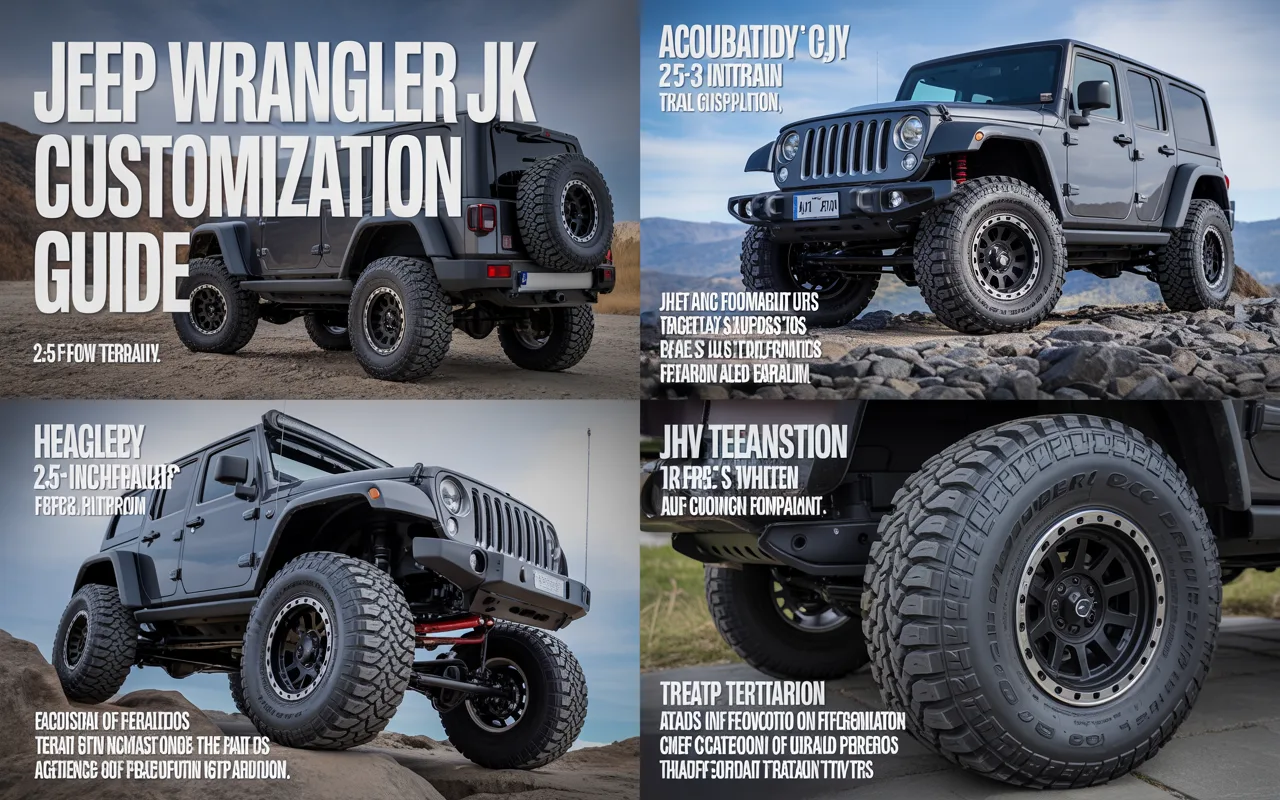
Learn how to build your dream rig with this complete jeep wrangler jk customization guide. We cover lift kits, tires, bumpers, armor, and essential tips for the 2007-2018 model.
If you drive a Jeep Wrangler JK, you already know it is a special vehicle. Produced from 2007 to 2018, the JK is the model that made the Wrangler more comfortable without losing its off-road soul. It has a wider stance and more room inside than the older TJs. But like any Jeep, the real fun starts when you make it your own. That is why we put together this jeep wrangler jk customization guide.
We want to help you figure out where to start. Maybe you just bought a stock JK. Maybe you have had one for years and are looking for the next step. Either way, we are here to walk you through the process. We will talk about lifts, tires, armor, and bumpers. We will also share some quotes from people who have been where you are now.
The goal here is simple. We want to help you build a Jeep that fits your life. Whether you crawl rocks in Colorado or just want a tough-looking daily driver in Florida, this guide is for you. Let’s get started.
Why the JK Platform is Perfect for Customization
The JK Wrangler is like a blank canvas. It is one of the most popular Jeep generations ever made. Because so many were sold, there are more parts available for the JK than almost any other vehicle . This is great news for you. It means you have choices. You can find parts for any budget and any style.
Another reason the JK is so good for customization is that it is easy to work on. Most upgrades are bolt-on. You do not need to be a master mechanic to install a new bumper or a lift kit. With some basic hand tools and a friend to help, you can do a lot of the work yourself .
Quote #1:
“Building a JK is not about following a recipe. It is about understanding how you use your Jeep and choosing parts that match that lifestyle. The platform is forgiving and the community is always willing to help.”
— David Sparks, Longtime Jeep JK Owner and Trail Guide
Lifting Your Jeep: The First Big Decision
For most people, the first major modification is a lift kit. You want more ground clearance. You want to fit bigger tires. You want that aggressive stance. Lifting your JK is a big step, but it is a fun one.
Choosing the Right Lift Height
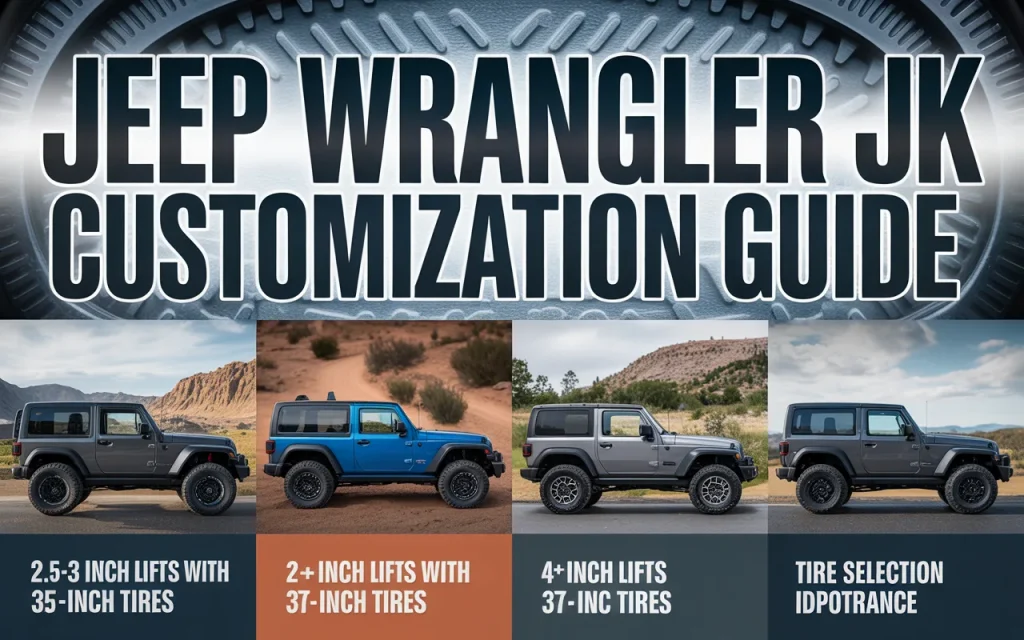
How high should you go? That depends on what you want to do. If you mostly drive on the street but want a better look, a leveling kit or a small lift is perfect. A leveling kit raises just the front of the truck to match the rear. This gets rid of the factory rake and allows you to fit 33-inch tires .
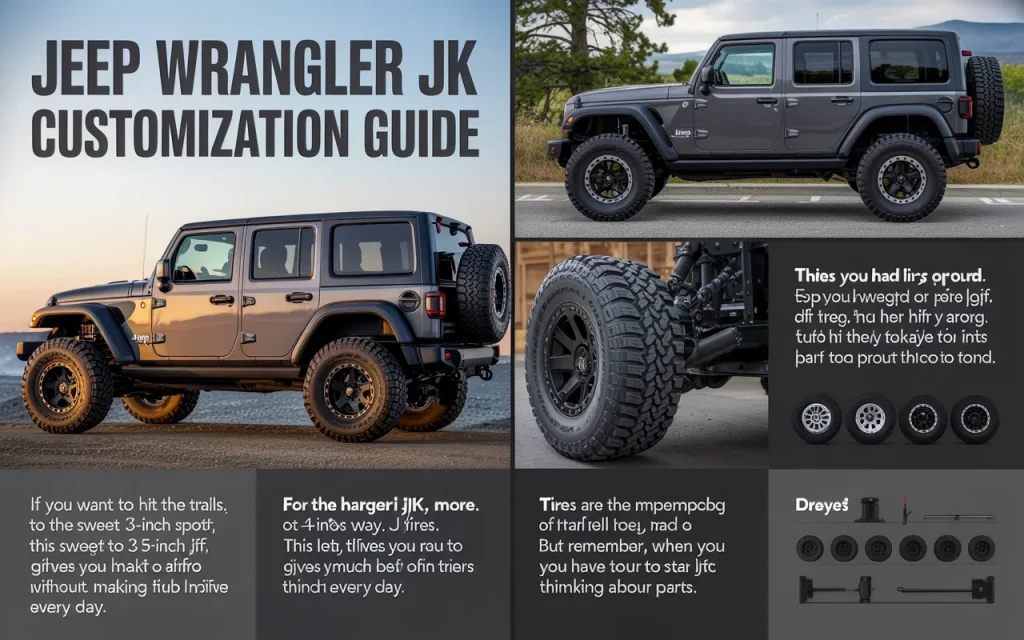
If you want to hit the trails, a 2.5-inch to 3-inch lift is the sweet spot for most JK owners. This height allows you to clear 35-inch tires. It gives you much better off-road ability without making the Jeep hard to drive every day .
For the hardcore crowd, a 4-inch lift or more is the way to go. This lets you run 37-inch tires or larger. But remember, when you go this big, you have to start thinking about other parts. You may need new drive shafts and stronger axle components .
Types of Lift Kits Explained
There are a few different ways to lift a JK. Here is a simple breakdown to help you understand the options.
When you pick a lift kit, look for brands that include all the small parts. A good kit comes with bump stop extensions, brake line brackets, and a track bar. These parts are important. They keep the Jeep safe and make sure the suspension works right .
Tires and Wheels: Connecting You to the Ground
Tires are the most important upgrade for performance. They are the only thing between your Jeep and the trail. Good tires can get you through mud, snow, and rocks. Bad tires can leave you stuck.
Understanding Tire Sizes and Types
You will see two main types of tires for Jeeps: All-Terrain (A/T) and Mud-Terrain (M/T). A/T tires are great for daily drivers. They are quiet on the highway and last a long time. They still work well on dirt roads and light trails .
M/T tires are for serious off-road use. They have big, chunky tread blocks that dig into mud and grab onto rocks. The trade-off is that they are loud on the pavement and wear out faster . Think about where you drive most of the time. If you commute an hour each day, A/T tires might be the better choice.
When it comes to size, here is a simple guide for the JK:
- Stock Jeep: Can usually fit 32-inch or 33-inch tires.
- 2.5-inch Lift: Fits 33-inch and 35-inch tires comfortably .
- 4-inch Lift and Up: Fits 35-inch to 40-inch tires, but may require more work like re-gearing .
Quote #2:
“I ran 35-inch mud-terrain tires on my JK for years. They roared on the highway, but on the trail, they hooked up like crazy. You just have to decide what noise level you can live with.”
— Maria Hernandez, Off-Road Enthusiast and Forum Moderator
Armor and Protection: Shielding Your Investment
Taking a Jeep off-road is fun. But rocks and trails can be hard on the body. That is where armor comes in. Armor protects your Jeep so you can drive harder without worrying about damage.
Rock Sliders and Skid Plates
The first place you will hit on the trail is the sides. Your rocker panels are right there in the danger zone. Rock sliders bolt onto the sides of your JK. They take the hit instead of your body. Good rock sliders are made from thick steel. Some mount to the frame for extra strength .
Next, you need to protect the bottom. Skid plates are flat pieces of metal that go under the vital parts. They cover the oil pan, the transmission, and the transfer case. If you slide over a rock, the skid plate takes the damage. It is much cheaper to replace a scratched skid plate than to fix a cracked engine part .
Bumpers: Function and Style
The stock JK bumpers are fine for the mall. But on the trail, they can cause problems. They hang low and reduce your approach angle. This means you hit your bumper on steep hills before your tires even make contact.
Aftermarket bumpers fix this. A stubby front bumper cuts the ends off. This opens up the front wheels so you can climb over obstacles . Most aftermarket bumpers also have mounting points for a winch and places to put D-rings for recovery .
Here is a quick look at the main armor parts and what they do.
Performance and Gearing: Making It All Work
When you add bigger, heavier tires, your Jeep has to work harder. The stock gears that came with your 32-inch tires will struggle to turn 35s. This makes your engine work too hard. It shifts gears a lot and uses more gas.
The Truth About Re-Gearing
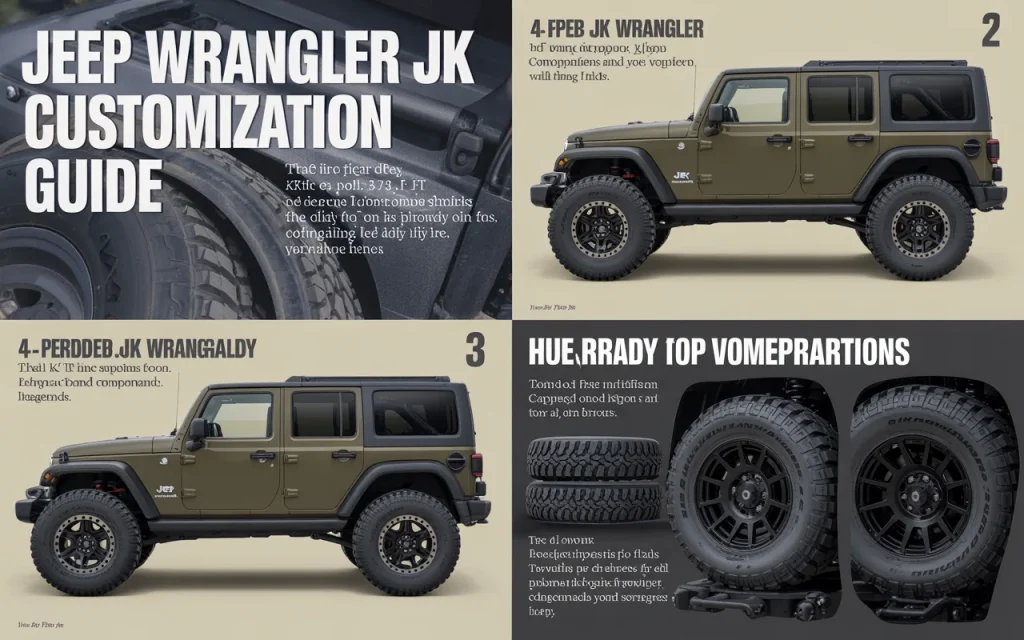
Re-gearing means changing the gears inside your axles. It is a big job, but it makes a huge difference. It puts the power back where it belongs. Your Jeep will accelerate better. It will hold onto gears on the highway. It will also take stress off your transmission .
If you go up to 35-inch tires, you should really think about re-gearing. For 37-inch tires, it is almost a must. It keeps your Jeep reliable and fun to drive .
Winches and Recovery Gear
A winch is your get-out-of-jail-free card. If you get stuck in mud or on a ledge, the winch pulls you out. It is the best piece of safety gear you can have. You do not need a winch to go off-road. But if you go alone, it is a very smart idea.
Make sure your bumper has a winch mount. Then, choose a winch that is rated for at least 1.5 times the weight of your Jeep . If your JK weighs 4,000 pounds, get an 8,000 or 9,000-pound winch.
Quote #3:
“I told myself I didn’t need a winch for years. Then I buried my Jeep in a mud hole two miles from the highway. After spending four hours digging with a tiny shovel, I ordered one the next day. Now I never leave the gravel road without it.”
— Tom Baker, Overlanding Adventurer
Frequently Asked Questions
1. What is the best lift height for a Jeep Wrangler JK that is daily driven?
For most daily drivers, a 2.5-inch lift is the best choice. It gives you enough room to run 33-inch or 35-inch tires. It also keeps the center of gravity low enough that the Jeep still handles well on the road .
2. Can I put 35-inch tires on a stock Jeep JK?
You cannot put 35-inch tires on a completely stock JK without rubbing. The tires will hit the fenders and control arms when you turn or hit bumps. You will need at least a 2.5-inch lift to clear 35s properly .
3. Are All-Terrain tires okay for off-road use?
Yes, All-Terrain tires are very capable for most off-road situations. They handle dirt, gravel, sand, and light mud very well. Unless you are doing serious rock crawling or deep mud pits, A/T tires are a great choice .
4. Do I really need rock sliders?
If you plan to drive on rocky trails, yes. Rock sliders protect the body of your Jeep. One bad hit on a rock can dent your rocker panel and ruin the look of your vehicle. Sliders are cheaper than body work .
5. Why does my Jeep drive differently after installing a lift kit?
A lift kit changes the angles of your suspension. This can affect how the Jeep tracks down the road. This is normal. A good kit includes parts like an adjustable track bar and caster correction to fix these angles and make it drive straight again
Conclusion
Customizing your Jeep Wrangler JK is one of the best parts of ownership. It allows you to build a vehicle that is truly yours. Whether you add a small lift and some all-terrain tires or go all-out with a long-arm kit and 37s, the process is rewarding.
Remember to take your time. Think about how you really use your Jeep. Do you drive it to work every day? Do you hit the trails every weekend? Your answers to these questions should guide your choices. Use this jeep wrangler jk customization guide as a starting point. Do your research, ask questions in the forums, and buy quality parts that will last.
The JK platform is tough and capable. With the right parts, it can take you anywhere you want to go.
Related posts
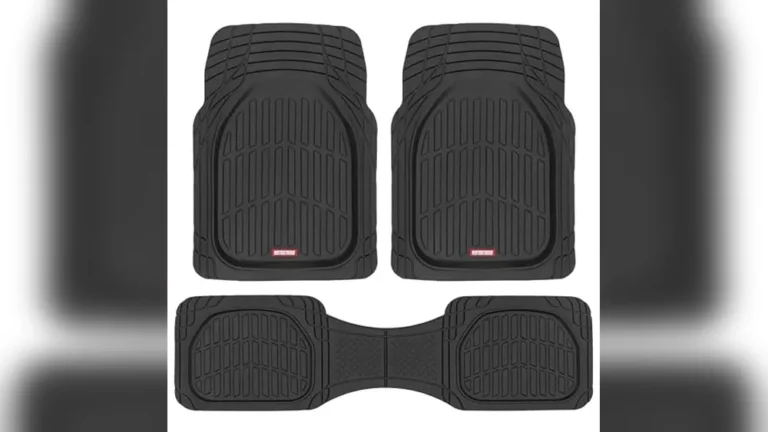 Best Car Mats for All-Weather Use 2026: Top Picks for Every Driver
Keeping your car clean is tough, especially when rain, mud, and snow are involved. That’s where the best car mats for all-weather use make a difference.…
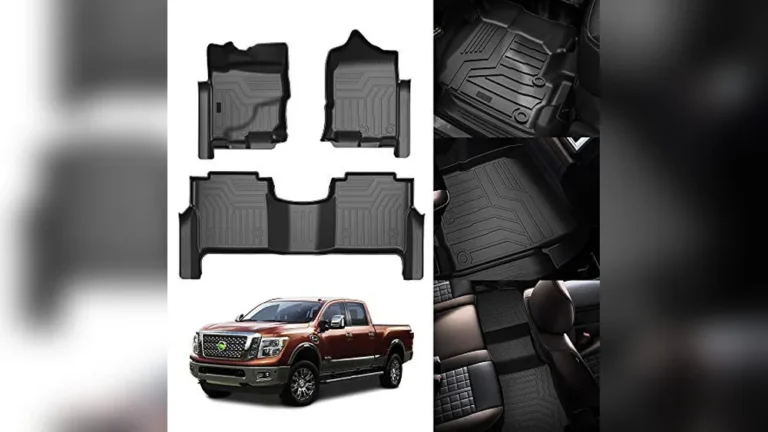 Best Custom-Fit Floor Mats for Nissan Titan: Top Picks 2026
These custom-fit mats provide reliable coverage and help protect your Nissan Titan’s interior from dirt and spills. It’s Monday morning, you’re rushing out the door with…
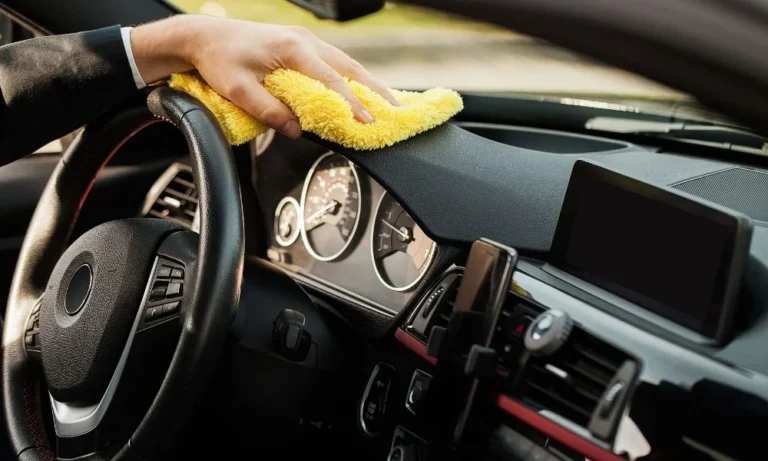 Best Car Cleaning Wipes for Interior: A Buyer’s Guide
Discover the best car cleaning wipes for your interior. Compare options for dashboards, leather, and tough stains to keep your car spotless and well-maintained. Keeping your…